The short answer: Whether an ADU needs a panel upgrade depends on a load calculation, not on the unit’s size alone. Published contractor figures, mostly from California, put a subpanel at about $2,000 to $5,000, a main service upgrade at $4,000 to $12,000 and a new electric meter at $3,000 to $15,000. In our worked example, a 600 sq ft all-electric ADU adds about 84 amps, which a 100-amp house service cannot carry.
Last verified: November 9, 2026 · Written by Marc
Electrical capacity is one of those ADU line items that stays invisible until a bid arrives. You can have approved plans and a good foundation price, then learn your house’s service cannot feed a second kitchen, bathroom and heat pump. An ADU electrical panel upgrade can cost more than the cabinets, and utility scheduling can hold up the whole job.
This guide shows you how electricians decide whether your existing service is enough, using a worked calculation with every number visible. You will see the reported price ranges, the three ways to power an ADU and the design choices that lower the load. Treat the math as an illustration: only a licensed electrician can size your actual system.
What an ADU electrical panel upgrade costs
Three different jobs get called a “panel upgrade,” and their prices are not interchangeable. Before you compare bids, find out which one the contractor means.
The figures below come from a California contractor’s guide to ADU utility connections and from ADU Scale’s cost page. They are industry-reported ranges, not official data, and we have not audited them.
| Work | What it means | Reported cost |
|---|---|---|
| Subpanel | A smaller panel at the ADU, fed from your existing main panel | $2,000 to $5,000 |
| Main service upgrade | Raising the capacity of the service to your property, on your side of the meter | $4,000 to $12,000 |
| Electric panel upgrade | ADU Scale’s separate estimate for a panel upgrade | $5,000 to $15,000 |
| New electric meter | A separate utility service for the ADU | $3,000 to $15,000, depending on utility design work |
| Trenching and conduit | The underground run to a detached ADU | $50 to $150 per linear foot, more if concrete must be cut |
Distance quietly drives the total. Using those trenching figures, a 60-foot run adds $3,000 to $9,000 on its own, and 120 feet adds $6,000 to $18,000. Our breakdown of hidden ADU costs and utility hookups puts those numbers next to sewer and water.
The ranges are wide because the work depends on your utility’s rules, your panel’s location and how far the wire must travel. They also skew toward California, so expect differences elsewhere. A written quote from a licensed electrician who has walked your site will always beat a published range.
Timing is a cost as well. The same contractor guide reports that utility service work in parts of the Bay Area can take several months, which matters if your construction loan is accruing interest while crews wait.
How to tell if your service can carry an ADU
Start at your main panel. The main breaker’s rating, commonly 100, 125 or 200 amps, tells you the size of the service you have. Then comes the question that actually decides the matter: how much of that capacity is already spoken for?
Electricians answer it using Article 220 of the National Electrical Code. A widely used approach for homes is the optional method in section 220.82, explained in this EC&M code article. It works in three stages:
- Add up the general load: 3 volt-amperes (VA) per square foot, 1,500 VA for each of two small-appliance circuits, 1,500 VA for laundry, and the nameplate rating of fixed appliances such as the range, dryer and water heater.
- Count the first 10,000 VA of that total at 100% and everything above it at 40%.
- Add the largest heating or cooling load, then divide by 240 volts to get amps.
The 40% factor reflects the reality that you will not run everything at once. Note that the method applies to dwellings served by a 100-amp or larger set of conductors, and the code changes between editions, so ask which edition your jurisdiction enforces.
There is a second route for an existing home. NEC section 220.87 can allow your electrician to use the actual maximum demand recorded over a one-year period, multiplied by 125%, and then add the new load, as Electrical Contractor magazine explains. Homes with a light real-world load can come out well below what the appliance-based math predicts.
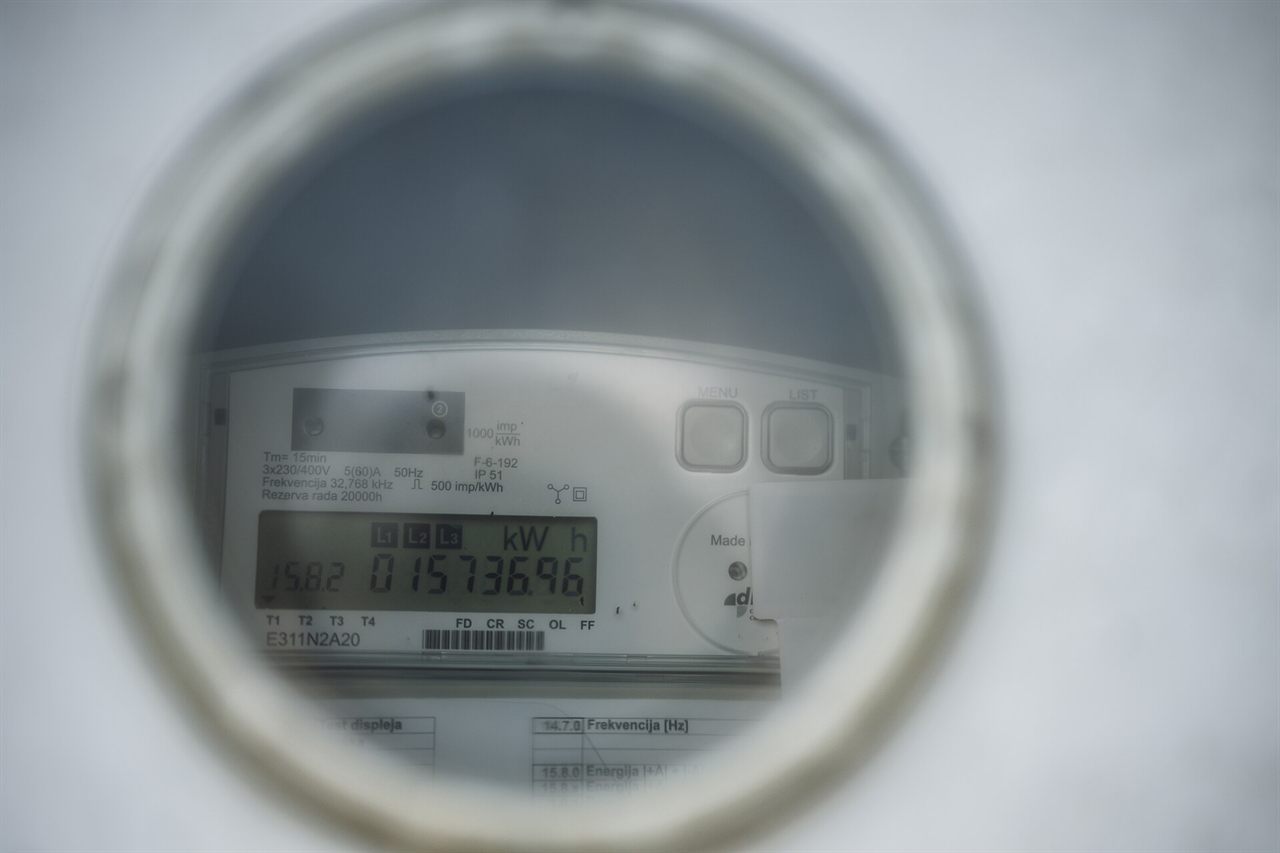
Practical tip: Ask your utility whether it can give you 12 months of interval data for your meter, then ask your electrician and building department whether they will accept a measured-demand calculation. Conditions apply, and approval is not automatic, but this request can decide whether you pay for a new service.
A worked example for a 600 sq ft ADU
Numbers make this clearer. Here are two hypothetical designs for the same 600 sq ft detached ADU, both calculated with the optional method and assuming a 100-amp feeder. The appliance ratings are our assumptions, so replace them with the nameplates on your own equipment.
| Load | Standard all-electric | Lower-load design |
|---|---|---|
| General load (600 sq ft × 3 VA) | 1,800 VA | 1,800 VA |
| Two small-appliance circuits | 3,000 VA | 3,000 VA |
| Laundry circuit | 1,500 VA | 1,500 VA |
| Range or cooktop | 12,000 VA | 8,000 VA |
| Clothes dryer | 5,000 VA | 2,000 VA |
| Water heater | 4,500 VA (resistance) | 1,000 VA (heat pump) |
| Connected load | 27,800 VA | 17,300 VA |
| Demand: first 10,000 VA at 100% | 10,000 VA | 10,000 VA |
| Demand: the rest at 40% | 7,120 VA | 2,920 VA |
| Heat pump heating and cooling | 3,000 VA | 2,000 VA |
| Total | 20,120 VA | 14,920 VA |
| Amps at 240 V | 83.8 A | 62.2 A |
Now add a hypothetical 1,800 sq ft main house with gas cooking, heating and hot water plus a 5,000 VA air conditioner. Its general load is 5,400 + 3,000 + 1,500 = 9,900 VA, all counted at 100%. Adding the air conditioner gives 14,900 VA, or 62.1 amps.
A simple sum gives about 146 amps with the standard ADU and about 124 amps with the lower-load design. Neither fits on a 100-amp service. Both leave room on a 200-amp service. A 125-amp service sits right on the edge with the lower-load design, which is exactly when an electrician’s judgment matters.
If measured data were accepted and the house peaked at 9,000 VA, the existing load would be 9,000 × 1.25 = 11,250 VA, or 46.9 amps. Added to the standard ADU, the total falls to about 131 amps.
Adding two separate results is a simplification for teaching purposes. Your electrician may treat two units on one service differently under the code, so use this to frame the conversation, not as a design.
Subpanel, service upgrade or separate meter
Once you know the load, you have three basic paths, and the cheapest one on paper is not always available.
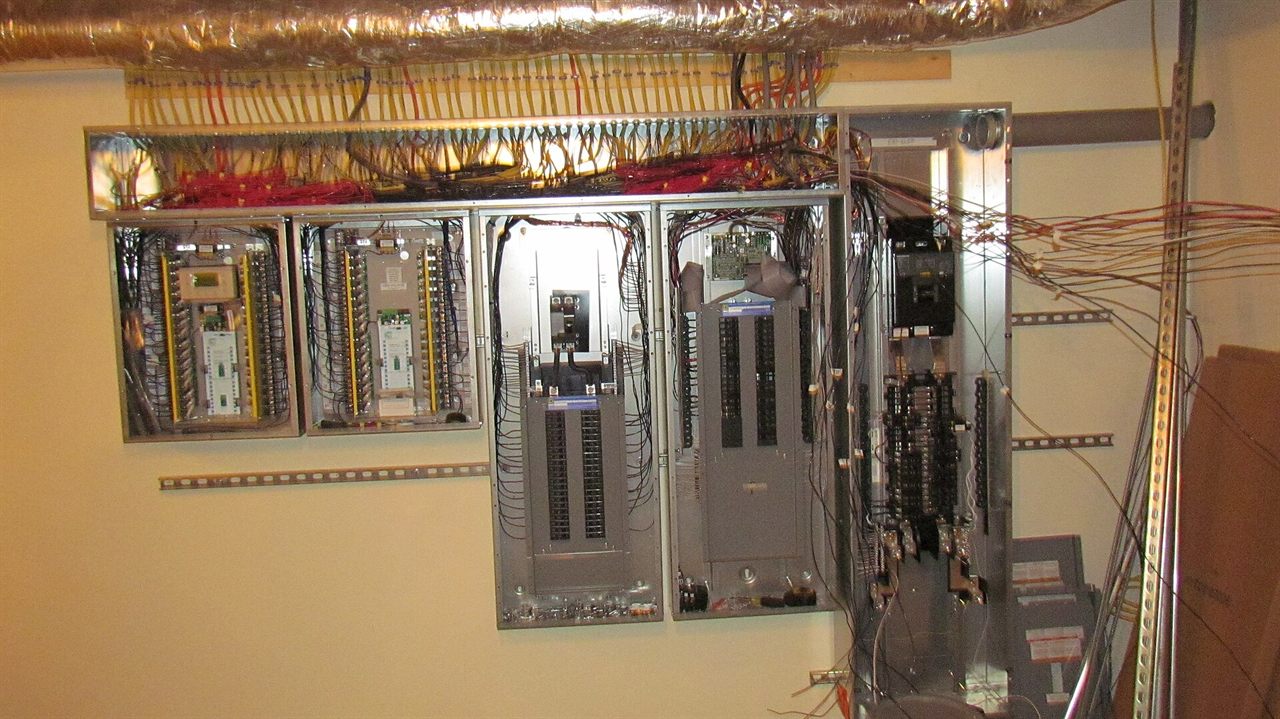
A subpanel off the existing service is usually the lowest-cost route, and it works when the main panel has room. You keep one utility account, which is simple, yet it means you will need a way to divide the electric bill with a tenant. Sub-metering may be possible.
A main service upgrade raises what your property can draw. You pay for the new equipment on your side, and your utility may have to replace the conductors or transformer connection on its side. Ask who pays for that portion, since rules vary from one utility to the next. Service upgrades also often involve a planned outage.
A separate meter and service gives the ADU its own account and bill, which landlords like. Our guide to separate utility meters for ADUs explains when California cities can require one and when they cannot. Elsewhere, state law may help: New Hampshire now bars towns from denying a separate panel and service for an ADU, as our New Hampshire ADU law guide explains.
Use this rough sorting logic:
- Your load calculation fits comfortably, and you do not mind sharing a bill: price a subpanel.
- Your load calculation does not fit, and you intend to live on-site: compare a service upgrade with a separate service.
- You plan to rent the ADU long term, and tenants should pay their own power: get a separate meter quote even if a subpanel would work.
- Your house has an older panel with known problems: raise it with the electrician first, since replacing it may be needed anyway.
California owners have one more variable. Solar requirements for newly constructed detached ADUs can involve panel specifications, covered in our guide to ADU solar requirements in California.
Design choices that can shrink the load
Your electrical bill starts on the architect’s desk. In the example above, three appliance decisions cut the calculated demand by 5,200 VA, or about 22 amps, with no change to the floor area. That may be the difference between a subpanel and a new service.
The biggest levers are the ones with large nameplate ratings:
- Cooking. A compact cooktop and oven rated below a full-size range reduce the connected load. In a small unit, a full 12,000 VA range is often more than the tenant needs.
- Water heating. A heat pump water heater typically draws far less than a resistance tank, though it needs space and has its own installation requirements.
- Laundry. Lower-power dryers exist, including heat pump models. Compare the nameplates before you pick one.
- Heating and cooling. Right-size the system to your ADU’s heat loss instead of copying a standard house size. A properly insulated small unit needs less capacity.
- Gas. Keeping gas appliances reduces electrical load, but the line itself has a reported cost of about $1,500 to $5,000, and local rules may discourage it.
Because the 40% factor discounts everything above the first 10,000 VA, trimming an appliance saves less than its full rating on paper. In our example, removing 4,000 VA from the range reduces demand by only 1,600 VA. The heating and cooling load is different. It is added at full value, so each VA saved there counts completely.
Common mistake: choosing appliances after the electrical design is done. If your electrician sized the feeder for a smaller cooktop and you later install a full range, the calculation no longer holds, and the inspector may catch it. Keep the appliance schedule and the load calculation in the same set of documents.
Future loads belong in this conversation as well. If you might add an EV charger, tell your electrician now. A slightly larger feeder installed during trenching costs far less than digging the same trench twice.
What to get in writing before you sign
Electrical work is one of the items most likely to be excluded from a bid or added later by change order. A short checklist keeps it from surprising you.
- Get a written load calculation for the house and the ADU together, and keep it with the permit set.
- Ask your utility for its service requirements in writing. A will-serve or service-requirements letter tells you whether the existing service can support the new load.
- Confirm who pays for what on the utility’s side of the meter, including any transformer work.
- Ask for the current lead time for a service upgrade or new meter, and build it into your schedule.
- Mark the meter, main panel and ADU on a site plan, with the trench route and its length.
- Have every bidder price the same scope, naming the subpanel or service size and the wire run.
- Confirm the permit path with your building department, including who pulls the electrical permit.
Step six is where bids diverge most. One contractor may include a subpanel and the trench, while another may list “electrical connection by others.” Our guide to comparing ADU contractor bids line by line shows you how to line those exclusions up.
Budget a contingency as well. An old service, a buried obstruction or a utility redesign can each change the price after work begins. Include this line in your overall ADU budget breakdown instead of treating it as an unlikely extra, so a higher quote does not derail the project. Electrical work must also meet local code, so hire a licensed electrician and do not energize new work before the required inspections.
Frequently asked questions
Does an ADU need its own electrical panel?
In practice, most ADUs get a panel of their own, usually a subpanel fed from the main house or a panel on a separate service. What varies is where the power comes from. A subpanel draws on your existing service, while a separate service has its own meter. Your electrician, your utility and your local code will determine which of these is acceptable on your property.
Is a 100-amp service enough for an ADU?
Often not, though it depends on your actual loads. In our worked example, a gas-heated house plus even a lower-load all-electric ADU came to about 124 amps, well beyond 100. A very small unit with gas appliances, or a home with low measured demand, may fit. Ask a licensed electrician for a written load calculation before you assume either result for your home.
How much does it cost to upgrade a panel for an ADU?
Published contractor figures put a main service upgrade at about $4,000 to $12,000, and one ADU cost source lists a panel upgrade at $5,000 to $15,000. A subpanel is reported at around $2,000 to $5,000. These ranges are not official and skew toward California. Your price will depend on your utility, panel location and trench length, so get written quotes.
Can I put a tenant’s ADU on a subpanel and split the bill?
Usually yes, as far as the electrical work is concerned, provided your service has the capacity. The billing is the harder part. Without a separate utility meter, you need a clear lease clause on how electricity is charged, and some states regulate how landlords can bill tenants for shared utilities. Check your state and local rules before you put a formula in the lease.
Who pays for the utility’s side of a service upgrade?
It depends on your utility. Owners normally pay for equipment on their side of the meter, and many utilities have their own rules and fees for work on the supply side. Ask your utility for its requirements and any fee estimate in writing before you sign with a contractor, and confirm whether your contractor’s price includes coordinating that work and paying those charges.
The bottom line
An ADU electrical panel upgrade is decided by a load calculation. Find your main breaker rating, have a licensed electrician run the numbers for both units, and ask whether measured demand can be used. Reported prices run from about $2,000 to $5,000 for a subpanel to $4,000 to $12,000 or more for a service upgrade, plus trenching on detached units. Appliance choices made early can lower the load and the bill.
Your next step is to request a written load calculation and a service-requirements letter from your utility. Hand both to every bidder so they all price the same electrical scope before you choose a contractor.
Sources
- EC&M: Dwelling Load Calculations Per the National Electrical Code
- Electrical Contractor: Determining and Calculating Existing Loads
- Imkat Construction: ADU Utility Connections and Separate Meters
- ADU Scale: ADU Cost
General information, not electrical or legal advice. Codes and utility rules vary; have a licensed electrician size your system.
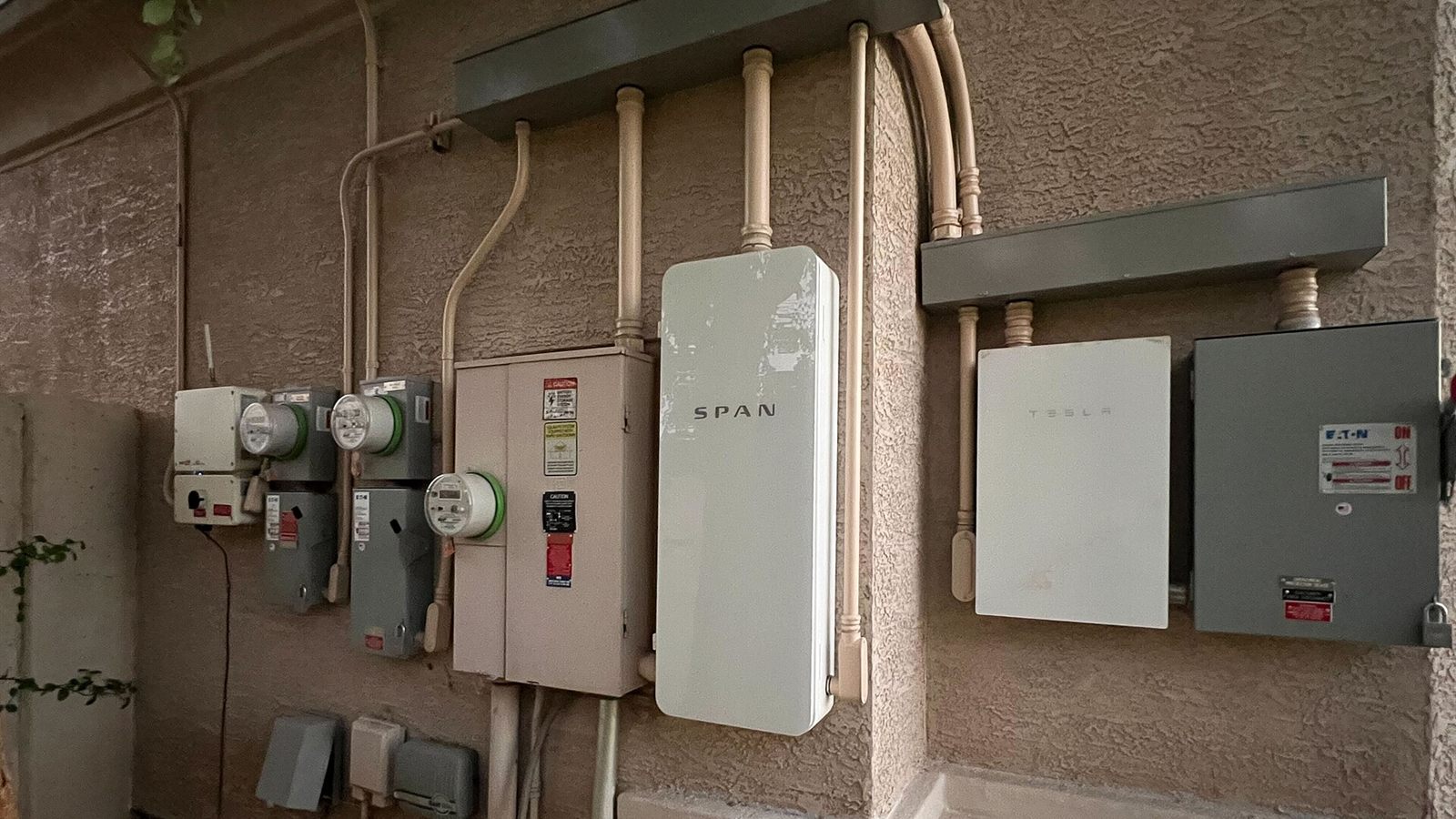
Cover photo: “Residential service entrance with multiple meters and a smart panel” by Rsparks3, CC0, cropped, via Wikimedia Commons. In-text photos: “Meter reading shows numbers indicating power usage” by Shixart1985, CC BY 2.0, resized; “NIST 1674” by the National Institute of Standards and Technology, public domain, resized; both via Wikimedia Commons.
Questions or a correction?
If something in this guide is unclear, out of date or does not match what your city told you, send me a message. Include the source if you have one.