The short answer: Federal voucher rules do not exclude ADUs. They bar a unit occupied by its owner, so you can generally live in the main house and rent the ADU to a voucher holder, subject to your housing authority’s approval. The unit must pass inspection and the rent must be found reasonable. You cannot rent to a close relative with a voucher, apart from a disability accommodation. California, Washington and Oregon also limit your right to refuse vouchers.
Last verified: November 9, 2026 · Written by Marc
A Section 8 ADU rental can look like an ideal match: a small, separate home for a household that needs one, and a monthly payment from a public agency toward the rent. The questions start once you try to apply the rules to a backyard unit. Can you live thirty feet away? Can you rent to your mother? What happens if your state says you cannot turn a voucher down?
This guide answers those questions using the federal Housing Choice Voucher regulations at 24 CFR Part 982, plus state law in three western states. You will work through a rent example and see each step of the approval process. It is general information, not legal advice, and your local housing authority has the final say on your unit.
Is an ADU eligible for a housing voucher?
We read the federal list of ineligible housing at 24 CFR 982.352, and it does not mention accessory units, in-law units or anything similar. The list covers public housing units, units with project-based Section 8 assistance, nursing and care homes, school dormitories, and units on institutional grounds. It also excludes “a unit occupied by its owner or by a person with any interest in the unit.”
That last item is the one that matters on your lot. The rule speaks of the unit, and an ADU with its own kitchen, bathroom and entrance is a separate unit from the main house. On our reading, you can live in the house and rent the ADU, or live in the ADU and rent the house, since the assisted family’s unit is not the one you occupy.
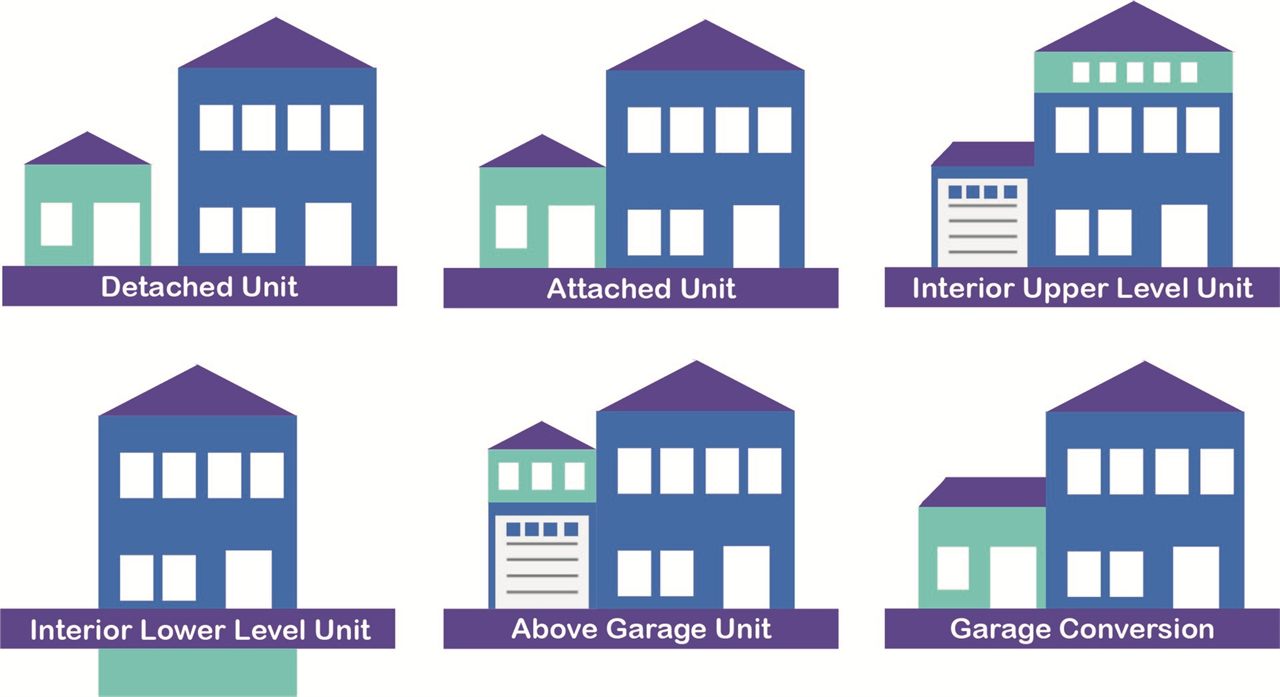
We did not find a HUD rule that addresses ADUs by name. Whether your particular unit qualifies is decided by the public housing agency (PHA) that administers the voucher. A shared house with a rented bedroom is a different situation, and it falls under special housing type rules.
Legality comes first. A voucher does not substitute for a building permit, and a PHA may refuse to work with an owner who has a pattern of renting units that fail state or local housing codes. If your unit was built without a permit, read our guide to legalizing an unpermitted ADU before you list it.
An eligible unit also needs to work in practical terms. A voucher family may need a certain bedroom count, so a studio will only fit households whose voucher size matches, and your PHA can explain how it handles those matches.
Practical tip: Call your PHA’s landlord or owner services line before you market the unit. Describe the ADU, whether you live on-site and how the utilities are metered, then ask if anything would prevent approval. Note the name of the person you speak with and the date.
The relatives rule, and why it catches ADU owners
Many ADUs are built with family in mind, so this rule deserves your attention before you make any plans. Under 24 CFR 982.306(d), a PHA must not approve a unit if the owner is the parent, child, grandparent, grandchild, sister or brother of any member of the assisted family.
The rule has one exception: the PHA can approve the unit if doing so “would provide reasonable accommodation” for a family member who is a person with disabilities. So if your parent uses a voucher and has a disability that makes living near you necessary, a request can be made. You should expect to document the need, and approval is not automatic.
Two details are easy to miss:
- The restriction applies to any member of the family, not only the head of household. Your sister’s household is covered, and so is a household where your sister is simply one of the occupants.
- It applies when a family first receives tenant-based assistance for a particular unit. It does not apply to a new tenancy with continued assistance in the same unit.
The definition of “owner” in this section also includes a principal or other interested party. Putting the ADU in an LLC is therefore unlikely to solve the problem if you remain the person behind it. Ask the PHA instead of assuming a structure will work.
Cousins, aunts, uncles and in-laws are not on the list in the regulation. Other conflict-of-interest rules may still apply if you or a relative has a connection to the housing authority. Keep the relationship out in the open, since hiding one can put the assistance at risk for the family and the program at risk for you.
If your goal is simply housing a parent or adult child without a voucher, a different set of questions applies. Our guide to building an ADU for aging parents covers costs, taxes and planning for that situation.
Do you have to accept a Section 8 voucher?
The federal voucher program does not force you to participate, and source of income is not one of the protected classes in the federal Fair Housing Act. State and local law can change that answer, and for ADU owners on the West Coast, it often does.
The table summarizes three states. It is not a full national list, and several other states and many cities have their own rules, so check where your property sits.
| State | Law | What it means for you |
|---|---|---|
| California | Gov. Code § 12955 | Federal housing vouchers count as protected source of income. Ads cannot state a preference against them. |
| Washington | RCW 59.18.255 | A landlord cannot refuse or treat a tenant differently because of source of income, with limited exceptions. |
| Oregon | ORS 659A.421 | Source of income includes Section 8 and other housing assistance. |
Some specifics carry real consequences. In California, if a rent subsidy is involved and you use credit history, you must offer the applicant the option to provide lawful, verifiable alternative evidence of ability to pay, give reasonable time to respond and consider it. In Washington, a minimum income requirement has to be applied after subtracting the voucher from the monthly rent.
Washington also has a narrow inspection exception. A landlord may refuse if the income source depends on the unit passing inspection, a written repair estimate exceeds $1,500 and the landlord has not received landlord mitigation funds for those repairs. Violations there can lead to a civil suit for up to four and a half times the monthly rent, plus court costs and attorney’s fees.
Where these laws apply, a listing that says “no Section 8” can itself be a violation. The City of San Jose makes the same point in its ADU guidance, as our San Jose ADU requirements guide notes. You may still screen applicants using criteria you apply to everyone, within the limits of your state and local law.
How Section 8 ADU rental math works
Three numbers set the payment: the payment standard, the gross rent and what the family must contribute. Your PHA sets payment standards, normally between 90% and 110% of the Fair Market Rent HUD publishes for each unit size.
The family’s contribution, called total tenant payment, is the highest of several amounts listed in 24 CFR 5.628, most commonly 30% of monthly adjusted income. Under 24 CFR 982.505, the housing assistance payment equals the lower of the payment standard minus that amount, or the gross rent minus that amount. Gross rent is the rent to you plus an allowance for utilities the tenant pays.
Here is a hypothetical example with a 1-bedroom payment standard of $1,800, a family with $2,000 of adjusted monthly income and a $100 utility allowance.
| Step | Rent of $1,700 | Rent of $1,950 |
|---|---|---|
| Rent to owner | $1,700 | $1,950 |
| Gross rent (rent + $100 utilities) | $1,800 | $2,050 |
| Total tenant payment (30% × $2,000) | $600 | $600 |
| Agency pays you (lower of $1,800 or gross rent, minus $600) | $1,200 | $1,200 |
| Tenant pays you | $500 | $750 |
| Family’s total share, with utilities | $600 | $850 |
| 40% income limit | $800 | $800 |
| Passes the 40% test? | Yes | No |
The second column shows the trap. Raising the rent above the payment standard does not raise the agency’s payment. It moves the extra cost to the family, and under 24 CFR 982.508 the family’s share cannot exceed 40% of adjusted monthly income when it first receives assistance for the unit, if gross rent exceeds the payment standard.
The agency also has to find the rent reasonable under 24 CFR 982.507, comparing it with unassisted units on location, quality, size, unit type, age, amenities, services, maintenance and utilities. Good comparables help you here, and the method in our guide to setting ADU rent is a sensible way to assemble them.
The approval path, step by step
The sequence begins after a voucher family chooses your unit. Most of the steps are handled by the PHA, and a slow step can leave your unit empty, so plan for the gap. The core requirements appear in 24 CFR 982.305.
- Screen the applicant using the same standards you apply to everyone, within your state’s limits. The PHA’s approval of a family does not replace your screening.
- Complete the request for tenancy approval with the family and submit it to the PHA.
- Have the unit inspected. It has to meet the applicable housing quality standard. PHAs with up to 1,250 budgeted units must inspect and decide within 15 days of the request, a period that pauses while the unit is unavailable.
- Wait for the rent reasonableness decision. The PHA may ask you to adjust your rent.
- Sign the lease with the family, including the HUD tenancy addendum and lead-based paint disclosure.
- Sign the housing assistance payments (HAP) contract with the PHA.
- Begin the tenancy and collect only the tenant’s share from the family.
Pay attention to step six. The PHA should try to execute the contract before the lease begins, and it must be executed within 60 calendar days of the lease start. A contract signed later is void, unless HUD grants an extension. No payment can be made until the contract is executed. When it is executed on time, the PHA may pay for the period back to the start of the lease.
A failed inspection is not the end of the process. Repairs can usually be made and the unit reinspected. A new ADU built to current code often has fewer problems than older housing stock, but items like smoke alarms, handrails, windows that open and working heat are worth checking yourself in advance.
Common mistake: letting the tenant move in before the contract is signed. You may then carry rent risk if the unit fails inspection or the approval stalls. Agree on a move-in date only after you know where the PHA is in the process.
Lease, utilities and deposits on a shared lot
An ADU sits close to the main house, and that closeness creates issues a standalone rental does not have. The voucher program’s lease rules at 24 CFR 982.308 force you to resolve several of them in writing.
The lease must state which utilities and appliances you provide and which the family provides. If the ADU shares a meter with your house, you will likely need to include electricity or water in the rent, or set up a billing method the PHA accepts. Later changes to those responsibilities require a new tenancy approval and a new HAP contract, so get this right the first time.
Other points to settle in advance:
- Your standard lease. If you use one for unassisted tenants, the same form is used here, with the HUD addendum added word for word. The addendum overrides any conflicting term. Our guide to ADU lease basics covers the clauses owners tend to forget.
- Extra charges. You cannot demand or accept more than the tenant’s share set by the program. 24 CFR 982.451 requires you to refund any excess promptly.
- Security deposits. You may collect one, but 24 CFR 982.313 lets the PHA prohibit deposits above private market practice or above what you charge unassisted tenants. State deposit limits still apply.
- Shared spaces. Be specific about the yard, driveway, trash area and parking, and apply the same rules you would use with any tenant.
- Rent increases. The PHA must make a new reasonableness determination before any increase.
Keep records of both payment streams, the agency’s and the tenant’s, because together they make up your rent. Our guide to ADU rental income taxes explains deductions, and a tax professional can confirm how to report the agency’s payments.
Finally, the program can stop paying if the unit fails to meet standards during the tenancy, and the HAP payment should arrive promptly but may be delayed by agency processes. Keep a small cash reserve so a late deposit does not disrupt your loan payment.
Frequently asked questions
Can I live in the main house and rent my ADU to a Section 8 tenant?
On our reading of the rules, generally yes. The federal rule bars assistance for a unit occupied by its owner or someone with an interest in that unit, and an ADU with independent facilities is a separate unit from your house. The rule does not name ADUs, so your local housing authority decides. Call its owner services staff, describe your property and ask them to confirm eligibility before you list.
Can my parent use a Section 8 voucher to rent my ADU?
Normally no. A housing agency must not approve a unit when the owner is the parent, child, grandparent, grandchild, sister or brother of any family member. The exception is a reasonable accommodation for a family member with a disability, which the agency must determine. The restriction applies when the family first receives assistance for that unit, so ask the agency how it handles your specific situation.
Can I refuse a Section 8 voucher for my ADU?
That depends on where the property is. Federal fair housing law does not list source of income as a protected class, and participation in the program is not mandated federally. California, Washington and Oregon protect voucher holders, as do other states and many cities. Where those laws apply, refusing an applicant or advertising “no Section 8” can be illegal. Check your state and local fair housing agency.
How much rent can I charge a voucher tenant for an ADU?
There is no fixed amount, but two limits apply. The housing agency must find your rent reasonable compared with similar unassisted units. If the gross rent exceeds the payment standard, the family’s share cannot exceed 40% of adjusted monthly income when it first receives assistance for your unit. A rent above the payment standard does not increase the agency’s payment, so the difference falls on the tenant.
How long does Section 8 approval take for an ADU?
Timing varies by agency. Smaller housing agencies must complete the inspection and determination within 15 days of the request, excluding any time the unit is unavailable, while larger agencies must act within a reasonable time. The payment contract has to be executed within 60 calendar days of the lease start. Ask your agency for its current processing time, and keep the unit ready for inspection when you apply.
The bottom line
A Section 8 ADU rental is generally possible when you live on the same lot, because federal rules bar the owner’s own unit and do not name ADUs. Two checks come first: the housing agency’s view of your unit, and whether the tenant is a close relative. Your state may also limit your right to refuse a voucher. Beyond that, the rent has to be reasonable, and the unit must pass inspection before payments start.
Your next step is to call your local housing agency’s owner services line and ask about your unit, its current payment standard and its inspection timeline. Then gather three comparable rents before you set a price.
Sources
- 24 CFR 982.352: Eligible housing
- 24 CFR 982.306: PHA disapproval of owner
- 24 CFR 982.305: PHA approval of assisted tenancy
- 24 CFR 982.507: Rent to owner, reasonable rent
- 24 CFR 982.505: How to calculate housing assistance payment
- 24 CFR 982.508: Maximum family share at initial occupancy
- California Government Code § 12955
- Washington RCW 59.18.255
- Oregon ORS 659A.421
General information, not legal or tax advice. Housing agency policies and local laws vary; confirm with your agency and a qualified professional.
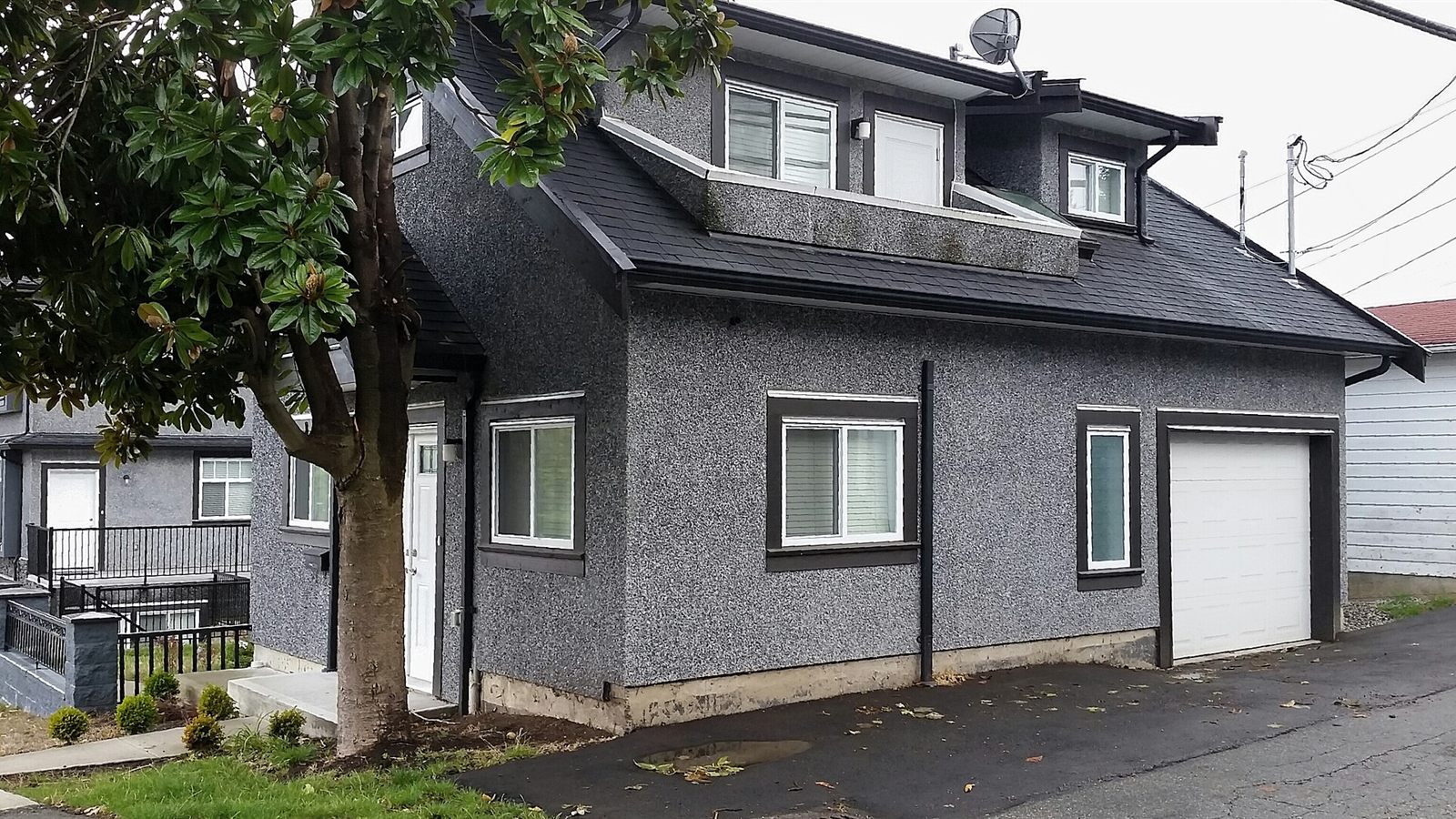
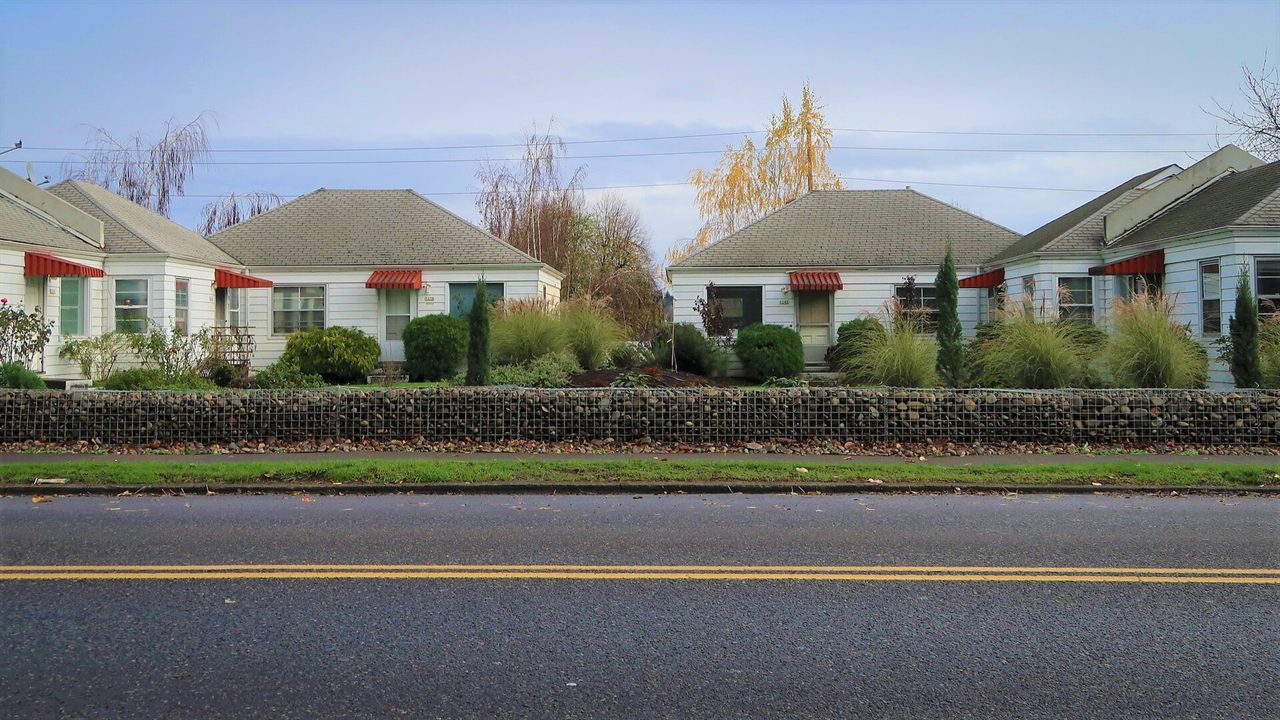
Cover photo: “Laneway house in Vancouver” by Mike, CC BY-SA 2.0, cropped, via Wikimedia Commons. In-text images: “Accessory Dwelling Unit (ADU) Types” by Joiedevivre123321, CC BY-SA 4.0, resized; “Cottage Cluster Development” by Mark McClure for Sightline Institute: Missing Middle Homes Photo Library, CC BY 2.0, resized; both via Wikimedia Commons.
Questions or a correction?
If something in this guide is unclear, out of date or does not match what your city told you, send me a message. Include the source if you have one.