The short answer: Set ADU rent from comparable rentals: find three to five similar units nearby, adjust for size, bedrooms, parking, outdoor space and which utilities you include, and price within that range. Use HUD’s Fair Market Rents, which estimate 40th-percentile gross rents for an area, as a cross-check, not a target. Document how you chose the number: lenders count only part of the lease, and the IRS treats a below-market rent to a relative as personal use.
Last verified: October 29, 2026 · Written by Marc
This guide explains a practical pricing method and the federal rules that make the number matter. It is general information, not financial, tax or legal advice. Local rent and tenant laws vary, so check your city’s rules before you sign a lease.
The rent you charge for an ADU drives everything that follows: whether the project pays for itself, how a lender reads your income and how the IRS treats a lease to family. Price it too high and the unit sits empty; too low and you leave money on the table every month. ADUs are also hard to compare, because a backyard cottage is not quite an apartment and not quite a house. This guide gives you a repeatable method, a worked example and the rules that make the final number count.
Step 1: find comparable rentals
A comparable rental, or “comp,” is a unit similar enough to yours that a tenant would choose between them. Look for three to five, rented recently, within a short distance:
- Other ADUs or backyard cottages first, because tenants compare them directly
- Small apartments and studios with the same number of bedrooms
- Guest houses and in-law units advertised under other names
Record each one’s rent, size, bedrooms, bathrooms, parking, laundry, outdoor space, which utilities are included and how long it took to rent. Asking prices are a starting point; rents that actually got signed are better. Save screenshots with dates, because you may need them later for a lender or the IRS.
Step 2: adjust for differences
No comp matches exactly, so adjust each one toward your unit. The table shows the usual adjustments, with the direction rather than a fixed dollar figure, because the value of each feature depends on your market.
| Feature | Your ADU has it, the comp does not | The comp has it, your ADU does not |
|---|---|---|
| Extra bedroom | Adjust the comp’s rent up | Adjust down |
| Off-street parking | Up | Down |
| In-unit laundry | Up | Down |
| Private outdoor space | Up | Down |
| Utilities included in rent | Up | Down |
| Detached, no shared walls | Up | Down |
| Newer construction | Up | Down |
After adjusting, you should have a range. Price near the middle if your unit is typical, toward the top if it is new and well finished, and toward the bottom if you want to fill it quickly or keep a long-term tenant.
Common mistake: comparing rents without checking utilities. A $2,000 unit with water, power and internet included is not the same offer as a $2,000 unit where the tenant pays them. Put every comp on the same basis before you compare.
Step 3: cross-check with HUD Fair Market Rents
HUD publishes Fair Market Rents (FMRs) for every metropolitan area and nonmetropolitan county. HUD defines them as “estimates of 40th percentile gross rents for standard quality units” in the area. In other words, about 40% of standard units rent for less and 60% for more. FMRs are effective at the start of the federal fiscal year, generally October 1, and the FY 2027 figures are published.
FMRs are useful as a sanity check, for two reasons. They come from a federal agency rather than a listing site, and they are published by number of bedrooms. If your planned rent is far above the FMR for your unit size, make sure your comps justify it. HUD also publishes Small Area FMRs by ZIP code for some areas, which can be closer to your neighborhood.
They are not a pricing target. An FMR is a midpoint-to-low estimate across a whole area, while a new ADU is usually newer than the average unit. Use it to catch an outlier, not to set the rent.
Step 4: run the numbers on your costs
The market sets the rent; your costs tell you whether that rent works. Add up the monthly costs of owning the ADU:
- Loan payment, if you borrowed to build
- Added property tax
- Insurance
- Utilities you include
- A maintenance reserve
- An allowance for vacancy between tenants
Compare the total with the market rent from steps 1 to 3. If the rent covers the costs with room to spare, you have a margin. If it does not, the answer is not to raise the rent above the market, but to revisit the budget. Our guides to ADU property tax and how to finance an ADU cover two of the largest lines.
Here is a hypothetical example. Your comps for a one-bedroom ADU adjust to $1,900 to $2,200 a month. Your monthly costs, including a loan payment, the added property tax, insurance and a reserve, come to $1,750. Pricing at $2,050 leaves a margin of $300 a month before vacancy. For scale, the Terner Center’s 2021 survey of California owners found a median new-ADU rent of $2,000 a month; use your own market’s data, not that figure.
Practical tip: Keep a one-page file with your comps, adjustments, the FMR you checked and the date you set the rent. It takes ten minutes, and it is exactly what a lender, a tax preparer or a family member will ask for later.
Why the number matters to lenders and the IRS
The rent you set is also evidence. Two federal rules make it important to get right and to document:
- Lenders count only part of it. Freddie Mac counts at most 75% of a documented lease, capped at 30% of the income used to qualify, and FHA applies 75% of the lesser of market rent or the lease. A realistic, documented rent is worth more to a lender than an optimistic one. See ADU rental income and loan qualification.
- The IRS looks at fair rental price. Under IRS Publication 527, days a relative uses the unit count as personal use unless the relative uses it as their main home and pays a fair rental price. Use by anyone paying less than a fair rental price is personal use too. Too much personal use limits your rental deductions. See ADU rental income taxes.
Rent rules that can limit what you charge
Local law can cap rent or rent increases on some ADUs. In Los Angeles, for example, the Housing Department says a detached ADU is generally outside the Rent Stabilization Ordinance, an attached ADU is covered only if the original structure was built before 1978, and converting livable space brings both units under it. Rules like these vary by city and state, so check your local rent and tenant laws before you sign a lease. Our guide to Los Angeles ADU rules covers that city’s approach.
Frequently asked questions
How much can I charge for my ADU?
What the market will pay for a comparable unit. Find three to five similar rentals nearby, adjust them for size, bedrooms, parking, laundry, outdoor space and included utilities, and price within the adjusted range. Check the result against HUD’s Fair Market Rent for your area and unit size, and make sure it covers your monthly costs. Local rent rules may set limits.
What are HUD Fair Market Rents?
HUD’s Fair Market Rents are estimates of 40th-percentile gross rents for standard quality units in a metropolitan area or nonmetropolitan county, published by number of bedrooms. They are used in federal housing programs and are effective at the start of the federal fiscal year, generally October 1. For pricing an ADU, they are a useful cross-check, but not a target.
Should I include utilities in the rent?
It depends on your metering. If the ADU shares meters with the house, including utilities avoids splitting bills, but you carry the risk of high use. With separate meters, tenants usually pay their own. Either way, adjust your comps to the same basis and state clearly in the lease which utilities are included. Our guide to ADU utility meters explains the options.
Can I charge my parent or adult child less rent?
You can, but it changes how the IRS treats the unit. Under IRS Publication 527, days a relative uses it count as personal use unless the relative uses it as their main home and pays a fair rental price. If you charge less, your rental deductions can be limited. Decide which matters more, and document a market-based rent if you want rental treatment.
How often should I review the ADU rent?
At each lease renewal, and whenever local rents move noticeably. Repeat the comparison: check current comps, the latest Fair Market Rent and your costs. Any increase must follow your lease and local rent and tenant laws, which can limit how much and how often rent can rise. Keep the file updated each time.
The bottom line
To set ADU rent, start with three to five comparable rentals, adjust them for size, features and included utilities, and price within the range. Use HUD’s Fair Market Rents as a cross-check and your monthly costs as a test of whether the rent works. Document the method: lenders count only part of the lease, and the IRS checks for a fair rental price when family rents the unit.
Your next step is to collect your comps this week and build the one-page rent file described above. Then test the rent against your loan in how to finance an ADU and the tax side in ADU rental income taxes.
Sources
- HUD User: Fair Market Rents
- IRS Publication 527, Residential Rental Property
- Freddie Mac: ADU fact sheet
- HUD: Mortgagee Letter 2023-17
- Terner Center: statewide ADU owner survey (2021)
- Los Angeles Housing Department: ADUs and rent control
General information, not financial or tax advice. Rules change; confirm every figure with a qualified professional.
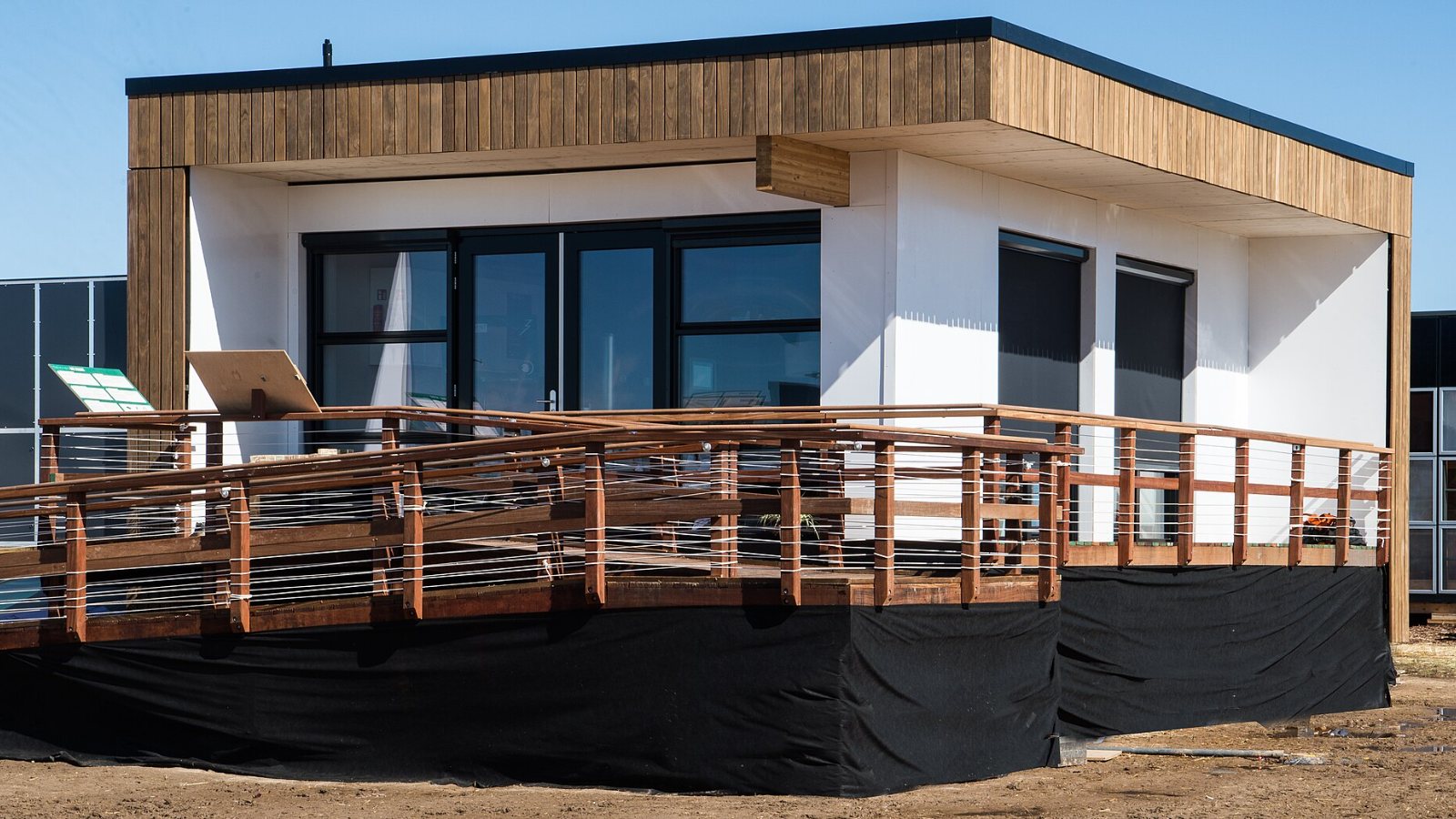
Cover photo: “Solar Decathlon SD17Gallery of Houses (36966717973)” by U.S. Department of Energy Solar Decathlon, public domain, via Wikimedia Commons.
Questions or a correction?
If something in this guide is unclear, out of date or does not match what your city told you, send me a message. Include the source if you have one.