The short answer: Rent from an ADU is taxable income, but you can usually subtract the costs of renting it: a share of property tax, mortgage interest and insurance, repairs, utilities you pay and depreciation on the unit itself. The ADU building is depreciated over 27.5 years; the land under it is not depreciable. Two rules catch ADU owners most often: renting to a relative below market rent, which can limit your deductions, and dividing costs that the house and the ADU share.
Last verified: October 28, 2026 · Written by Marc
This guide explains federal rules in IRS Publication 527 (2025 returns). It is general information, not tax advice. State taxes differ, and your situation may have details this guide does not cover, so confirm your return with a CPA or enrolled agent.
You built the ADU to bring in rent, and the first tax season is when owners find out how much of that rent they keep. The good news is that the IRS treats an ADU like any other residential rental. The less obvious part is that an ADU sits on the same lot as your home, so many costs are shared, and the people who rent ADUs are often family. Both change the math. Below you will find what to report, what you can deduct, how depreciation works on a newly built unit and a worked example you can copy with your own numbers.
How the IRS sees rent from an ADU
For federal tax purposes, an ADU you rent out is residential rental property. The rent you collect is income in the year you receive it, and the costs of renting it out are deductions against that income. Publication 527 puts it plainly: the expenses of renting your property, “such as maintenance, insurance, taxes, and interest, can be deducted.”

Most owners report the income and expenses on Schedule E (Form 1040), the same form used for a rented house or condo. Advance rent counts as income when you receive it, even if it covers months in the next year. A security deposit you plan to return is not income while you hold it, but it becomes income if you keep it, for example to cover unpaid rent.
There is one case where you report nothing at all. If you use the ADU as a home and rent it for fewer than 15 days in the year, the IRS says its primary function “isn’t considered to be rental,” and you do not include that rent in income. You also cannot deduct rental expenses in that case. This rarely applies to a long-term ADU rental, but it matters if the unit is mostly a guest suite you rent for a weekend or two.
Deductions you can usually take
The deductions fall into two groups: costs you subtract in full in the year you pay them, and the cost of the building, which you recover slowly through depreciation.

Costs that are typically deductible in the year you pay them, for the rental share:
- Mortgage interest on a loan used to build or buy the rental, including a HELOC used for the ADU
- Property tax on the portion of the parcel the rental represents
- Insurance that covers the rental, including a landlord policy or the added premium for the ADU
- Repairs and maintenance, such as fixing a leak, repainting or replacing a broken fixture
- Utilities you pay for the unit, if they are not passed to the tenant
- Advertising, tenant screening and management fees
- Legal and professional fees related to the rental, such as preparing a lease
What you cannot deduct is just as important. You cannot deduct the cost of improvements in the year you pay for them. Publication 527 says you “must capitalize any expense you pay to improve your rental property.” Building the ADU, adding a room or replacing the roof are improvements: they become part of the basis you depreciate. If you build part of the ADU yourself, the value of your own labor is not part of its cost: the IRS counts what you paid, not your time.
Practical tip: Open a separate bank account or card for the ADU from the first permit fee onward. When the CPA asks which costs were construction and which were repairs, a clean account answers the question in minutes, and it gives you the records the IRS expects if a deduction is ever questioned.
Depreciation: recovering what you spent to build
Depreciation is how you deduct the cost of the ADU building itself. You do not deduct it all at once. Under the General Depreciation System (GDS), residential rental property is recovered over 27.5 years, and Publication 527 says you “must use the straight line method and a mid-month convention.” Straight line means the same deduction every full year. Mid-month means the first year counts from the middle of the month the unit was placed in service, that is, ready and available to rent.
Three rules shape the number for an ADU:
- Land is never depreciable. The IRS explains that land “generally doesn’t wear out, become obsolete, or get used up.” When you build an ADU on a lot you already own, you are depreciating the construction cost, not the land.
- Your basis is what it cost to build. That includes construction, design and engineering, permit and impact fees and utility connection charges tied to the unit. Keep the invoices: they are your proof.
- Depreciation starts when the unit is ready to rent, not when you start building or when the first tenant moves in.
Here is a hypothetical example. You spent $200,000 to design, permit and build a detached ADU and it was ready to rent in early July. A full year of depreciation would be $200,000 divided by 27.5, about $7,273. Because the unit was placed in service mid-year, the first-year deduction is roughly half of that under the mid-month convention. The IRS tables in Publication 527 give the exact percentage for each month.
Depreciation has a catch you should know before you plan to sell. When you sell, the depreciation you were allowed generally reduces your basis, which can increase the taxable gain. That is a reason to get advice before a sale, not a reason to skip the deduction.
Shared costs: dividing the house and the ADU
An ADU sits on your lot, so the property tax bill, the homeowner’s insurance policy and sometimes the mortgage cover both your home and the rental. You may only deduct the rental share. Publication 527 lets you use “any reasonable method” to divide shared expenses, and the two most common are the number of rooms and the square footage.
| Shared cost | Common way to split it | What stays personal |
|---|---|---|
| Property tax on the parcel | Rental square footage ÷ total living square footage | Your home’s share, deductible only as an itemized deduction if you qualify |
| Homeowner’s insurance | Same ratio, or the actual added premium for the ADU | The part that covers your home |
| Mortgage interest | Share of the loan that paid for the rental, or a reasonable ratio | Interest on your home’s share |
| Utilities on one meter | Square footage, or a reasonable per-person estimate | Your household’s use |
| A HELOC used only for the ADU | Fully tied to the rental | None, if the money went only into the ADU |
A worked example of the split: your house has 1,600 sq ft and the ADU 400 sq ft, so 2,000 sq ft of living space in total. The ADU is 20% of it. If the property tax bill is $9,000, the rental share is about $1,800. Use the same method every year and write down how you chose it.
Common mistake: deducting 100% of the property tax or homeowner’s insurance because “the ADU raised the bill.” Only the rental share is a rental expense. If the ADU added a separate, documented premium, that added amount is easier to defend than a guess.
If your utilities run through one meter, the split is messier. See our guide to whether an ADU needs separate utility meters before you decide how to bill the tenant.
Renting the ADU to family
Many ADUs are built for a parent, an adult child or another relative. That is fine for taxes, but it changes the rules if the rent is low. The IRS counts a day as personal use when a family member uses the unit, unless that relative uses it as their main home and pays a fair rental price. Use by anyone who pays less than a fair rental price also counts as personal use.
Why it matters: once personal use passes the greater of 14 days or 10% of the days rented at a fair price, the IRS treats the unit as a dwelling you use as a home. Your rental deductions are then limited, and you generally cannot use the rental to create a loss.
Practical ways to stay on the right side of the rule:
- Set the rent by looking at comparable listings for similar units nearby, and save screenshots of them
- Put the arrangement in a written lease, as you would with a stranger
- Collect rent on a schedule and deposit it into the ADU account
- If you choose to charge a relative far below market, accept that the unit is treated more like part of your home than a business, and plan your deductions that way
There is no penalty for being generous. The point is to know which set of rules applies before you file, rather than after.
Rental losses and the $25,000 allowance
In the first years, depreciation and interest can push the rental into a loss on paper even while rent covers the payment. Rental activity is generally passive, and passive losses usually offset only passive income. There is an exception that helps many ADU owners.
If you actively participate in the rental, you may deduct up to $25,000 of rental loss against other income, such as wages. Active participation generally means you own at least 10% of the property and make management decisions, such as approving tenants, setting rent or approving repairs.
The allowance shrinks with income:
- Modified adjusted gross income (MAGI) of $100,000 or less: the full allowance is available.
- MAGI between $100,000 and $150,000: the allowance is reduced by half of the amount over $100,000.
- MAGI of $150,000 or more: no allowance (the limits are lower if you are married and file separately).
Losses you cannot use are not lost. Under IRS Publication 925, disallowed passive deductions are carried forward to the next tax year, where they can offset future passive income. Higher earners should also ask about the Net Investment Income Tax, which the IRS notes may include rental income.
A simple year-one checklist
Owners who keep the paperwork tidy from the start pay less for tax preparation and sleep better if a letter ever arrives. Before your first return with the ADU, gather this:
- The final construction cost, with invoices for design, permits, fees, utility connections and construction.
- The date the unit was ready to rent, such as the final inspection or certificate of occupancy.
- The lease and rent records, including deposits and any rent paid in advance.
- Comparable rents, if you rent to a relative.
- Your method for splitting shared costs, with the square footage figures.
- Bills for each expense, sorted into repairs and improvements.
- Loan statements showing interest paid on any loan used for the ADU.
If you have not built yet, these records start with the first estimate. Our ADU budget breakdown shows the cost blocks you will want to track separately, and our guide to counting ADU rental income to qualify for a loan explains how lenders read the same rent.
Frequently asked questions
Do I have to pay taxes on rent from an ADU?
Yes, in most cases. Rent from an ADU is taxable income and is usually reported on Schedule E (Form 1040), after subtracting deductible expenses such as the rental share of property tax, interest, insurance, repairs and depreciation. The main exception is a unit you use as a home and rent for fewer than 15 days in the year: that rent is not reported, and the related rental expenses are not deducted.
How long do I depreciate an ADU?
Under the General Depreciation System, residential rental property is depreciated over 27.5 years using the straight line method and the mid-month convention. Depreciation starts when the unit is placed in service, meaning ready and available to rent. Only the building and related costs are depreciable; the land is not. Publication 527 includes tables with the exact first-year percentage for each month.
Can I deduct the cost of building the ADU in one year?
Generally no. Building an ADU is an improvement, and the IRS requires you to capitalize improvements rather than deduct them in the year you pay. The construction cost, including design, permits and connection fees tied to the unit, becomes the basis you recover through depreciation. Ordinary repairs to the finished unit, by contrast, are usually deductible in the year you pay them.
What happens if I rent the ADU to my mother for less than market rent?
Days when a relative uses the unit count as personal use unless the relative uses it as their main home and pays a fair rental price. If personal use passes the greater of 14 days or 10% of the days rented at a fair price, the unit is treated as a home you use, and your rental deductions are limited. A written lease at a market-based rent avoids that.
Can an ADU rental loss reduce the tax on my salary?
It can, within limits. If you actively participate in managing the rental, you may deduct up to $25,000 of rental losses against other income. The allowance phases out between $100,000 and $150,000 of modified adjusted gross income and is not available above that. Losses you cannot use are generally carried forward to later years.
Do state taxes follow the same rules?
Not always. Most states start from federal income, but they can differ on depreciation, credits and how rental losses are treated, and some cities tax rental income or require a business license for landlords. Check your state tax agency and city rules, or ask a local tax professional, before you file your first return with the ADU.
The bottom line
ADU rental income taxes follow the same federal rules as any residential rental: you report the rent, deduct the rental share of your costs and depreciate the building over 27.5 years. The ADU-specific work is in two places. Split shared costs with a reasonable method you can explain, and if you rent to family, charge a fair rent with a written lease or accept that the unit counts as personal use.
Your next step is practical. Before your first filing, gather the seven items in the checklist above and take them to a CPA or enrolled agent with rental experience. For the source rules, read IRS Publication 527.
Sources
- IRS Publication 527, Residential Rental Property
- IRS Publication 925, Passive Activity and At-Risk Rules
General information, not financial or tax advice. Rules change; confirm every figure with a qualified professional.
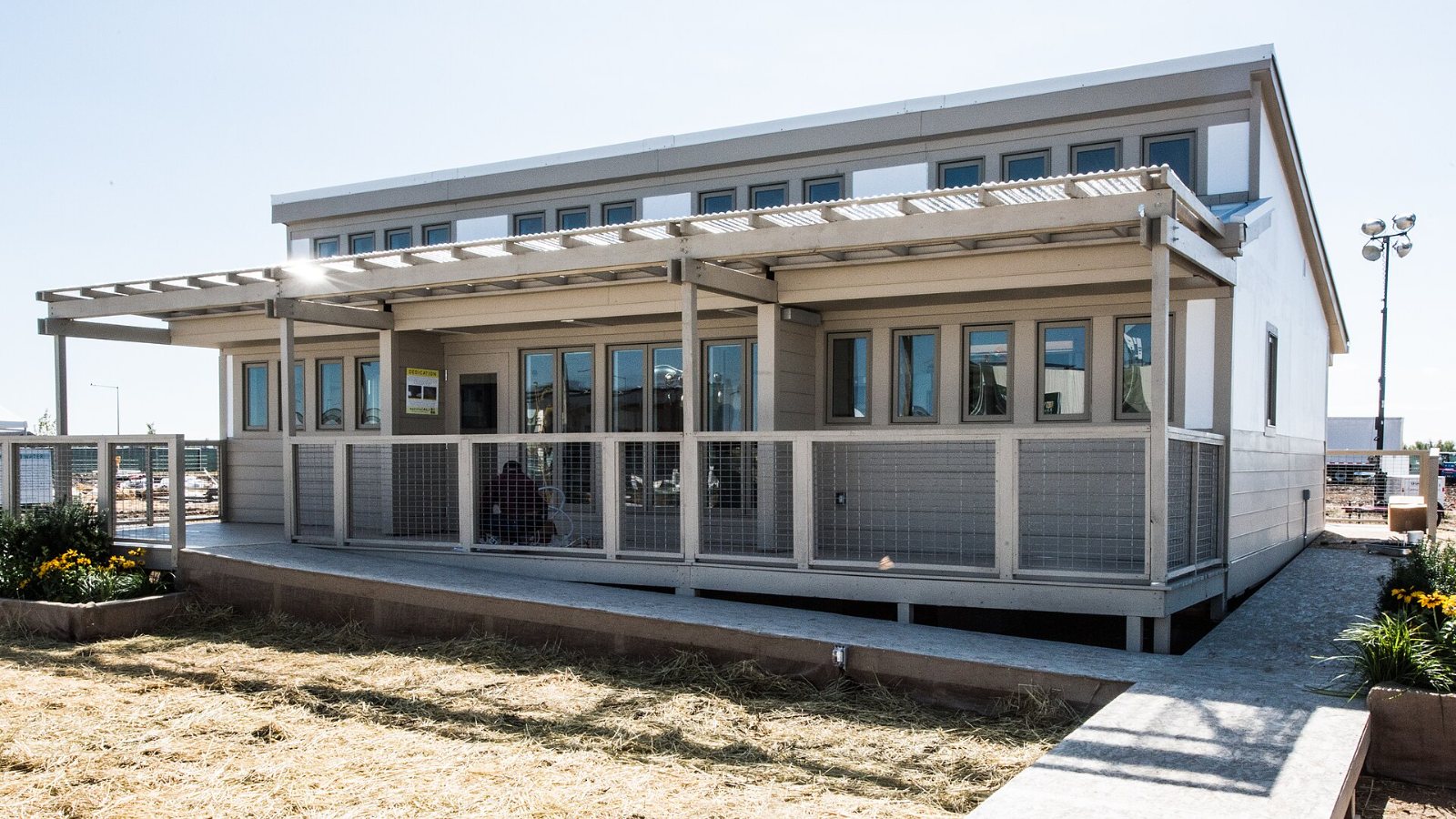
Cover photo: “SD2017 Gallery of Houses (37482565841)” by U.S. Department of Energy Solar Decathlon, public domain, via Wikimedia Commons.
Questions or a correction?
If something in this guide is unclear, out of date or does not match what your city told you, send me a message. Include the source if you have one.