The short answer: A pre-approved ADU plan is a building design a city or county has already reviewed, so staff check only your site-specific details instead of the whole design. California required every local agency to set up a pre-approval program by January 1, 2025, and gives cities 30 days to approve or deny a complete application for a detached ADU that uses a plan pre-approved in the current building code cycle. Pre-approval does not cover your lot, foundation or utility connections.
Last verified: October 26, 2026 · Written by Marc
This guide explains Government Code section 65852.27 and compares the official programs of several California cities and counties, with Seattle as an outside example. It is general information, not legal advice. Plan lists change often, so check your city’s page before you buy a plan.
Design is one of the slowest and most expensive parts of an ADU before construction starts. Pre-approved plans attack both: a design that has already passed code review costs less to adapt and moves through permitting faster. State law now requires every California city and county to offer one. But owners often expect more than a plan can deliver. A pre-approved design is approval of the building, not of your lot. This guide explains the law, what pre-approval covers, how programs compare and how to choose a plan.
What California law requires
The rule is Government Code section 65852.27, added by AB 1332 in 2023 and amended in 2024. It applies to all cities, including charter cities. Each local agency had to develop a pre-approval program by January 1, 2025, and the program must:
- accept ADU plan submissions for pre-approval, without restricting who may submit them;
- approve or deny each submission under the state ADU standards;
- post approved plans on the agency’s website, with the applicant’s contact information, and remove a plan within 30 days if its owner asks; and
- optionally, include plans the agency developed itself or plans that other California agencies have pre-approved.
The practical benefit is speed. Under section 65852.27(b), the city must approve or deny a complete application for a detached ADU within 30 days if it uses a plan the city pre-approved within the current three-year building code cycle, or a plan identical to one it already approved for a detached ADU in that cycle. Every other ADU application follows the general clock in section 66317: 15 business days to check completeness and 60 days to decide.
What pre-approval covers, and what it does not
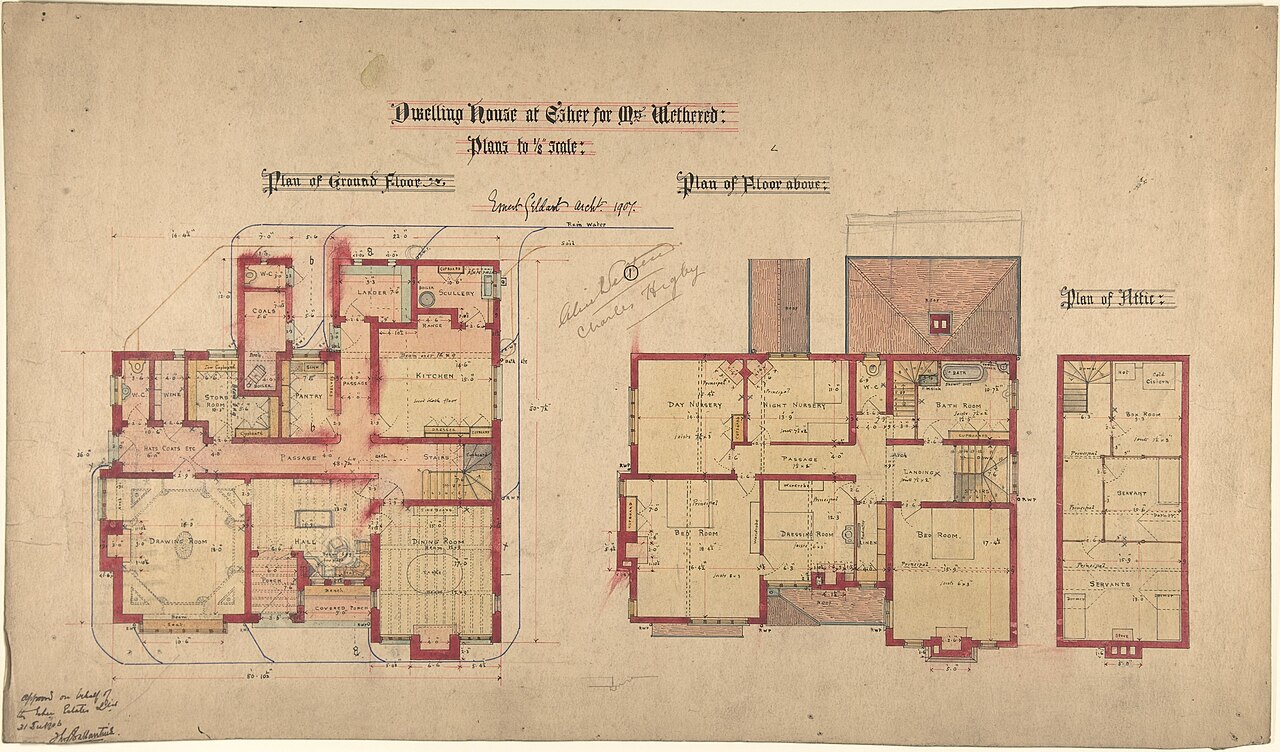
Oakland states the limit most clearly: its pre-approval covers the standardized design and Building Code compliance, and it “does not constitute approval for any specific property.” Los Angeles says the same in practice: its standard plans are checked against the building, residential and green codes, but reviewers still check your zoning and foundation. San Jose still requires site-specific documents showing where the ADU goes, the utility connections and setbacks.
| Usually covered by pre-approval | Still your responsibility |
|---|---|
| The building’s design and code compliance | Site plan for your lot |
| Structural design of the standard building | Foundation design for your soil and site |
| Energy and green-building design of the plan | Utility connections and their charges |
| Grading, drainage and site work | |
| City permit fees and other agency charges |
Treat a pre-approved plan as the building, not the project. Our guides to hidden ADU costs and ADU design costs show where the savings stop.
Common mistake: buying a pre-approved plan before checking your lot. Hazard zones, flood areas and zoning can rule a plan out before you start, and the plan’s savings do not help if the site needs a custom foundation or long utility runs.
California programs compared
These are the programs verified on official pages. Two are run by counties and apply only in unincorporated areas; inside a city, use the city’s program.
| Program | Plans offered | Stated benefit | Key limits |
|---|---|---|---|
| San Jose (Preapproved ADUs) | 12 detached configurations from 7 vendors, 476 to 991 sq ft | Same-day permit possible at the plan review meeting | Residential lot with a house or duplex; not in a geohazard, landslide, flood or WUI zone |
| Los Angeles (ADU Standard Plan Program) | Plans by private architects and engineers; LADBS posts a list | Shorter plan check, quicker permit | Zoning, foundation and site still reviewed; plans marked approved or expired |
| City of San Diego | Pre-approved plans listed on the city’s ADU page | 30-day review | Plans must comply with the municipal code; license cost set by the plan provider |
| Oakland | City plans for a studio, one bedroom and two bedrooms; outside designers can submit | Faster approval, reduced permit fee | Planning and building permits still required |
| San Diego County (unincorporated) | Plans A to F, 600 to 1,200 sq ft, about 85% complete | Ready-made drawings you complete with site information | Only outside city limits |
| Riverside County (unincorporated) | Free county standard plans | No plan cost | Single-family zoning; not in a flood hazard or environmental constraint area |
The City of San Diego also accepts permit-ready plans from San Diego County and Encinitas if they meet its submittal guidelines, which shows the option in state law to admit other agencies’ plans.
San Jose strongly advises having the vendor or contractor pull the permit, so liability for the work stays with the professional. Our guides to San Jose, Los Angeles and San Diego cover each city’s other rules.
Outside California: Seattle’s ADUniverse
Seattle’s pre-approved designs are listed on ADUniverse. The City’s 2026 submission guide says permits for one- and two-unit structures can issue in two to six weeks when the site has no environmentally critical area and no tree removal, with a reduced permit fee. It caps the licensing fee designers can charge at $1,500 per unit for residential-code plans. Our Seattle ADU fees guide covers the charges pre-approval does not remove.
How to choose a pre-approved plan
- Check your lot first: zoning, hazard zones, flood areas and setbacks.
- Confirm the plan is current: the 30-day clock applies only to plans pre-approved in the current building code cycle.
- Ask for the all-in price: plan fee, licensing fee and site-specific engineering.
- List what is excluded: foundation, site plan, grading, utility trenching and connection charges.
- Decide who pulls the permit: San Jose recommends the vendor or contractor.
- Check the unit against your goals: size, bedrooms and whether it stays at or under 750 sq ft for impact fees.
- Get a site-work bid before you commit to the plan.
Practical tip: Ask the city’s ADU staff which pre-approved plans have actually been permitted in your neighborhood. A plan that has already been adapted to lots like yours usually moves faster than one that has never been used locally.
Frequently asked questions
Do California cities have to offer pre-approved ADU plans?
Yes. Government Code section 65852.27 required each local agency to develop a pre-approval program by January 1, 2025, accept plan submissions from anyone, approve or deny them under the state ADU standards and post approved plans on its website. Agencies may also include their own plans or plans other California agencies have pre-approved.
How fast is a permit with a pre-approved plan?
For a detached ADU, a California city must approve or deny a complete application within 30 days if it uses a plan pre-approved in the current building code cycle. San Jose says a permit can be issued the same day as the plan review meeting when the site documents are complete. Other ADU applications follow the 60-day decision clock.
Does a pre-approved plan mean no review?
No. Reviewers still check your property, zoning, foundation and utility connections, and you must submit a site-specific plan. Oakland says its pre-approval does not constitute approval for any specific property. The review is shorter because the building itself has already been checked against the building codes.
Can I use a plan approved by another city?
Sometimes. State law lets a city include plans that other California agencies have pre-approved, but each city decides whether to do so. The City of San Diego, for example, accepts permit-ready plans from San Diego County and Encinitas if they meet its submittal guidelines. Ask your city before you buy a plan approved elsewhere.
Is a pre-approved plan cheaper?
Often. Riverside County’s plans are free, Oakland and Seattle say permit fees are lower, and design costs usually fall. One industry guide puts design fees with a pre-approved plan at about $2,000 to $5,000, against $10,000 to $25,000 for a standard custom design. Site work and connection charges still apply, so compare the all-in price.
The bottom line
Pre-approved ADU plans in California are designs a city has already reviewed, and state law requires every local agency to offer them. A complete application for a detached ADU using a current pre-approved plan must be decided within 30 days. The plan covers the building, not your lot: site plan, foundation, utilities and fees remain yours.
Your next step is to check your lot against the program’s limits, then compare two or three current plans by all-in price, including site work. Then estimate the rest of the budget with our ADU budget breakdown and the timeline with our ADU permit application checklist.
Sources
- Cal. Gov. Code § 65852.27
- Cal. Gov. Code § 66317
- City of San Jose: Preapproved ADUs
- LADBS: ADU page
- City of San Diego: Information Bulletin 400
- City of Oakland: Pre-Approved Plans
- San Diego County: Dwelling Unit Building Plans
- Riverside County: Permit Ready ADU
- City of Seattle: ADUniverse 2.0 submission guide
General information, not legal advice. Local rules vary and change; confirm with your planning department.
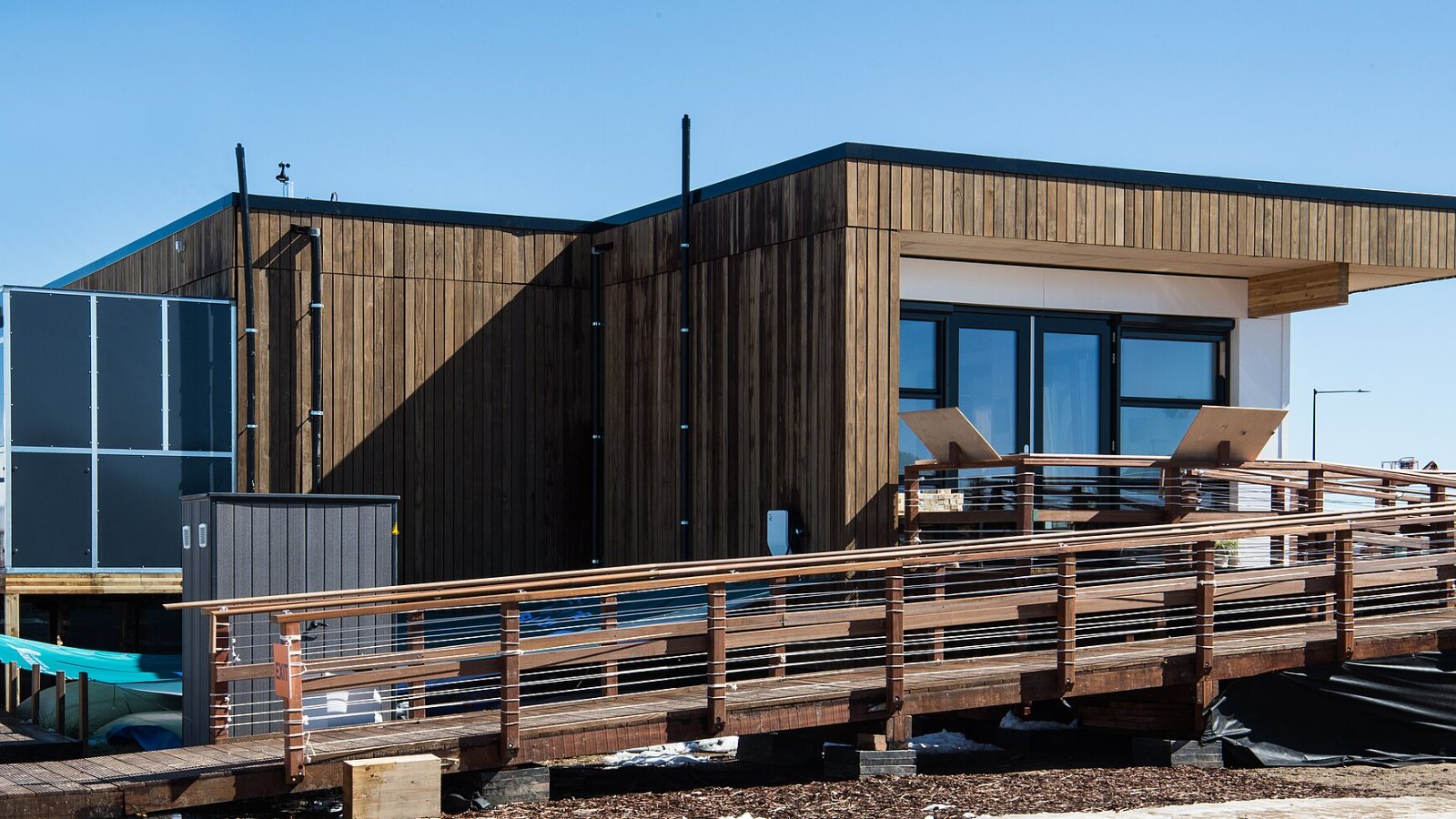
Cover photo: “Solar Decathlon SD17Gallery of Houses (37605654032)” by U.S. Department of Energy Solar Decathlon, public domain, via Wikimedia Commons.
Questions or a correction?
If something in this guide is unclear, out of date or does not match what your city told you, send me a message. Include the source if you have one.