The short answer: Building an ADU changes what your insurance has to cover, and renting it changes it again. Standard homeowners policies generally cover detached structures for about 10% of the insurance on the house, which may be far less than a new ADU costs. Triple-I also warns that a standard policy may not cover losses while your home is rented out, and that long-term rentals usually need a landlord or rental dwelling policy. Call your insurer before construction starts and again before a tenant moves in.
Last verified: October 29, 2026 · Written by Marc
This guide summarizes general insurance guidance from the Insurance Information Institute and California contract law, read on October 29, 2026. It is general information, not insurance or legal advice. Policies differ by company and state, so your policy wording and your agent decide what is covered.
Most ADU budgets list design, permits and construction, and few list insurance. Yet an ADU adds a building worth tens or hundreds of thousands of dollars to your lot, and often a tenant. A policy written for a house with a shed may not fit a house with a rented cottage. The good news is that the questions are predictable. This guide explains the parts of a homeowners policy an ADU touches, the three moments when you should call your insurer and a checklist for that call.
How a homeowners policy is organized
A homeowners policy has two main parts. California’s Department of Insurance describes Section I as property coverage and Section II as liability coverage. Within those, the pieces an ADU affects are:
| Coverage | What it does | How an ADU affects it |
|---|---|---|
| Dwelling | Repairs or rebuilds the house | An attached ADU or a conversion becomes part of the house |
| Other structures | Covers detached buildings such as garages and sheds | A detached ADU may fall here, with a limit often around 10% of the dwelling coverage |
| Personal property | Your belongings | A tenant’s belongings are not yours |
| Loss of use / additional living expenses | Extra costs if you cannot live at home after a covered loss | Triple-I notes it can also cover lost rent if you rent out part of your home |
| Liability | Injuries and damage you are legally responsible for | A tenant and their guests add people on the property |
The exact names and limits vary by policy. Your declarations page lists each coverage and its limit.
The other structures gap
Triple-I says standard policies generally cover detached structures for about 10% of the amount of insurance on the structure of the house. That works for a shed. It may not work for a new detached ADU.
Here is a hypothetical example. Your house is insured for $500,000 of dwelling coverage, so other structures coverage at 10% would be $50,000. You build a detached ADU that would cost $250,000 to replace. If the ADU were destroyed by a covered loss and the 10% limit applied, the policy would pay at most $50,000, leaving $200,000 uncovered.
How to close the gap depends on your insurer. Options may include raising the other structures limit, scheduling the ADU separately or insuring it under a different policy. Ask which approach your company uses.
Common mistake: assuming the new ADU is covered automatically because the house is insured. The policy may treat a detached unit as an “other structure” with a much smaller limit, and that limit was set long before the ADU existed. Ask for written confirmation of the limit that applies to the new unit.
When you rent the ADU
Renting changes the risk, and insurers price it differently. Triple-I’s guidance on renting out your home makes three points:
- A standard homeowners policy may not cover losses incurred while your home is rented out.
- For long-term leases, you will likely need a landlord or rental dwelling policy.
- Most landlord policies cover loss of rental income if a covered loss means you cannot rent the property while it is repaired, usually for a limited period.
Landlord policies also include liability coverage. Triple-I notes that if a tenant or a guest is hurt on the property, it can cover legal fees and medical expenses. Your tenant’s own belongings are generally the tenant’s responsibility, which is one reason many landlords ask tenants to carry renters insurance. Whether you can require it depends on your lease and local law.
Three moments to call your insurer
- Before construction starts. Ask how the policy treats a building under construction on your lot, whether your liability coverage applies to work on site and whether the builder must carry any coverage for the project.
- When the ADU is finished. Report the new building and its replacement cost, and confirm which coverage and limit now apply to it.
- Before a tenant moves in. Tell your insurer the unit will be rented and ask whether you need a landlord endorsement or a separate policy.
A fourth call is worth making if you change how the unit is used, for example from a parent living there to a paying tenant, or to short-term guests where local law allows it.
The contractor’s insurance
The contractor’s insurance protects you during construction. In California, a home improvement contract must include notices on commercial general liability insurance and on workers’ compensation insurance (Business and Professions Code § 7159). The contract must say whether the contractor carries liability insurance, and with which company, and whether it carries workers’ compensation for its employees or has none.
Ask for proof of both before work starts and call the insurer named in the contract to confirm the policy. The license board’s notice in every contract also warns that if you use an unlicensed contractor, you may be liable for injuries to that contractor’s workers. Our guide to checking an ADU contractor’s license shows how to verify both.
What a standard policy does not cover
Some risks need separate coverage whether or not you build an ADU. Triple-I says a standard policy will not pay for damage caused by a flood, an earthquake or routine wear and tear. If your area faces either risk, ask whether flood or earthquake coverage should extend to the ADU as well as the house.
Liability limits also deserve a second look. Triple-I says liability limits generally start at about $100,000 and suggests talking with an insurance professional about higher limits or an umbrella policy if you have significant assets. A rental unit adds people to your property, which is a reason to review the limit.
Practical tip: Before you call, write down the ADU’s square footage, construction type, replacement cost estimate, whether it is attached or detached, who will live there and whether it has its own utility meters. Insurers ask these questions, and a written summary makes quotes easier to compare.
A checklist for your insurance review
- Which coverage applies to the ADU: dwelling or other structures?
- What is the limit, and does it cover the ADU’s replacement cost?
- Is the policy still valid once the unit is rented?
- Do you need a landlord endorsement or a separate landlord policy?
- Does the policy cover lost rent after a covered loss, and for how long?
- What liability limit applies, and would an umbrella policy make sense?
- Are flood and earthquake covered, or do you need separate policies?
- How does the premium change, and does the lender require anything?
Your lender may also have insurance requirements for a loan secured by the property. Our guide to ADU construction loans explains how lenders handle the project.
Frequently asked questions
Does homeowners insurance cover an ADU?
It may, but often not fully. An attached ADU or a conversion is usually part of the house. A detached ADU may fall under other structures coverage, which Triple-I says is generally about 10% of the insurance on the house. That limit may be lower than the ADU’s replacement cost, so ask your insurer how it covers the new unit.
Do I need landlord insurance for a rented ADU?
Often, yes. Triple-I says a standard homeowners policy may not cover losses while your home is rented out and that long-term leases usually need a landlord or rental dwelling policy. Some insurers handle it with an endorsement on your homeowners policy. Tell your insurer before the tenant moves in and get the answer in writing.
Does insurance cover lost rent if the ADU is damaged?
Many landlord policies do. Triple-I says most landlord policies cover loss of rental income when a covered loss prevents you from renting the property during repairs, usually for a limited period. Standard homeowners coverage for additional living expenses can also cover lost rent when you rent out part of your home. Check your policy’s limits and time period.
Will an ADU raise my insurance premium?
It usually adds something, because there is more property to insure and, if you rent, more people on the lot. How much depends on the insurer, the ADU’s value and construction, its location and the coverage you choose. Ask for quotes before construction ends so the cost goes into your budget and rent calculation.
Does the contractor’s insurance protect me during construction?
It can help. California home improvement contracts must say whether the contractor carries commercial general liability insurance and workers’ compensation for employees. Ask for proof of both and confirm with the insurer. Your own insurer should also tell you how your policy treats construction on your property.
The bottom line
ADU insurance needs attention at three moments: before construction, when the unit is finished and before you rent it. Standard policies often cover detached structures at about 10% of the house’s insurance, which may not cover a new ADU’s replacement cost, and Triple-I warns that a standard policy may not cover losses while a home is rented. Long-term rentals usually need landlord coverage.
Your next step is to call your insurer with the ADU’s details and get the coverage, limits and premium in writing. Then add the premium to your ADU budget and to the costs you use to set the rent.
Sources
- Triple-I: What is covered by standard homeowners insurance?
- Triple-I: Coverage for renting out your home
- California Department of Insurance: Residential insurance, homeowners and renters
- Cal. Bus. & Prof. Code § 7159 (contract insurance notices)
General information, not legal or financial advice. Rules and prices change; confirm with the agency or professional involved.
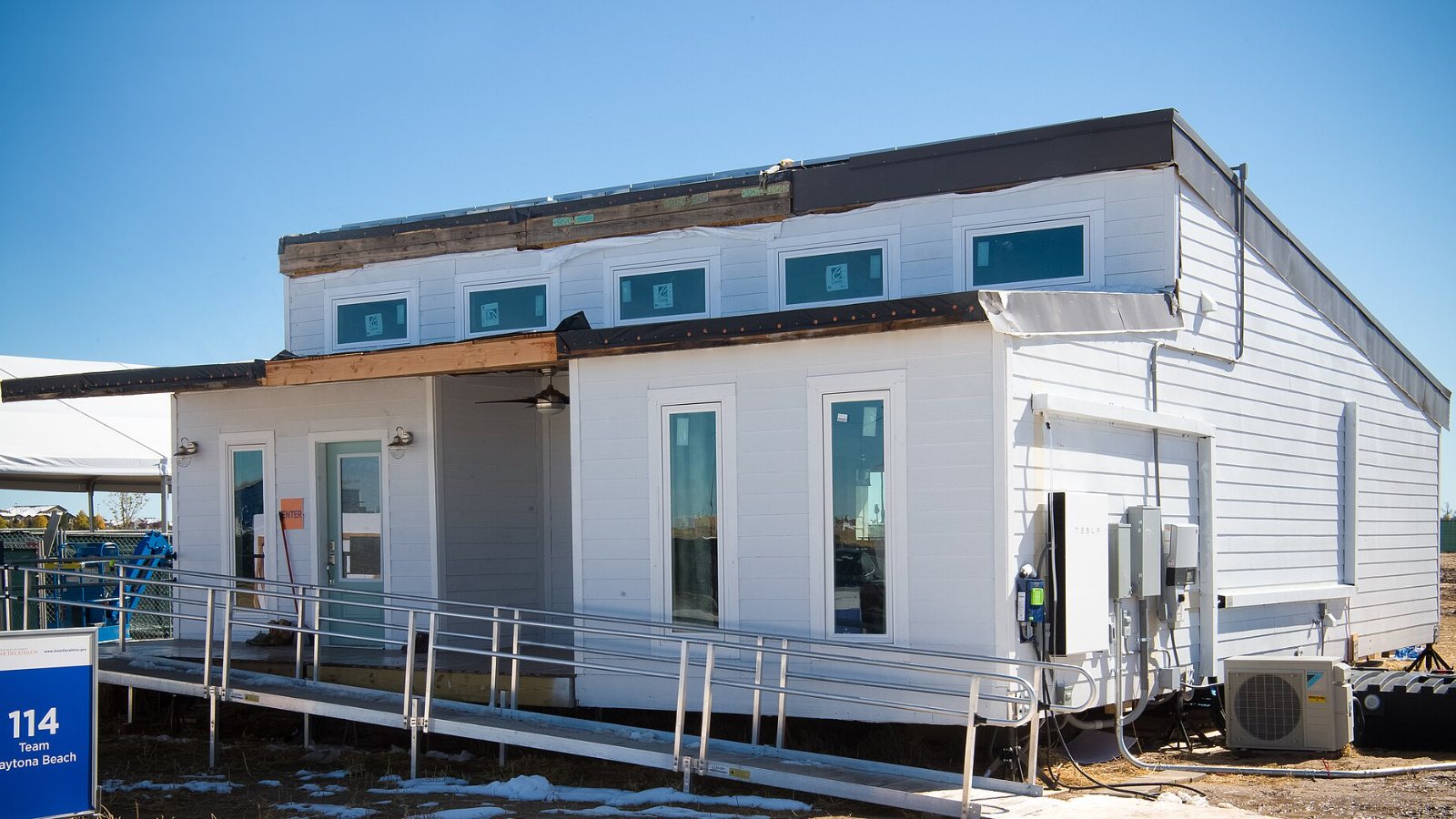
Cover photo: “Solar Decathlon SD17Gallery of Houses (36970854613)” by U.S. Department of Energy Solar Decathlon, public domain, via Wikimedia Commons.
Questions or a correction?
If something in this guide is unclear, out of date or does not match what your city told you, send me a message. Include the source if you have one.