The short answer: Vermont law, 24 V.S.A. § 4412(1)(E), bars any bylaw that excludes, as a permitted use, one ADU within or appurtenant to a single-family home, outside flood hazard and river corridor areas. A home with an ADU must face the same review and dimensional rules as a home without one. Under the state definition, the ADU can be up to 30% of the home’s habitable floor area or 900 sq ft, whichever is greater, and the property needs sufficient wastewater capacity.
Last verified: October 29, 2026 · Written by Marc
This guide summarizes 24 V.S.A. §§ 4303 and 4412 as published by the Vermont Legislature on October 29, 2026. It is general information, not legal advice. Your town’s zoning bylaw applies the rule, so confirm the details with your zoning administrator.
Vermont’s ADU rule predates the recent wave of state ADU laws, and the 2023 HOME Act (Act 47) and a 2024 law (Act 181) both amended the section that contains it. The structure is simple: the state does not tell towns everything an ADU can be, it tells them what they cannot do, which is treat a home with an ADU more harshly than a home without one. The details sit in two places, the definition of an ADU and the zoning rule. This guide walks through both, with a worked example on the size rule.
The core rule: a permitted use
Section 4412(1)(E) says no bylaw shall have the effect of excluding, as a permitted use, one ADU located within or appurtenant to a single-family dwelling. “Permitted use” means the town approves it under its ordinary standards rather than through a discretionary review such as a conditional use hearing.
The only exception in that paragraph is for flood hazard and fluvial erosion areas regulated under section 4424. Inside those areas, the town’s flood bylaws still decide.
Two more rules in the same paragraph protect owners:
- Equal treatment: a single-family home with an ADU must be subject to the same review, dimensional or other controls as a single-family home without one.
- Conversions: the criteria for converting an existing detached nonresidential building, such as a barn or garage, into ADU space cannot be more restrictive than the criteria for a single-family home without an ADU.
What counts as an ADU: the 30% or 900 sq ft rule
Section 4303(38) defines an ADU as a distinct unit that is clearly subordinate to a single-family dwelling and has facilities for independent living, including sleeping, food preparation and sanitation. Two conditions apply:
- The property has sufficient wastewater capacity.
- The unit does not exceed 30% of the total habitable floor area of the single-family dwelling, or 900 sq ft, whichever is greater.
“Whichever is greater” is the opposite of many other states, where the smaller number wins. In Vermont, the 900 sq ft figure is a floor for the size the definition allows.
| Habitable floor area of the house | 30% of the house | Size allowed by the definition |
|---|---|---|
| 1,500 sq ft | 450 sq ft | Up to 900 sq ft |
| 3,000 sq ft | 900 sq ft | Up to 900 sq ft |
| 4,000 sq ft | 1,200 sq ft | Up to 1,200 sq ft |
So a modest house can still have an ADU of up to 900 sq ft, and a larger house can have a larger one. Towns can adopt bylaws that are less restrictive, under section 4412(1)(F).
A worked example shows how the pieces fit. Take a hypothetical 1,800 sq ft farmhouse on a septic system, with an old barn. Thirty percent of the house is 540 sq ft, so the definition allows an ADU of up to 900 sq ft. If the owner converts part of the barn, the town cannot apply conversion criteria stricter than those for a single-family home without an ADU. The deciding question is wastewater: the septic system has to have enough capacity for the added unit, or be upgraded, before the barn space counts as an ADU under the state definition.
Common mistake: applying another state’s “lesser of” size rule in Vermont. Here the definition uses “whichever is greater,” so on a 1,500 sq ft house the ADU can be up to 900 sq ft, not 450.
Owner occupancy: what the current definition says
Older summaries of Vermont law describe ADUs on owner-occupied lots, and the protection has been read that way in the past. The current definition in section 4303(38) does not include an owner-occupancy condition. Its only two conditions are wastewater capacity and size.
That does not settle every local question. Your town’s bylaw may still contain older language, and the state’s equal-treatment rule means the ADU follows the same controls as the house. Ask your zoning administrator whether the bylaw has been updated since the 2023 and 2024 amendments, and which version it applies.
Wastewater capacity in practice
Because sufficient wastewater capacity is part of the definition, it is not a side issue in Vermont. A unit that the property’s wastewater system cannot serve is not an ADU for the purposes of the state protection.
For a lot on a municipal sewer, capacity usually means confirming the connection with the sewer department. For a lot on a septic system, it means showing the system can handle the added flow, or upgrading it. Wastewater review may sit outside the zoning office, so ask your town which office checks capacity before you finalize plans.
Practical tip: On a septic lot, find your existing wastewater permit first. The capacity it allows is often the deciding factor for whether, and how large, an ADU can be, and it is cheaper to learn that before you design.
Our guide to building an ADU on a septic system explains why capacity matters so much.
Short-term rentals and local rules
Section 4412(1)(F) keeps two local powers in place. A town may adopt a bylaw that is less restrictive for ADUs than the state rule, and it may regulate short-term rentals separately from other residential rentals. If you plan nightly rentals, the town’s short-term rental rules decide, not the ADU protection.

How to check your Vermont lot
- Check flood and river corridor status: inside those areas, the town’s flood bylaws apply.
- Measure the home’s habitable floor area and apply the 30% or 900 sq ft rule.
- Confirm wastewater capacity with the sewer department or your septic permit.
- Read the town bylaw for any older ADU language.
- Check conversion rules if you plan to use a barn or garage.
- Check short-term rental rules if relevant.
- Get the zoning administrator’s answer in writing.
Frequently asked questions
Do Vermont towns have to allow ADUs?
Yes. Under 24 V.S.A. § 4412(1)(E), no bylaw can exclude, as a permitted use, one ADU within or appurtenant to a single-family dwelling, except in flood hazard and fluvial erosion areas regulated under section 4424. A home with an ADU must face the same review and dimensional controls as a home without one.
How big can an ADU be in Vermont?
Under the definition in 24 V.S.A. § 4303(38), an ADU cannot exceed 30% of the total habitable floor area of the single-family dwelling or 900 sq ft, whichever is greater. That means any house can have an ADU of up to 900 sq ft, and a house of more than 3,000 sq ft can have a larger one. Towns may adopt less restrictive bylaws.
Do I have to live in the house to have an ADU in Vermont?
The current definition of an ADU in section 4303(38) does not include an owner-occupancy condition; its conditions are wastewater capacity and size. Older descriptions of Vermont law refer to owner-occupied homes, and some town bylaws may still use that language. Ask your zoning administrator which version of the bylaw applies to your lot.
Can I convert a barn into an ADU in Vermont?
Section 4412(1)(E) says the criteria for converting an existing detached nonresidential building into ADU space cannot be more restrictive than the criteria for a single-family home without an ADU. A barn, garage or shed conversion is therefore reviewed on the same terms as the house. The unit still needs sufficient wastewater capacity and must meet building and safety codes.
Can a Vermont town limit Airbnb rentals of an ADU?
Yes. Section 4412(1)(F) says the ADU rule does not prevent a town from adopting a bylaw that regulates short-term rentals separately from residential rentals. Long-term rentals follow the ADU protection, but nightly or weekly rentals follow the town’s short-term rental rules, which vary from town to town.
The bottom line
Vermont ADU law protects one ADU within or next to a single-family home as a permitted use, outside flood and river corridor areas, and requires towns to treat a home with an ADU the same as one without. The state definition allows an ADU of up to 30% of the house or 900 sq ft, whichever is greater, and requires sufficient wastewater capacity. Short-term rentals stay local.
Your next step is to measure your home’s habitable floor area, confirm wastewater capacity and ask your zoning administrator whether the bylaw reflects the current state definition. Compare Vermont with its neighbors in ADU laws by state and in our Maine ADU law guide.
Sources
General information, not legal advice. Local rules vary and change; confirm with your planning department.
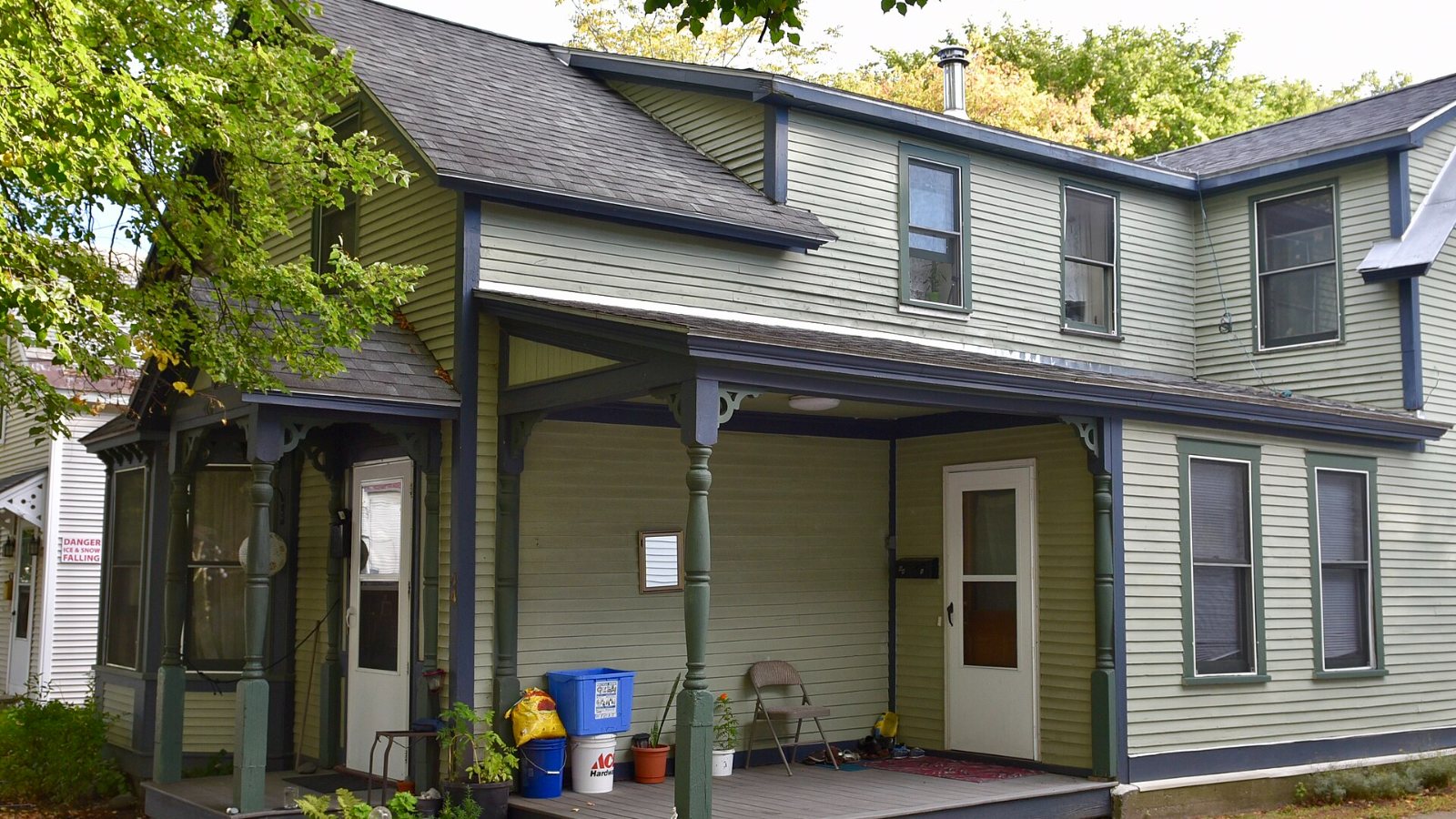
Cover photo: “The House at 44 Front Street Burlington, VT” by Jim Roberts, CC BY-SA 4.0, cropped, via Wikimedia Commons.
Questions or a correction?
If something in this guide is unclear, out of date or does not match what your city told you, send me a message. Include the source if you have one.