The short answer: Sometimes. In California, a city cannot use its front setback rule to block an ADU of at least 800 sq ft with 4-foot side and rear setbacks, so if nothing else fits, the unit may sit in the front setback. San Diego applies this by letting one ADU of up to 800 sq ft encroach into the front setback. Other places go the opposite way: Portland requires a detached ADU to sit 40 feet back from the front lot line or behind the house. Everywhere, the local code still decides the details.
Last verified: October 29, 2026 · Written by Marc
This guide explains California’s state rule and how a few other states and cities treat front yards. It is general information, not legal advice. Front-yard rules are often written into local design and zoning codes, so confirm your lot with your planning department.
Most ADUs go in the backyard, but many lots do not have one worth the name. Corner lots, shallow lots and homes set far back on their parcel often have more space in front than behind. Whether that space can hold an ADU depends on one question: is the front setback a rule your city can use against an ADU? In California, often not. In other states, the answer varies. This guide walks through the California rule, its limits, how other places compare and how to check your own lot.
The California rule
Section 66321(b)(3) lists what a city “shall not establish by ordinance.” It includes any limit on “lot coverage, floor area ratio, open space, front setbacks, and minimum lot size” that does not permit an ADU with at least 800 sq ft of interior livable space and with 4-foot side and rear setbacks “to be constructed in compliance with all other local development standards.”
Read it in order:
- A city can have a front setback.
- It cannot use that setback, or lot coverage, FAR or open space, to make an 800 sq ft ADU with 4-foot side and rear setbacks impossible.
- The ADU must still comply with “all other local development standards,” such as height, design and fire rules.
HCD’s handbook summarizes the practical result: cities cannot use front-setback rules to block that unit, and if nothing else fits, the ADU may sit in the front setback. The state-mandated detached ADU in section 66323(a)(2) carries the same protection: it needs no more than 4-foot side and rear setbacks, and the city may cap it at 800 sq ft.
| Situation in California | Can the ADU use the front setback? |
|---|---|
| An 800 sq ft ADU fits behind or beside the house | Usually no; the city can require it to go there |
| Only the front area can fit an 800 sq ft ADU with 4-foot side and rear setbacks | Yes, the front setback cannot be used to block it |
| You want a unit larger than 800 sq ft in the front | Depends on the local ordinance |
| A garage already in the front setback is converted | The existing structure can be converted in place |
Common mistake: assuming the rule gives you a choice. The protection exists so that an 800 sq ft ADU always fits somewhere. If your backyard can hold it, a city can generally keep the unit out of the front setback.
How San Diego applies it
San Diego’s January 2026 bulletin turns the state rule into a clear local standard. On any lot, one ADU of up to 800 sq ft may exceed the floor-area ratio and may encroach into the front setback. Front and street-side yards otherwise follow the base zone.
That makes San Diego a good example of the size line. An 800 sq ft unit can use the front setback; a larger unit has to meet the base zone’s front setback. If you are designing a front-yard ADU there, 800 sq ft is the number to design to. Our San Diego ADU rules guide covers the rest of the city’s standards.
Converting a garage that already sits in front
Many California homes have a garage at the front of the lot, sometimes inside today’s front setback. State law lets you convert it without moving it. A conversion within existing space needs no new setback, and an existing structure rebuilt in the same location and dimensions keeps its position.
A hypothetical example: a 1960s house has a detached two-car garage 10 feet from the street, where today’s code requires 20 feet. Converting that garage into an ADU uses the existing building, so the front setback does not force it back. The city also cannot require you to replace the garage parking you convert. Our guide to garage conversion ADUs covers the costs.
Practical tip: If your lot has an existing garage near the street, price a conversion before a new front-yard ADU. It avoids the front-setback question entirely, along with new foundations and most of the parking rules.
Other states and cities
Outside California, the answer depends on whether the state ties ADU setbacks to the main house.
- Washington: inside urban growth areas, cities cannot apply setbacks to ADUs that are stricter than those for the main house. An ADU generally follows the same front setback as the house, so it cannot be placed closer to the street than the house could.
- Colorado: in covered jurisdictions, side setbacks cannot exceed those for the main house, and rear setbacks are capped at 5 feet or the accessory standard. The statute does not open the front setback.
- Portland, Oregon: a detached ADU must be set back 40 feet from the front lot line or located behind the rear wall of the main house, so front-yard detached ADUs are largely ruled out.
Our guide to ADU setback requirements compares those rules in more detail.
Design and practical limits
Even where the law allows a front-yard ADU, other rules shape it:
- Height and design: the state height floor of 16 feet for a detached ADU applies. A unit approved under your city’s ordinance can still face objective design standards, while a state-mandated unit under section 66323 is protected from standards that section does not authorize.
- Fire access: a front-yard unit is often easier to reach, which can help with access rules such as San Jose’s 150-foot path from the curb.
- Utilities: where the lines run from the street, a front ADU can mean shorter trenches, which our guide to hidden ADU costs shows can save thousands.
- Driveways and sight lines: traffic visibility rules near driveways and corners are separate from ADU law.
- HOAs: covenants can still restrict front-yard structures in states without an HOA override.
How to check your front yard
- Measure the backyard and side yards. Can an 800 sq ft ADU with 4-foot side and rear setbacks fit anywhere else?
- Check for an existing structure in front, such as a garage, that you could convert.
- Read your city’s ADU ordinance for any front-setback provision, like San Diego’s.
- Check the base zone’s front setback if your unit will be larger than 800 sq ft.
- Check overlays such as historic districts or the coastal zone.
- Check your HOA documents.
- Get the answer in writing before you design.
Frequently asked questions
Can I put an ADU in my front yard in California?
Sometimes. Under Government Code section 66321(b)(3), a city cannot use front-setback rules to block an ADU of at least 800 sq ft with 4-foot side and rear setbacks. If no other location on the lot can fit that unit, it may sit in the front setback. If the backyard can fit it, the city can generally require it there.
How big can a front-yard ADU be?
The state protection covers a unit of at least 800 sq ft of interior livable space with 4-foot side and rear setbacks. A larger unit in the front setback depends on your city’s ordinance. San Diego, for example, lets one ADU of up to 800 sq ft encroach into the front setback, while larger units must meet the base zone’s front setback.
Can I convert a garage that sits in the front setback?
Generally yes. A conversion within existing space needs no new setback under California law, and an existing structure rebuilt in the same location and dimensions keeps its position. The converted ADU also needs no parking, and the city cannot require you to replace the garage spaces. The conversion still has to meet building and fire codes.
Can an HOA stop a front-yard ADU?
In California, Civil Code section 4751 voids covenants that effectively prohibit or unreasonably restrict ADUs on single-family lots, but reasonable rules on placement and appearance can survive. In states without a similar law, the HOA’s covenants can still restrict front-yard structures. Our guide to whether an HOA can block an ADU explains the state differences.
Are front-yard ADUs allowed outside California?
It depends on the state and city. Washington ties ADU setbacks to the main house inside urban growth areas, Colorado limits side and rear setbacks but not the front, and Portland requires detached ADUs to be 40 feet from the front lot line or behind the house. Read your local code, because front setbacks are usually set locally.
The bottom line
You can build an ADU in your front yard in California when no other location fits an 800 sq ft unit with 4-foot side and rear setbacks, because a city cannot use its front setback to block that unit. San Diego lets one ADU of up to 800 sq ft encroach into the front setback. Elsewhere, front setbacks usually still apply, and Portland largely rules front-yard detached ADUs out.
Your next step is to measure whether an 800 sq ft unit fits behind or beside your house, and check for an existing garage you could convert instead. Then read ADU setback requirements and run our 5-step property check.
Sources
- Cal. Gov. Code § 66321
- Cal. Gov. Code § 66323
- HCD: ADU Handbook (March 2026)
- City of San Diego: Information Bulletin 400
- City of Portland: ADU zoning requirements
- MRSC: Accessory Dwelling Units (Washington)
General information, not legal advice. Local rules vary and change; confirm with your planning department.
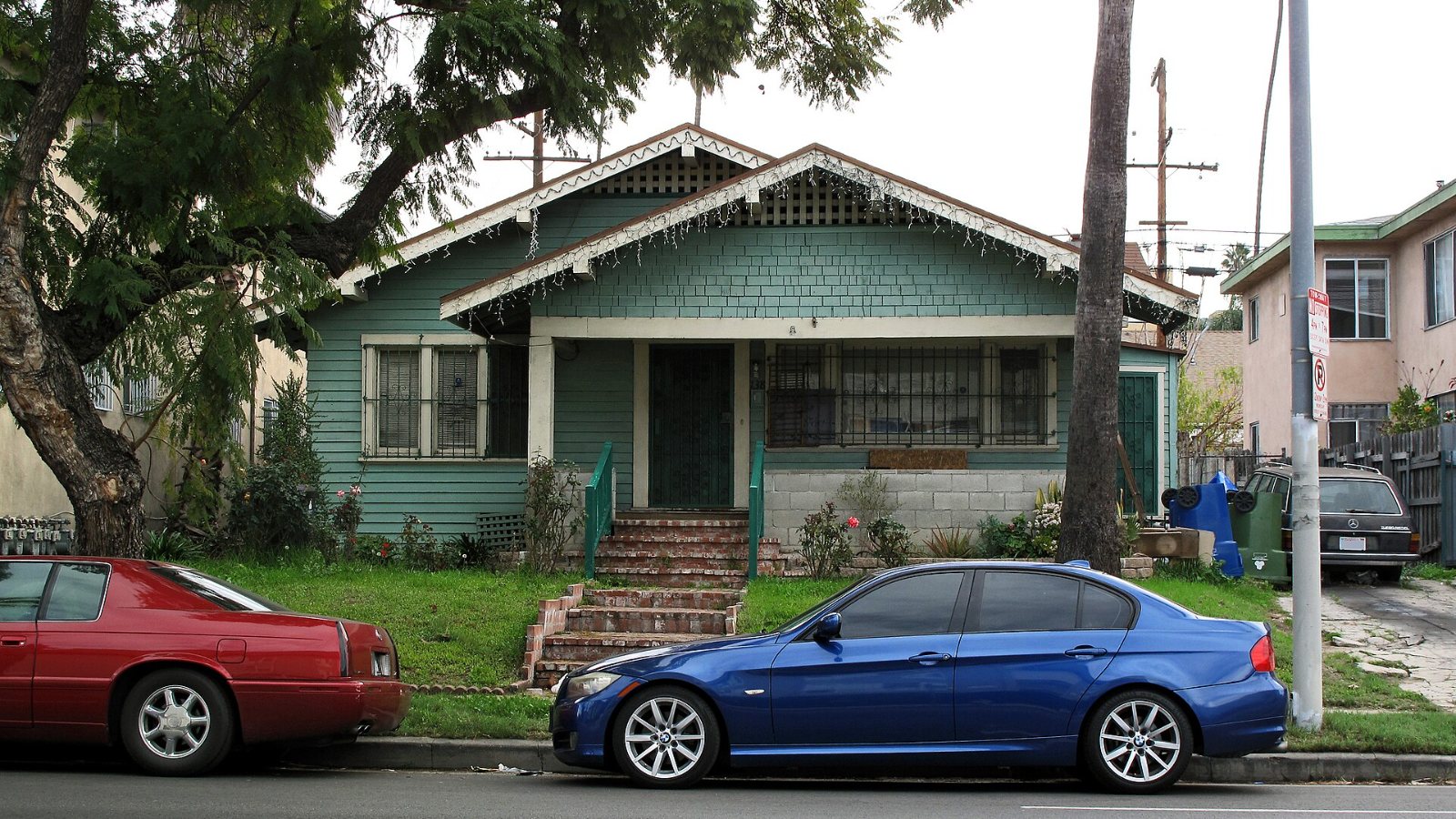
Cover photo: “138 N Normandie bungalow, Los Angeles” by Downtowngal, CC BY-SA 4.0, cropped, via Wikimedia Commons.
Questions or a correction?
If something in this guide is unclear, out of date or does not match what your city told you, send me a message. Include the source if you have one.