The short answer: Utah’s state ADU law covers internal ADUs, units created within a primary dwelling. Under Utah Code § 10-21-303, in effect since November 6, 2025, an internal ADU is a permitted use in areas zoned primarily for residential use, and a municipality cannot restrict its size relative to the house, lot size, street frontage or internal connectivity. But the law lets cities require one extra parking space, bar internal ADUs on lots of 6,000 sq ft or less, ban rentals under 30 days and prohibit renting one unless the home is the owner’s primary residence.
Last verified: October 29, 2026 · Written by Marc
This guide summarizes Utah Code § 10-21-303 as published by the Utah Legislature on October 29, 2026. It is general information, not legal advice. The statute lists what a municipality “may” do, so your city’s ordinance decides which options apply.
Utah’s ADU law is narrower than those in Western states such as Washington, Oregon or Montana. It does not guarantee backyard cottages. Instead, it protects one type of unit: the internal ADU, such as a basement apartment, inside a single-family home. Within that scope, it removes several common barriers but leaves cities a long list of tools, including an owner-occupancy rule for rentals. This guide explains what the law guarantees, what cities can still require and how to check your lot.
What the law protects
Section 10-21-303(1) applies in any area zoned primarily for residential use. In those areas:
- Permitted use: “the use of an internal accessory dwelling unit is a permitted use.”
- No restrictions on four points: except as the statute allows, a municipality may not establish restrictions or requirements for one internal ADU within a primary dwelling, including restrictions governing its size in relation to the house, total lot size, street frontage or internal connectivity.
- Equal design treatment: a municipality’s regulation of architectural elements for internal ADUs “shall be consistent with the regulation of single-family units, including single-family units located in historic districts.”
The unit must also comply with all applicable building, health and fire codes.
The statute covers internal ADUs only. Detached cottages and additions are left to local zoning.
What cities may still require
Subsection (3) gives municipalities a list of options. These are the ones owners meet most often:
| A municipality may | What it means for you |
|---|---|
| Prohibit a separate utility meter | The ADU may have to share the house’s meter |
| Require that the home keeps the appearance of a single-family dwelling | No visible second front door, for example |
| Require one additional on-site parking space | Unless the city already requires four off-street spaces |
| Require replacing garage or carport parking | If the ADU is built in the garage or carport and is habitable |
| Require a rental permit or license | A permit to rent the internal ADU |
| Prohibit internal ADUs on lots of 6,000 sq ft or less | Small lots can be excluded |
| Prohibit internal ADUs where the septic tank is failing | The system must work |
| Prohibit rentals of less than 30 consecutive days | No nightly rentals |
| Prohibit renting it unless the home is the owner’s primary residence | Owner occupancy to rent |
| Prohibit internal ADUs in mobile homes | As defined in state law |
The statute also lets a city exclude internal ADUs from zoning districts covering up to 25% of its residentially zoned area, or up to 67% in a city with a large university campus, with protections for some newer subdivisions.
Common mistake: assuming Utah bars owner-occupancy rules like many Western states. Section 10-21-303 lets a municipality prohibit renting an internal ADU in a home that is not the owner’s primary residence. If you plan to rent while living elsewhere, check your city’s ordinance first.
Enforcement: notices and liens
Utah’s law includes an unusual enforcement section. A municipality may hold a lien against a property with an internal ADU if the owner violates the statute or a related ordinance, after a written notice of violation and a chance to cure it:
- Cure period: at least 14 days for renting or offering to rent the unit for less than 30 consecutive days, and at least 30 days for other violations.
- Hearing: if the owner files a written objection, the city must hold a hearing before recording a lien.
- Amount: up to $100 for each day of violation after the cure period ends.
- No penalty if cured: an owner who cures the violation in time cannot be charged a lien, penalty or fee for it.
Cities that issued a permit or rental license for an internal ADU on or after October 1, 2021, may also record a notice of the ADU with the county recorder.
Practical tip: If you rent an internal ADU in Utah, keep the city’s rental permit and your leases on file and write leases of at least 30 consecutive days. The statute’s shortest cure period, 14 days, applies to short-term rentals, so that is where violations move fastest.
A worked example
Take a hypothetical home on a 7,500 sq ft lot in a residential zone, with a finished basement the owner wants to turn into an internal ADU.
- Permitted use: yes, the internal ADU is a permitted use.
- Size: the city cannot restrict its size relative to the house.
- Lot size: at 7,500 sq ft, the lot is above the 6,000 sq ft threshold the city could use to exclude it.
- Parking: the city may require one extra on-site space.
- Rental: the city may require a rental license, ban stays under 30 days and require the owner to live in the home to rent the ADU.
- Meter and appearance: the city may require a shared meter and no change to the single-family appearance.
How to check your Utah lot
- Confirm the zoning is primarily residential.
- Measure the lot: 6,000 sq ft or less can be excluded.
- Plan an internal unit, inside the existing home.
- Read the city ordinance for parking, meters, appearance and rental rules.
- Check the septic system if you are not on sewer.
- Ask about rental licenses and owner occupancy.
- Get the answers in writing.
Frequently asked questions
Does Utah allow ADUs by right?
For internal ADUs, yes: in areas zoned primarily for residential use, Utah Code § 10-21-303 makes an internal ADU a permitted use, and the city cannot restrict its size relative to the house, lot size, street frontage or internal connectivity, except as the statute allows. Detached ADUs and additions are not covered by this section and depend on local zoning.
Do I have to live in the house to rent an internal ADU in Utah?
You might. The statute lets a municipality prohibit the rental of an internal ADU located in a dwelling that is not occupied as the owner’s primary residence. If your city has adopted that rule, you must live in the home to rent the ADU. Check your city’s ordinance before you plan a rental.
Can a Utah city require parking for an internal ADU?
Yes, one additional on-site space, on top of the parking the city already requires, unless the city’s ordinance already requires four off-street spaces. If you build the ADU in a garage or carport and it becomes habitable space, the city may also require you to replace those parking spaces.
Can I build an internal ADU on a small lot in Utah?
Not necessarily. Section 10-21-303 lets a municipality prohibit internal ADUs on lots of 6,000 sq ft or less. Cities can also exclude them from zoning districts covering up to 25% of their residentially zoned area, or up to 67% where a large university campus is located. Check your lot size and zoning district first.
Can I rent an internal ADU on Airbnb in Utah?
Usually not. The statute lets a municipality prohibit renting or offering to rent an internal ADU for less than 30 consecutive days, and it gives cities a shorter cure period, at least 14 days, for that violation before a lien of up to $100 a day can apply. Check your city’s short-term rental rules before you list.
The bottom line
Utah ADU law protects internal ADUs: in residential zones they are a permitted use, and cities cannot restrict their size relative to the house, lot size, frontage or internal connectivity. But cities may require an extra parking space, shared meters, a rental license and owner occupancy to rent, exclude lots of 6,000 sq ft or less and ban rentals under 30 days, with liens of up to $100 a day for uncured violations.
Your next step is to measure your lot, read your city’s internal ADU ordinance and ask whether it requires owner occupancy to rent. Compare Utah with other Western states in ADU laws by state and in our Montana ADU law guide.
Sources
General information, not legal advice. Local rules vary and change; confirm with your planning department.
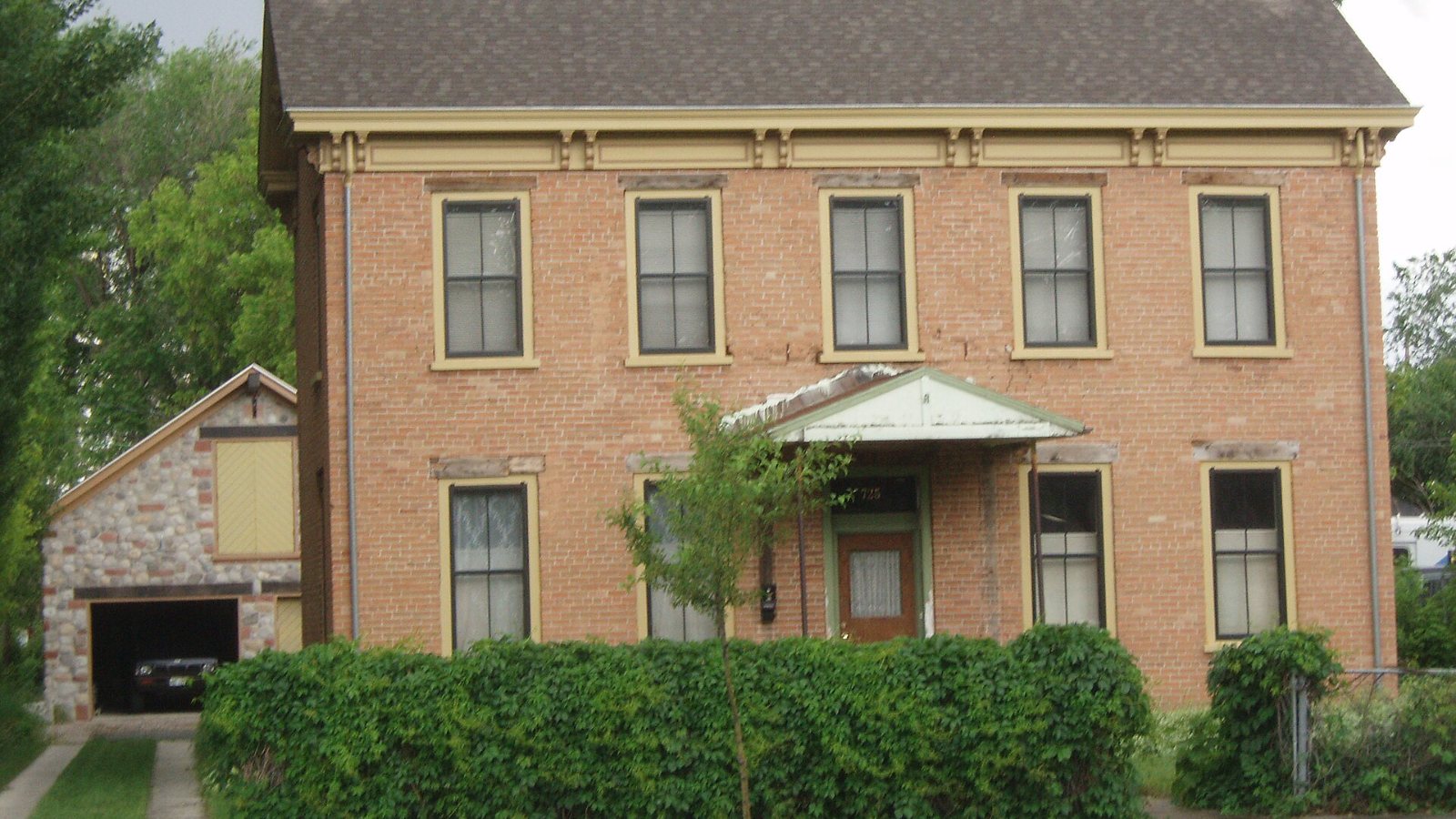
Cover photo: “Hepworth House Salt Lake City Utah” by Ntsimp, public domain, via Wikimedia Commons.
Questions or a correction?
If something in this guide is unclear, out of date or does not match what your city told you, send me a message. Include the source if you have one.