The short answer: In California, an ADU or JADU does not need fire sprinklers if sprinklers are not required for the main house, and building an ADU cannot force you to add sprinklers to the existing home (Gov. Code §§ 66314(d)(12) and 66323(d)). In practice, cities read the rule the other way too: if the main house has sprinklers, the ADU must have them. Fire access, hydrant and fire-separation rules still apply either way.
Last verified: October 28, 2026 · Written by Marc
This guide explains California state law in force on October 28, 2026, with examples from three cities. It is general information, not legal advice. Fire rules are applied by your local building and fire departments, so confirm your project with them.
Fire sprinklers are one of the costs ADU owners fear most, because retrofitting them can mean new water lines, a bigger meter and opened ceilings. The good news is that California ties the ADU to the main house: if your home does not need sprinklers, neither does the ADU. The catch is in the details. Attached ADUs can change what “the house” is, fire access rules can force a variance and some hillside areas have their own exceptions. This guide walks through each one, with a decision table and a checklist you can use before you design.
What California law says
Two sections of the Government Code say the same thing for different kinds of ADUs.
- Section 66314(d)(12), for ADUs approved under a local ordinance: ADUs “shall not be required to provide fire sprinklers if they are not required for the primary residence,” and building one “shall not trigger a requirement for fire sprinklers to be installed in the existing primary dwelling.”
- Section 66323(d), for the state-mandated units that a city must approve ministerially: sprinklers “shall not be required in an accessory dwelling unit or a junior accessory dwelling unit if sprinklers are not required for the primary residence,” and building the unit does not trigger sprinklers in the existing home.
So the rule covers both kinds of ADUs and JADUs, and it protects the house as well as the ADU. A city cannot use your ADU permit as a reason to require sprinklers in a home that did not need them.
What the statute does not say is that an ADU never needs sprinklers. It ties the answer to the primary residence, and that is where local practice comes in.
When the main house has sprinklers
Cities read the rule as a match: the ADU follows the main house. Two examples from city guidance:
- San Diego says an ADU does not need automatic fire sprinklers unless the primary dwelling has them. If the primary home is sprinklered, the ADU must be too.
- San Jose says that if the primary home has fire sprinklers, the ADU must have them.
That makes your first question simple: does your house have sprinklers, or was it required to have them when it was built? Look at the ceilings for sprinkler heads, check the original building permit and ask the building department if you are not sure.
| Your situation | Does the ADU need sprinklers? | What to confirm |
|---|---|---|
| Main house has no sprinklers and was not required to | No, under state law | Your city’s reading of “required for the primary residence” |
| Main house has sprinklers | Usually yes, in city practice | Whether the system can be extended or the ADU needs its own |
| Attached ADU that enlarges the combined building | Depends on local fire code thresholds | Combined floor area, as in San Jose’s rule below |
| JADU inside the house | No new sprinklers if the house has none | Fire separation, such as a rated shared wall |
| Hillside and very high fire hazard area | Check local exceptions | Los Angeles’s Memo 143 for ordinance ADUs |
Common mistake: answering the question from memory. Check the ceilings and the original permit before you design: if sprinkler heads are there, or the house was required to have them, plan for the ADU to match.
The attached-ADU trap
An attached ADU is built onto the house, so it can change the size of the building the fire code looks at. San Jose spells this out: an attached ADU over 500 sq ft, where the combined floor area of the house and ADU exceeds 3,600 sq ft, requires sprinklers throughout the house and the ADU.
Here is a hypothetical example of how that bites. A 3,200 sq ft house in San Jose without sprinklers adds a 600 sq ft attached ADU. The combined floor area is 3,800 sq ft and the ADU is over 500 sq ft, so under the city’s FAQ the whole building would need sprinklers. The same 600 sq ft built as a detached ADU would follow the main house, which has none.
The lesson applies beyond San Jose. If your house is large, ask the fire department how it measures an attached ADU before you choose between attached and detached. A detached unit, or an attached one kept under the local threshold, can avoid a whole-house retrofit.
Practical tip: Bring the floor areas of the house and the planned ADU to your first meeting with the fire department, and ask for any combined-area threshold in writing. It is the one number that can turn an ADU project into a whole-house sprinkler job.
JADUs and fire separation
A JADU is created inside the existing home, so it follows the same sprinkler rule: none needed if the house has none, and the JADU cannot trigger a retrofit of the house.
That does not mean no fire work at all. San Diego’s guidance says a JADU follows the same logic as an ADU on sprinklers and may need a fire-rated shared wall. A rated wall or door between the JADU and the rest of the house is a common requirement, so ask your building department what separation it expects before you finalize the layout.
Fire rules that still apply without sprinklers
Skipping sprinklers does not skip fire safety. Cities still apply access and water-supply rules, and these are where many ADU projects get stuck. San Jose’s FAQ gives a clear set of examples:
- Every part of the ADU must be within 150 feet of the curb along a clear path at least 4 feet wide, or you may need a fire variance.
- A hydrant must be within 600 feet of all exterior walls, or you may need a variance.
- The nearest hydrant must deliver at least 1,000 gallons per minute at 20 psi, proven by a letter from your water company.
- The house and the ADU each need their own visible address.
Fire separation also matters near property lines. California’s residential code generally requires fire-resistance-rated exterior walls close to a lot line, so an ADU built at a 4-foot setback may need a rated wall, limits on windows or protected eaves. Our guide to ADU setback requirements explains that trade-off.
Hillside and fire hazard areas
Some areas add their own rules on top of the state floor. In Los Angeles, the city ordinance restricts ADUs where a Very High Fire Hazard Severity Zone and a Hillside Area overlap. Memo 143 says that restriction cannot be applied to state-mandated ADUs, but it leaves some sprinkler exceptions for ordinance-based ADUs in those combined areas.
If your lot is in a fire hazard zone, a hillside area or both, ask two questions before you design: which category your ADU falls into (state-mandated or local ordinance) and which fire requirements apply to that category. The answer can change both the sprinkler question and the access rules. Our Los Angeles ADU rules guide covers the city’s approach.
How to check your project step by step
- Check the main house for sprinkler heads and look up its original permit.
- Decide attached or detached, and add up the combined floor area if attached.
- Ask the fire department about any combined-area threshold and how it reads “required for the primary residence.”
- Check access: measure the path from the curb to the farthest part of the ADU.
- Check water supply: find the nearest hydrant and ask your water company for a flow letter.
- Check overlays: fire hazard, hillside or wildland-urban interface zones.
- Get the answers in writing and keep them with your permit file.
Frequently asked questions
Do I need fire sprinklers in my ADU in California?
Not if sprinklers are not required for your main house. Government Code sections 66314(d)(12) and 66323(d) say an ADU or JADU does not need sprinklers in that case, and building one cannot trigger sprinklers in the existing home. If your house already has sprinklers, cities such as San Diego and San Jose require the ADU to have them too. Confirm with your fire department.
Can the city make me add sprinklers to my house because of the ADU?
No. Both sections say that building an ADU or JADU shall not trigger a requirement to install fire sprinklers in the existing primary dwelling. The exception to watch is a large attached ADU, which can change the building the fire code measures: San Jose requires sprinklers throughout when an attached ADU over 500 sq ft takes the combined area above 3,600 sq ft.
My house has sprinklers. Does my detached ADU need them?
In city practice, usually yes. San Diego and San Jose both say that if the primary home is sprinklered, the ADU must be too. Ask whether the existing system and water service can be extended to the ADU or whether it needs its own system, because the answer affects your water meter and utility costs. Our guide to ADU utility meters covers the water side.
Do garage conversions need sprinklers?
A garage conversion follows the same rule as any ADU: no sprinklers if the main house does not require them. Conversions often raise other fire questions, though, such as fire separation from an attached house, exits and the distance from the curb. If the garage sits close to a property line, the wall facing it may also need a fire-resistance rating. Ask your building department before you design.
Are the rules different in wildfire zones?
They can be. The state sprinkler rule still applies, but local codes add requirements in fire hazard areas. In Los Angeles, Memo 143 leaves some sprinkler exceptions for ordinance-based ADUs where a Very High Fire Hazard Severity Zone and a Hillside Area overlap. Ask which category your ADU falls into and which fire rules apply to it before you buy plans.
The bottom line
California ties ADU fire sprinklers to the main house. If sprinklers are not required for the primary residence, the ADU and any JADU do not need them, and building the ADU cannot force a retrofit of the house. If the house is sprinklered, expect the ADU to match. Large attached ADUs, fire access, water supply and fire hazard zones are where the real requirements show up.
Your next step is to check your house for sprinklers, then work through the seven steps above with your fire department before choosing attached or detached. Then read California ADU laws in 2026 and see how San Jose and San Diego apply these rules.
Sources
- Cal. Gov. Code § 66314
- Cal. Gov. Code § 66323
- City of San Diego: Information Bulletin 400
- City of San Jose: ADU FAQs
- Los Angeles City Planning: ZA Memo 143, Revision 1
General information, not legal advice. Local rules vary and change; confirm with your planning department.
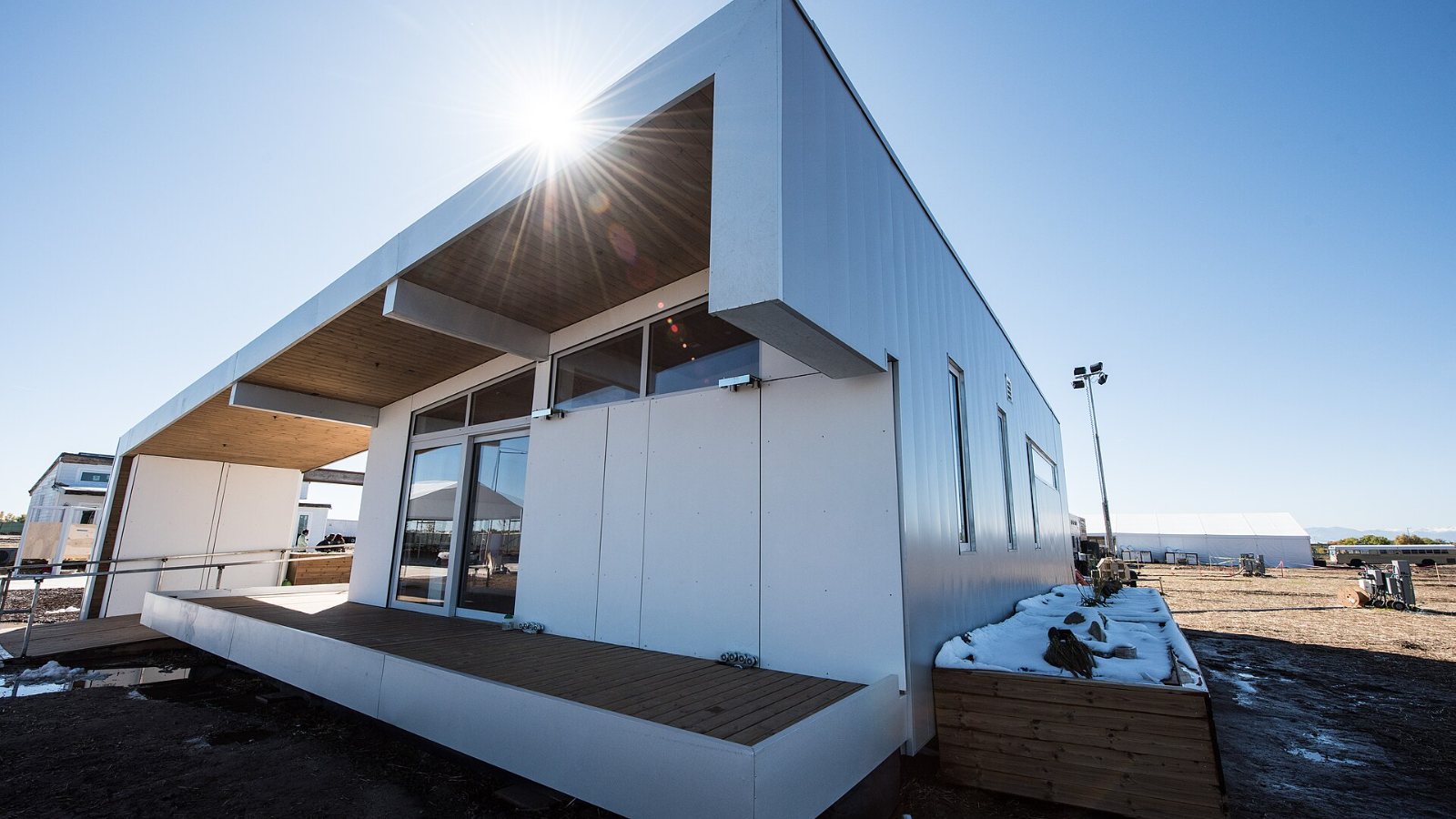
Cover photo: “Solar Decathlon SD17Gallery of Houses (37643240191)” by U.S. Department of Energy Solar Decathlon, public domain, via Wikimedia Commons.
Questions or a correction?
If something in this guide is unclear, out of date or does not match what your city told you, send me a message. Include the source if you have one.