The short answer: Even if a loan will pay for construction, most ADU owners need cash first: for design, engineering, a soils report, permit fees and a reserve for surprises. Architect design alone typically runs $10,000 to $25,000 for a standard detached ADU, or about $2,000 to $5,000 with a city’s pre-approved plan. Divide your target by what you can set aside each month to get your timeline. Keep the money somewhere safe and insured: the FDIC’s national average savings rate was 0.38% in October 2026, and some accounts pay more.
Last verified: October 29, 2026 · Written by Marc
This guide uses published figures and simple arithmetic. It is general information, not financial or investment advice. Your costs depend on your lot and city, and the right place for your savings depends on your situation, so talk to a financial professional if you are unsure.
Most ADU financing guides start with the loan. In practice, the project starts months earlier, with bills a lender usually will not pay yet: a designer’s deposit, a survey, a soils report, plan check fees. Owners who have not planned for those costs either stall after the first drawings or borrow expensively to keep going. Saving first gives you options: a smaller loan, a better rate, or the ability to pause without losing the work you have paid for. This guide shows what to save for, how to set a timeline and where to keep the money while you wait.
What you pay before a loan
The costs that usually come before construction financing fall into a few groups:
| Cost | Typical range or rule | Source |
|---|---|---|
| Design with an architect | $10,000 to $25,000 standard; $18,000 to $40,000 or more custom | Ranges verified in our ADU design cost guide |
| Design with a pre-approved plan | About $2,000 to $5,000 | Same guide |
| Soils (geotechnical) report | $2,500 to $5,000 | ADU Scale (builder, June 2026) |
| Permit and plan check fees | Vary by city; impact fees are waived at 750 sq ft or less | City fee schedules |
| Contractor down payment in California | No more than $1,000 or 10% of the contract, whichever is less | Bus. & Prof. Code § 7159 |
| Contingency reserve | Your choice; see below | Your budget |
Our guides to ADU design costs and ADU permit costs by city break these down further.
Common mistake: saving only for the down payment on a loan. The design, engineering and permit costs come first, and some loans do not reimburse them. Ask your lender which pre-construction costs it will finance before you count on it.
How to set your savings target
Your target depends on how you plan to pay for construction:
- Cash for everything. Save the full project cost. UC Berkeley’s 2021 survey found a statewide median of $150,000 for California ADUs, mostly built before recent cost increases, so current projects often cost more.
- Loan for construction, cash for the start. Save the pre-construction costs above plus a reserve. This is the most common path.
- Home equity or construction loan for most of it. Save for the costs the lender will not cover and for the reserve the lender may require you to show.
Then add a contingency. There is no legal or standard figure for it; owners commonly hold back a share of the budget for site surprises and change orders. The ADU budget breakdown shows where those surprises usually come from.
A worked timeline
Here is a hypothetical example for an owner who plans to use a loan for construction and cash for the start:
| Item | Amount |
|---|---|
| Architect design, standard detached ADU | $15,000 |
| Soils report | $4,000 |
| Permit and plan check fees (example) | $8,000 |
| Contingency reserve (example) | $13,000 |
| Savings target | $40,000 |
If the owner can set aside $2,000 a month, the target takes 20 months. At $3,000 a month it takes about 14 months. Interest at today’s average rates barely changes that: $40,000 held for a year at the 0.38% national average savings rate earns roughly $150, while the same amount in a hypothetical account paying 4% would earn roughly $1,600. Rates vary widely between banks, which is why comparing them is worth a few minutes.
The example also shows a way to shorten the wait. Choosing a city’s pre-approved plan instead of a custom design could bring the design line from $15,000 down to about $2,000 to $5,000, a saving of $10,000 to $13,000, which cuts five to six months from this timeline at $2,000 a month.
Practical tip: Split your savings by when you will spend them. Money for design and the soils report is needed within months; money for the contingency may not be needed for a year or more. Matching each part to its date makes it easier to choose where to keep it.
Where to keep ADU savings
ADU savings are money you will need on a known schedule, so safety and access usually matter more than growth. The FDIC says deposits are automatically insured to at least $250,000 at each FDIC-insured bank, and that savings accounts, money market deposit accounts and certificates of deposit (CDs) are covered. Stocks and mutual funds are not insured.
The FDIC’s national averages, last updated October 19, 2026, were:
- Savings accounts: 0.38%
- Money market accounts: 0.63%
- 12-month CDs: 1.76%
Those are averages across banks. Because they are averages, some banks and credit unions pay more, so compare rates. A CD can work for money you will not need until a known date, such as the contingency reserve, while design deposits are better kept in an account you can reach at any time.
Ways to shorten the timeline
- Use a pre-approved plan, which can cut design costs sharply.
- Stay at 750 sq ft or less to avoid impact fees.
- Ask about fee deferrals or local programs. Statewide grants are closed in 2026; our guide to California ADU grants tracks what remains.
- Choose a conversion of a garage or basement, which usually needs less site work.
- Borrow for part of the start, if the cost of borrowing is lower than the cost of waiting. Our guide to how to finance an ADU compares the options.
When to stop saving and start borrowing
There is no single right moment. These signals suggest you may be ready to talk to lenders:
- Your pre-construction costs are covered in cash.
- You have a reserve you will not need to touch during the loan application.
- You have real bids, not estimates, for construction.
- You know how the loan will be repaid, from rent, income or both.
If rent from the ADU will help repay the loan, see our guide to ADU rental income and loan qualification, because lenders count only part of it.
Frequently asked questions
How much should I save before building an ADU?
At least enough for the costs that come before a loan: design, engineering, a soils report and permit fees, plus a reserve for surprises. Architect design alone typically costs $10,000 to $25,000 for a standard detached ADU. If you plan to pay cash for everything, your target is the full project cost, which in California often exceeds $150,000.
Will a construction loan pay for design and permits?
Sometimes, but not always, and often not upfront. Some lenders reimburse or include certain soft costs, while others expect you to pay them before closing. Ask each lender which pre-construction costs it finances and when it pays them. Plan to have the design deposit and early fees in cash either way.
Where should I keep money I’m saving for an ADU?
Usually somewhere safe and easy to reach, because you will spend it on a schedule. The FDIC insures savings accounts, money market deposit accounts and CDs at insured banks to at least $250,000 per bank. In October 2026 the national average savings rate was 0.38%, and some accounts pay more, so compare.
How long does it take to save for an ADU?
Divide your savings target by what you can set aside each month. In our hypothetical example, a $40,000 target takes 20 months at $2,000 a month and about 14 months at $3,000 a month. Choosing a pre-approved plan or a smaller unit can shorten the timeline by reducing the target.
Is it better to save longer or borrow sooner?
It depends on the cost of each. Saving longer means a smaller loan but a later start, while construction costs may rise in the meantime. Borrowing sooner costs interest but gets the unit built and, if rented, earning. Compare the loan’s interest with the rent you would collect and the cost increases you might avoid.
The bottom line
Saving for an ADU starts with the costs no lender may cover: design, engineering, a soils report, permit fees and a reserve. Architect design alone often runs $10,000 to $25,000, while a pre-approved plan can cost about $2,000 to $5,000. Divide your target by your monthly savings to get a timeline, and keep the money in insured accounts while you wait. Saving first does not replace a loan; it makes the loan smaller and the project easier to pause if something goes wrong.
Your next step is to price your pre-construction costs with your city and a designer, then set a monthly savings amount. When you are ready to borrow, compare HELOCs and construction loans for the rest.
Sources
- FDIC: National Rates and Rate Caps (October 19, 2026)
- FDIC: Deposit Insurance
- Cal. Bus. & Prof. Code § 7159 (down payment limit)
- ADU Scale: California ADU cost guide (builder, updated June 2026)
General information, not financial or tax advice. Rules change; confirm every figure with a qualified professional.
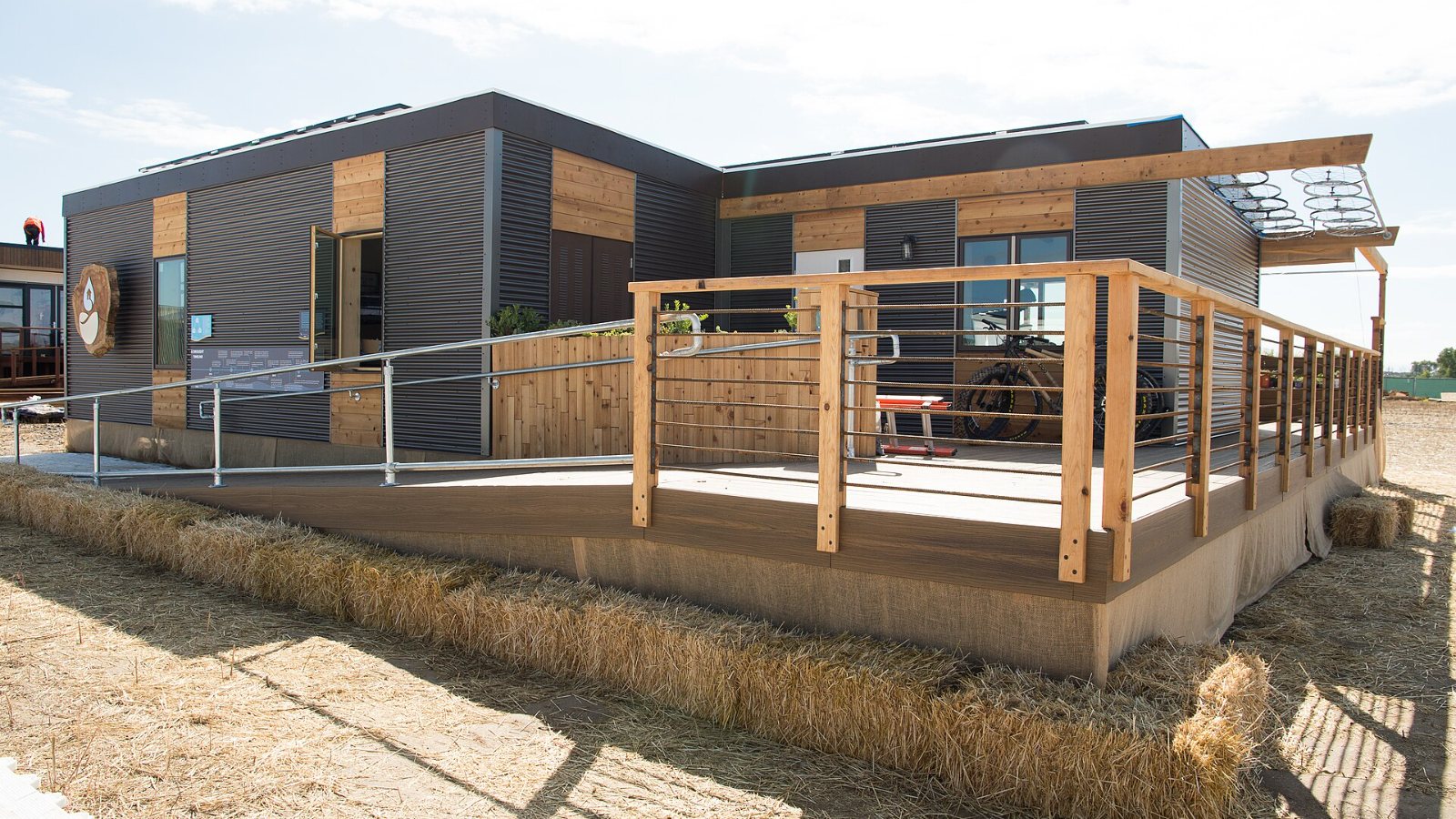
Cover photo: “SD2017 Gallery of Houses (37434911596)” by U.S. Department of Energy Solar Decathlon, public domain, via Wikimedia Commons.
Questions or a correction?
If something in this guide is unclear, out of date or does not match what your city told you, send me a message. Include the source if you have one.