The short answer: For most newly built ADUs, the statewide rent cap does not apply yet. California’s cap, 5% plus inflation or 10%, whichever is lower, exempts housing with a certificate of occupancy issued within the previous 15 years. The state’s just cause rules also exempt a single-family home where the owner lives and rents no more than two units or bedrooms, including an ADU or JADU. Local rent control is limited by the Costa-Hawkins Act for units built after February 1, 1995. Local just cause and tenant ordinances can still apply, so your city’s rules decide the rest.
Last verified: October 29, 2026 · Written by Marc
This guide summarizes California statutes read on October 29, 2026. It is general information, not legal advice. Rent and eviction law is detailed and local ordinances vary, so confirm your situation with your city’s rent program or a landlord-tenant lawyer before you raise rent or end a tenancy.
Owners ask this question for two reasons. Before building, they want to know whether rent from the ADU will keep up with costs. After renting, they want to know what they can change and how. The answer depends on three layers of law: the statewide rent cap, the statewide just cause rules and any local ordinance, which state law limits in its own way. This guide takes each layer in turn, shows how they combine for typical ADUs and ends with a checklist for your city.
Layer 1: the statewide rent cap (Civil Code § 1947.12)
The Tenant Protection Act caps rent increases over any 12-month period at 5% plus the percentage change in the cost of living, or 10%, whichever is lower. The current version took effect on April 1, 2024, and is set to remain in effect until January 1, 2030.
The law lists properties it does not cover. Three matter for ADUs:
| Exemption | What the law says | What it means for an ADU |
|---|---|---|
| New housing, § 1947.12(d)(4) | Housing issued a certificate of occupancy within the previous 15 years | A newly built ADU is generally exempt for 15 years after its certificate of occupancy |
| Owner-occupied two-unit building, § 1947.12(d)(6) | Two units in one structure with the owner in one, “and neither unit is an accessory dwelling unit or a junior accessory dwelling unit” | This exemption does not help ADU owners: it excludes ADUs and JADUs by name |
| Separately sellable housing, § 1947.12(d)(5) | Property alienable separate from any other dwelling unit, not owned by a REIT, a corporation or an LLC with a corporate member, with a required written notice to the tenant | An ADU usually cannot be sold separately from the house; whether this exemption covers a lot with a house and an ADU is a question for a lawyer |
The 15-year exemption is the one most ADU owners rely on. It is also temporary: a unit completed in 2026 would come under the cap around 2041, if the law were extended beyond 2030 in its current form.
Layer 2: the statewide just cause rules (Civil Code § 1946.2)
After a tenant has lived in a unit for 12 months, California generally requires a just cause, stated in the written notice, to end the tenancy. For no-fault reasons, such as the owner moving in, the owner must pay relocation assistance or waive the final month’s rent, equal to one month’s rent.
The just cause law has its own exemptions. Two are especially relevant:
- Owner-occupied single-family home, § 1946.2(e)(5): single-family owner-occupied residences, including a residence where the owner-occupant rents or leases no more than two units or bedrooms, “including, but not limited to, an accessory dwelling unit or a junior accessory dwelling unit.”
- New housing, § 1946.2(e)(7): housing issued a certificate of occupancy within the previous 15 years.
Notice the difference from the rent cap: the owner-occupied home exemption names ADUs as covered in the just cause law, while the two-unit exemption in the rent cap law excludes them.
Common mistake: reading the “owner-occupied duplex” exemption as covering a house and an ADU. Both statutes say that exemption does not apply when either unit is an ADU or a JADU. If your ADU is exempt, it is usually for another reason, such as the 15-year rule or, for just cause, the owner-occupied single-family exemption.
Layer 3: local rent control and Costa-Hawkins
Many California cities have their own rent ordinances. State law limits them. Under the Costa-Hawkins Rental Housing Act, Civil Code § 1954.52, an owner may set the initial and all later rents for a unit that has a certificate of occupancy issued after February 1, 1995, or that is separately alienable from any other unit, with some exceptions.
In practice, that means a city generally cannot cap the rent of a newly built ADU under its rent control ordinance. Costa-Hawkins does not stop cities from applying other local rules, such as just cause ordinances, relocation payments or registration requirements, and the details vary by city.
Los Angeles shows how this plays out. The city’s Housing Department says a detached ADU is generally outside the Rent Stabilization Ordinance, an attached ADU is covered only if the original structure was built before 1978, and converting existing livable space brings both units under it. Rules like these are why the type of ADU matters, not just its age. Our guide to Los Angeles ADU rules covers that city.
How the layers combine: three examples
These hypothetical cases show how the rules stack up for an owner who lives in the main house:
- New detached ADU, completed in 2026. The state rent cap does not apply for 15 years. State just cause rules do not apply because of the owner-occupied single-family exemption and the 15-year exemption. Costa-Hawkins limits local rent caps. Local just cause rules may still apply.
- Part of an older house converted into an ADU in a city with rent control. The conversion uses a building that may already be covered by the local ordinance. In Los Angeles, converting existing livable space brings both units under the Rent Stabilization Ordinance. Check the local ordinance before setting rent.
- Owner moves out and rents both the house and the ADU. The owner-occupied exemption in the just cause law no longer fits, because the owner no longer lives there. The 15-year exemption may still cover the ADU, but the older house may now be subject to the state rent cap and just cause rules. Check both units separately.
Practical tip: Keep a copy of the ADU’s certificate of occupancy, or the final inspection record, with your lease file. The 15-year exemptions in both statutes run from that date, and it is the first document a tenant, lawyer or city rent program will ask for.
Rent increases still need proper notice
Even when no cap applies, a rent increase on a month-to-month tenancy must follow Civil Code § 827: at least 30 days’ written notice if the increase is 10% or less over the past 12 months, and at least 90 days if it is more. A fixed-term lease generally keeps its rent until the term ends. Our guide to ADU lease basics covers notices and deposits.
What to check for your city
- Does your city have a rent stabilization ordinance, and which units does it cover?
- Does it have its own just cause ordinance, and does it exempt owner-occupied homes with an ADU?
- Does it require relocation payments, and how much?
- Does it require rental registration or annual fees?
- Does it treat conversions of existing space differently from new detached ADUs?
Your city’s rent program or housing department usually publishes these rules. If the answer is unclear, ask in writing before you set the rent.
Frequently asked questions
Does AB 1482 apply to my new ADU?
Usually not at first. California’s rent cap, Civil Code section 1947.12, exempts housing issued a certificate of occupancy within the previous 15 years, which covers most newly built ADUs. The exemption ends 15 years after that date. The current law is set to remain in effect until January 1, 2030, unless the Legislature extends it.
Is a house with an ADU exempt as an owner-occupied duplex?
No. Both the rent cap and the just cause statute say the two-unit owner-occupied exemption applies only if neither unit is an ADU or a JADU. A house with an ADU may be exempt for other reasons, such as the 15-year rule or, for just cause only, the owner-occupied single-family home exemption.
Can my city cap the rent on my ADU?
Usually not for a newly built unit. The Costa-Hawkins Act lets an owner set the initial and later rents for a unit with a certificate of occupancy issued after February 1, 1995, with some exceptions. Cities can still apply other local rules, such as just cause or relocation requirements, so check your city’s ordinance.
Do I need just cause to end my ADU tenant’s lease?
Under state law, often not if you live in the main house: the just cause statute exempts owner-occupied single-family homes renting no more than two units or bedrooms, including an ADU or JADU. Local ordinances may still require just cause or relocation payments. Check your city’s rules before serving any notice, and consider legal advice.
What happens when the 15-year exemption ends?
The ADU would then come under the state rent cap and the state just cause rules, unless another exemption applies or the law has changed by then. The current rent cap statute is set to remain in effect until January 1, 2030. Keep the certificate of occupancy date on file and review the rules well before the exemption ends.
The bottom line
Rent control rarely limits a newly built ADU in California today. The state rent cap and the state just cause rules both exempt housing with a certificate of occupancy from the past 15 years, the just cause law also exempts owner-occupied homes renting an ADU or JADU, and Costa-Hawkins limits local rent caps on units built after 1995. Local just cause and relocation rules can still apply.
Your next step is to find your ADU’s certificate of occupancy date and check your city’s rent and eviction ordinances. Then set the rent with our guide to how to set ADU rent and write the lease with our ADU lease basics.
Sources
- Cal. Civil Code § 1947.12 (statewide rent cap)
- Cal. Civil Code § 1946.2 (just cause)
- Cal. Civil Code § 1954.52 (Costa-Hawkins)
- Cal. Civil Code § 827 (rent increase notices)
- Los Angeles Housing Department: ADUs and rent control
General information, not legal advice. Local rules vary and change; confirm with your planning department.
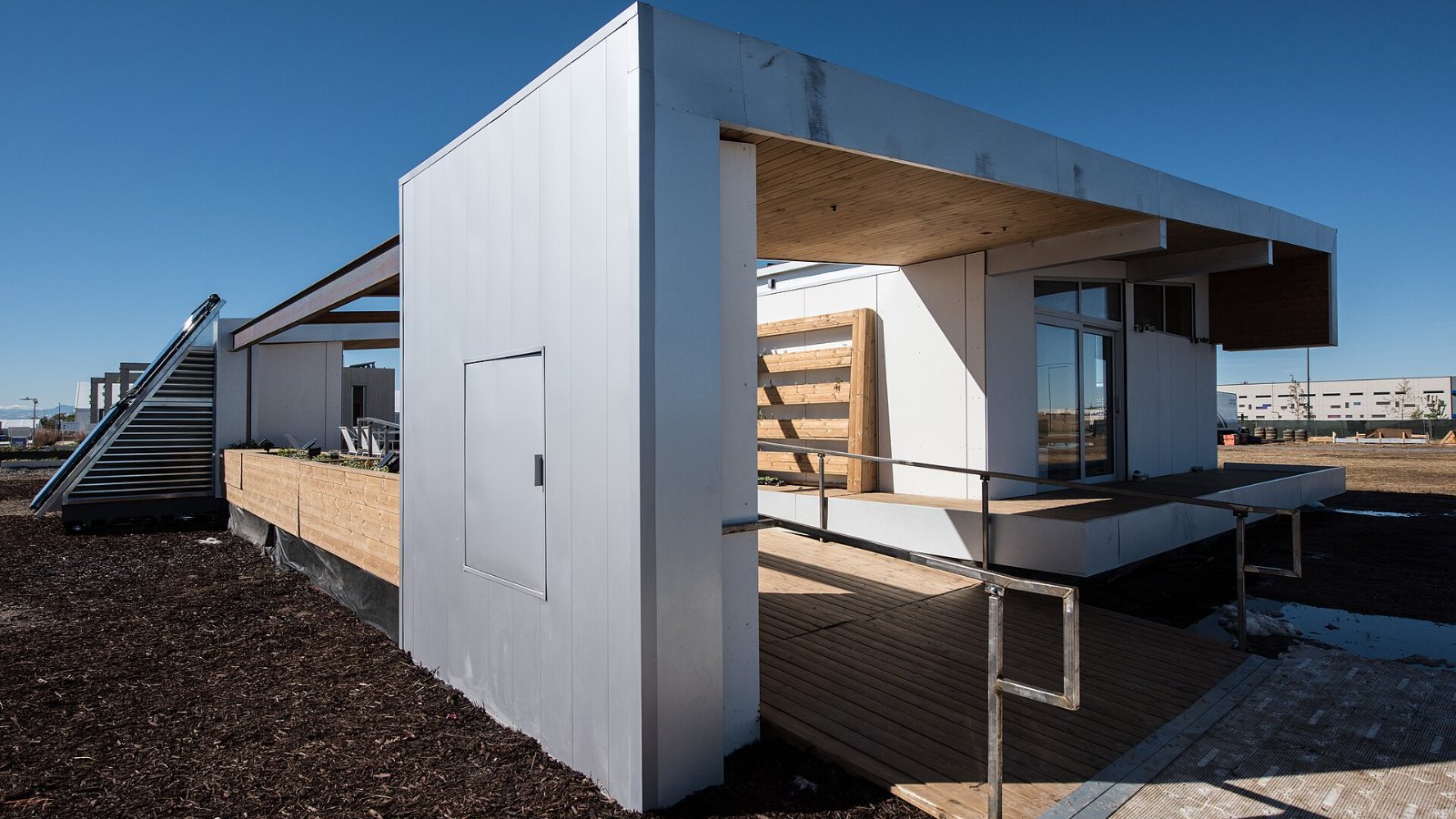
Cover photo: “Solar Decathlon SD17Gallery of Houses (37643239791)” by U.S. Department of Energy Solar Decathlon, public domain, via Wikimedia Commons.
Questions or a correction?
If something in this guide is unclear, out of date or does not match what your city told you, send me a message. Include the source if you have one.