The short answer: Yes. On a lot with a single-family home, California requires cities to ministerially approve any combination of one ADU and one JADU within existing or proposed space plus one new detached ADU of up to 800 sq ft. That is two ADUs and a JADU. On multifamily lots, the limits are higher: up to 25% of existing units as conversions and up to eight detached ADUs. Cities may allow more under their own ordinances, but lots created by an SB 9 split can be capped at two units.
Last verified: October 29, 2026 · Written by Marc
This guide explains Government Code section 66323 as amended by SB 543, in force since January 1, 2026. It is general information, not legal advice. Whether your lot physically fits each unit is a separate question, so confirm your plans with your planning department.
Owners often ask whether they can build “two ADUs” as if it were one rule. In California, the answer comes from a list of unit types that a city must approve “or any combination” of them. Read carefully, that list lets a typical single-family lot hold the house, a converted ADU, a JADU and a new detached ADU. Multifamily lots follow different numbers. This guide explains each combination, how local ordinances can add more and when the count is capped.
The combinations on a single-family lot
Section 66323(a) says a city “shall ministerially approve” a building permit in a residential or mixed-use zone for any of the following units, “or any combination” of them. On a lot with an existing or proposed single-family home, two of the categories apply:
| Category | What it allows | Key conditions |
|---|---|---|
| § 66323(a)(1) | One ADU and one JADU per lot | Within the proposed or existing space of the home or an accessory structure; up to 150 sq ft of expansion for ingress and egress; exterior access; setbacks sufficient for fire and safety |
| § 66323(a)(2) | One detached, new-construction ADU | Side and rear setbacks of no more than 4 feet; the city may cap it at 800 sq ft of livable space and at the state height floor |
Because the statute allows “any combination,” a city must approve all three together: a converted ADU (inside the house or a garage), a JADU inside the house and a new detached ADU in the yard. That is the combination HCD describes as the state baseline, and it gives a single-family lot up to four homes counting the main house.
Section 66323(b) adds a protection: a city cannot impose any objective development or design standard not authorized by the section on a unit that meets these requirements. Lot coverage, floor-area ratio and similar rules cannot be used to block them.
What “within existing space” means
The first category depends on space that already exists or is proposed as part of the home or an accessory structure. Typical examples:
- A garage, attached or detached, converted into an ADU
- A basement, attic or bedroom suite converted into an ADU
- A den or part of the house converted into a JADU of up to 500 sq ft
The 150 sq ft expansion is only for ingress and egress, such as an entry or stairs. Anything larger is new construction and falls under the detached category or your city’s ordinance.
Common mistake: planning two new detached ADUs on a single-family lot under the state baseline. Section 66323(a) guarantees one detached new-construction ADU per single-family lot. A second detached unit depends on your city’s ordinance, so ask before you design it.
Multifamily lots: up to eight detached ADUs
On a lot with a multifamily building, sections 66323(a)(3) and (a)(4) set different limits:
- Conversions inside the building: multiple ADUs within the parts of an existing multifamily building that are not used as livable space, such as storage rooms, boiler rooms, passageways, attics, basements or garages. A city must allow at least one and up to 25% of the existing units.
- Detached ADUs: on a lot with an existing multifamily building, no more than eight detached ADUs, and not more than the number of existing units. On a lot with a proposed multifamily building, no more than two.
- Standards: detached ADUs on multifamily lots get the state height floors and rear and side setbacks of no more than 4 feet.
If the existing building already sits closer than 4 feet to a side or rear line, the city cannot require changes to the building as a condition of approving the ADUs.
A hypothetical example: a lot with an existing fourplex could add one ADU in an unused basement (25% of four units is one) and up to four detached ADUs, because the eight-unit cap is limited to the number of existing units.
More units under a local ordinance
The state baseline is a floor. Cities can allow more through their own ADU ordinance under section 66314. HCD’s March 2026 handbook says cities must allow at least one ADU under the local ordinance in addition to the three state-mandated units, although how a city applies this varies.
Sacramento shows how much the local route can differ. Its ordinance allows up to two ADUs in any combination of attached, detached or JADU, with detached units up to 1,200 sq ft, while the state standards allow up to three units on a single-unit lot, with the detached one at 800 sq ft. Owners choose the framework that fits their lot. Our guide to Sacramento ADU rules compares them.
Practical tip: Ask your planning department one question in writing: which units can I build under state standards, and which under the local ordinance, on this parcel? The two frameworks can give different sizes and counts, and choosing the wrong one can cost you a unit.
When the count is capped
Two situations limit the number of units below the baseline:
- SB 9 lot splits. Section 66411.7(j) says a city is not required to permit more than two units on a parcel created by an urban lot split, counting ADUs and JADUs. Our guide to SB 9 versus an ADU explains the trade-off.
- Physical limits. The law guarantees approval, not space. Setbacks, easements, fire access, utilities and lot shape decide whether all the units fit.
How to plan two ADUs on your lot
- List the existing space: garage, basement, attic or rooms you could convert.
- Choose the converted unit: an ADU, a JADU or one of each.
- Site the detached ADU: up to 800 sq ft with 4-foot side and rear setbacks.
- Check utilities and fire access for three units, not one.
- Ask about the local ordinance for anything beyond the baseline.
- Check fees by size: each ADU of 750 sq ft or less avoids impact fees.
- Get the plan confirmed in writing before you design.
Frequently asked questions
Can I have an ADU and a JADU on the same lot?
Yes. Section 66323(a)(1) lets a city approve one ADU and one JADU per lot with a single-family home, within the existing or proposed space of the home or an accessory structure. Because the statute also allows “any combination” of categories, you can add a new detached ADU under section 66323(a)(2), for a total of three units plus the main house.
Can I build two detached ADUs on a single-family lot?
Not under the state baseline. Section 66323(a)(2) guarantees one detached, new-construction ADU per lot with a single-family home. A second detached ADU depends on your city’s own ordinance. Some cities allow it: Sacramento’s ordinance, for example, allows two ADUs in any combination, with two detached units capped at 1,200 sq ft combined. Ask your planning department.
How many ADUs can I add to an apartment building?
On a lot with an existing multifamily building, you can convert non-livable space into at least one ADU and up to 25% of the existing units, and add up to eight detached ADUs, but not more than the number of existing units. On a lot where a multifamily building is only proposed, the limit is two detached ADUs. JADUs are not allowed on multifamily lots.
Do two ADUs pay more fees than one?
Each unit is assessed on its own size. An ADU of 750 sq ft or less, or a JADU of 500 sq ft or less, pays no impact fees, so keeping each unit under those thresholds keeps the exemption for both. Permit, plan-check, school and utility fees still apply per unit. SB 1117 will change the calculation above 750 sq ft for lots with up to two ADUs from January 1, 2027.
Does an SB 9 lot split let me add more ADUs?
Not necessarily. On a parcel created by an urban lot split, section 66411.7(j) lets the city cap the total at two units, and it counts ADUs and JADUs. Splitting can create two parcels you can sell, but it can also reduce the units you could build compared with keeping one lot and using the ADU baseline.
The bottom line
You can build two ADUs on one lot in California: on a single-family lot, cities must approve a converted ADU, a JADU and a new detached ADU of up to 800 sq ft together. Multifamily lots can add conversions of up to 25% of existing units and up to eight detached ADUs. Local ordinances can allow more, while SB 9 lots can be capped at two units.
Your next step is to list the space you could convert, site the detached unit and ask your planning department which framework gives your lot the most units. Then check fees in ADU impact fees and the full rules in California ADU laws in 2026.
Sources
- Cal. Gov. Code § 66323
- Cal. Gov. Code § 66321
- Cal. Gov. Code § 66411.7
- HCD: ADU Handbook (March 2026)
- City of Sacramento: ADU handout (CDD-0423)
General information, not legal advice. Local rules vary and change; confirm with your planning department.
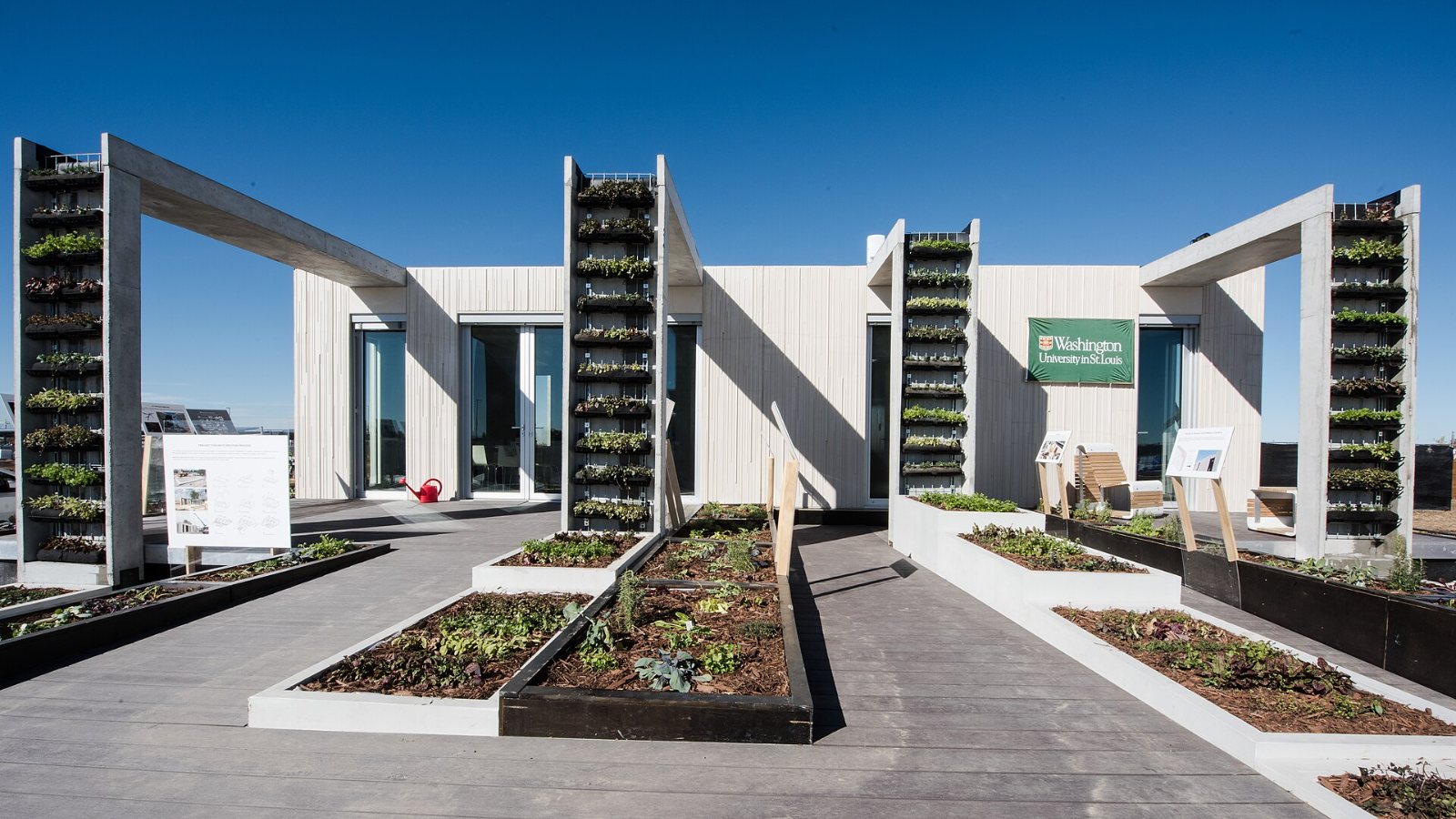
Cover photo: “Solar Decathlon SD17Gallery of Houses (37385156990)” by U.S. Department of Energy Solar Decathlon, public domain, via Wikimedia Commons.
Questions or a correction?
If something in this guide is unclear, out of date or does not match what your city told you, send me a message. Include the source if you have one.