The short answer: A basement is one of the easiest places to add an ADU, because the space already exists inside the home. In California, a city must ministerially approve an ADU within the existing space of a single-family home, with exterior access, and it needs no parking. The Energy Commission treats converting existing conditioned space, such as a finished basement, as an alteration, so no solar is required. Portland has no size limit for basement ADUs in homes at least five years old, and Utah protects internal ADUs specifically.
Last verified: October 29, 2026 · Written by Marc
This guide summarizes state rules and city guidance verified on October 29, 2026. It is general information, not legal or engineering advice. Basements raise building code questions, such as exits and ceiling height, that your building department decides.
A basement apartment uses space you already own and heat. There is no new foundation, no new roof and often no new utility trench. That is why basements are popular in older cities, and why several states single them out. The catch is that a basement must become a safe home, with a way out in an emergency, enough light and air and a dry space. This guide covers how state ADU laws treat basement conversions, the building questions to settle early and a checklist.
How state law treats a basement ADU
A basement ADU is a conversion within the existing home, and state laws tend to protect that kind of unit most:
| State or city | Rule for an ADU within the existing home | Source |
|---|---|---|
| California | Ministerial approval for an ADU within existing space, with exterior access and setbacks sufficient for fire and safety | Gov. Code § 66323(a)(1) |
| California | No parking for an ADU that is part of the existing home | Gov. Code § 66322(a)(3) |
| California (Energy Code) | Converting existing conditioned space is an alteration; no solar required | 2025 Energy Code ADU FAQs |
| Portland, Oregon | No size limit for a basement ADU in a primary structure at least five years old | City of Portland ADU zoning |
| Utah | Internal ADUs are a permitted use in residential zones | Utah Code § 10-21-303 |
| Washington | Two ADUs per lot in urban growth areas, in any combination, including conversions | MRSC summary |
| Maine | An ADU may be built within an existing dwelling unit | 30-A MRSA § 4364-B |
Portland’s rule is especially useful. The city caps most ADUs at 75% of the house or 800 sq ft, whichever is smaller, but the cap does not apply to a basement in a house at least five years old. On a hypothetical 900 sq ft bungalow with a full basement, a backyard ADU would be capped at 675 sq ft, while the basement could become a larger unit.
The Energy Code: alteration, not new construction
California’s Energy Commission draws a line that affects the budget:
- Converting existing conditioned space, such as a finished basement, is an alteration. The work you change, such as water heaters, mini-splits, lighting or envelope work, must meet the code, but the solar requirement for new detached ADUs does not apply.
- Converting unconditioned space, such as an unfinished, unheated basement or a garage, into living space is treated as an addition, which also needs no solar but brings the rules for additions, such as insulation.
Common mistake: assuming a basement conversion needs no energy work at all. It avoids solar, but any heating, water heating, lighting or insulation you change still has to meet the Energy Code. Ask your designer which path, alteration or addition, applies to your basement.
Building questions to settle early
The legal approval is often the easy part. These building questions usually decide whether a basement can become a unit, and they are answered by your building department under the residential code:
- Emergency exit: bedrooms in a basement generally need an emergency escape opening, such as an egress window or door.
- Ceiling height: the code sets minimum ceiling heights for habitable rooms.
- Light and ventilation: natural light and air, or mechanical ventilation, for each room.
- Moisture: a damp basement needs drainage and waterproofing before it becomes a home.
- Fire separation: the ADU may need fire-rated separation from the main house.
- Sewer drainage: fixtures below the sewer line may need an ejector pump; one contractor guide puts these at $5,000 to $12,000 where gravity flow is not possible.
- Exterior access: California’s ministerial path requires exterior access for the ADU.
Practical tip: Before you hire a designer, ask your building department for its basement conversion checklist, and have a contractor check for moisture. Egress, ceiling height and water are the three issues that most often decide whether a basement can be converted.
Basement ADU or JADU?
In California, a basement within a single-family home could become either a full ADU or a JADU of up to 500 sq ft. The choice matters:
- A JADU needs only an efficiency kitchen and can share a bathroom with the house, but it is capped at 500 sq ft and, if it shares sanitation, requires the owner to live on the property.
- An ADU within existing space has no state size cap, has a full kitchen and bathroom, and never requires owner occupancy.
A basement larger than 500 sq ft is usually a better fit for a full ADU. Our guide to JADUs compares the two.
A worked example in California
Take a hypothetical single-family home in California with a 700 sq ft finished basement, a side door to the yard and a bathroom below the level of the sewer line.
- Unit type: at 700 sq ft, the space is too large for a JADU, which is capped at 500 sq ft, so it becomes a full ADU within existing space.
- Approval: ministerial, because it is within the existing home and has exterior access through the side door.
- Parking: none can be required, because the ADU is part of the existing home.
- Energy Code: converting finished, conditioned space is an alteration, so no solar is required; changed heating, water heating and lighting must comply.
- Plumbing: the bathroom below the sewer line may need an ejector pump.
- Building code: each bedroom needs an emergency escape opening, and ceiling heights must meet the code.
How to plan a basement ADU
- Check the basement’s condition: moisture, ceiling height and structure.
- Plan the exits: an egress opening for each bedroom and an exterior entrance.
- Decide ADU or JADU based on size and your plans for the unit.
- Plan plumbing: check whether fixtures drain by gravity or need an ejector pump.
- Plan heating and ventilation under the Energy Code path that applies.
- Plan fire separation from the main home.
- Get the building department’s checklist and a pre-application review.
Frequently asked questions
Can I turn my basement into an ADU?
In many places, yes. In California, a city must ministerially approve an ADU within the existing space of a single-family home if it has exterior access and setbacks sufficient for fire and safety, and no parking can be required for it. Building code requirements, such as emergency exits, ceiling height and ventilation, still decide whether your basement can be converted.
Does a basement ADU need solar panels in California?
No. The California Energy Commission treats converting existing conditioned space, such as a finished basement, as an alteration, and converting unconditioned space as an addition. The solar requirement applies to newly constructed detached ADUs, not to alterations or additions. Any work you change, such as heating or lighting, still has to meet the Energy Code.
Is there a size limit for a basement ADU?
It depends on the place. In California, an ADU within existing space has no state size cap, while a JADU is limited to 500 sq ft. Portland has no size limit for a basement ADU in a primary structure at least five years old, even though most other ADUs there are capped. Massachusetts caps protected ADUs at half the house or 900 sq ft.
Does a basement ADU need its own entrance?
In California’s ministerial path, yes: the ADU within existing space must have exterior access from the home. A JADU needs a separate entrance, plus an interior entry if it shares the house’s bathroom. Separately, building codes usually require an emergency escape opening in basement bedrooms. Ask your building department what it requires for your layout.
Do I need parking for a basement ADU?
Not in California. Government Code section 66322(a)(3) bars any parking standard for an ADU that is part of the proposed or existing primary residence, which covers a basement unit. Other states differ: Utah lets cities require one extra on-site space for an internal ADU. Our guide to ADU parking requirements explains the California rules.
The bottom line
A basement ADU is often the simplest conversion: California approves an ADU within existing space ministerially, requires no parking for it and treats a finished basement conversion as an alteration with no solar requirement. Portland drops its size cap for basements in older homes, and Utah protects internal ADUs. Exits, ceiling height and moisture decide whether your basement qualifies.
Your next step is to have a contractor check the basement for moisture and get your building department’s conversion checklist before you design. Compare the options in JADUs and two ADUs on one lot.
Sources
- Cal. Gov. Code § 66323
- Cal. Gov. Code § 66322
- California Energy Commission: 2025 Energy Code ADU FAQs
- City of Portland: ADU zoning requirements
- Utah Code § 10-21-303
- Maine: 30-A MRSA § 4364-B
- IMKAT Construction: ADU utility connections
General information, not legal advice. Local rules vary and change; confirm with your planning department.
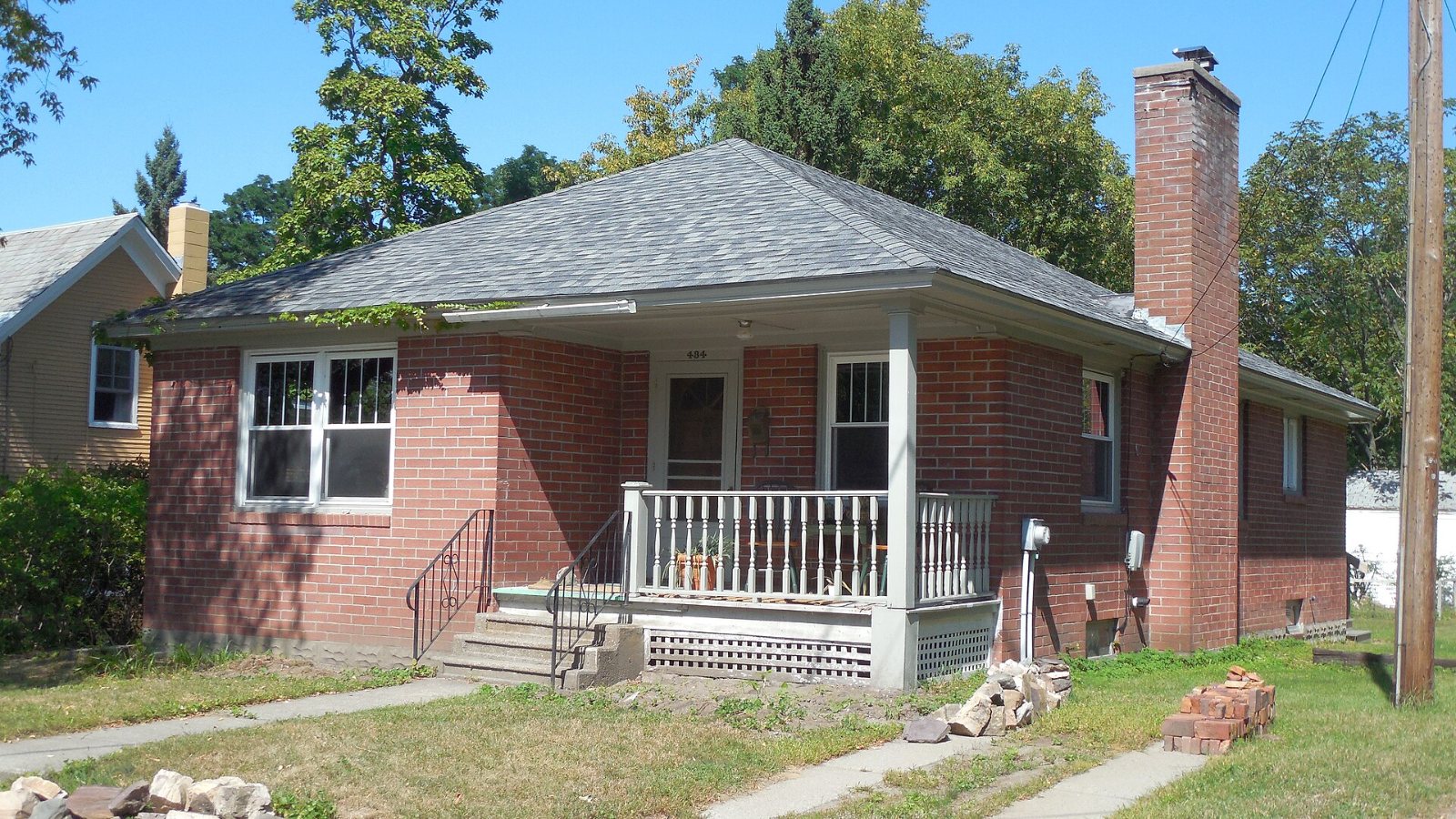
Cover photo: “Brick House BTV” by Niranjan Arminius, CC BY-SA 4.0, cropped, via Wikimedia Commons.
Questions or a correction?
If something in this guide is unclear, out of date or does not match what your city told you, send me a message. Include the source if you have one.