The short answer: You can usually build an ADU in a historic district, but expect design rules. In California, cities can apply objective standards that prevent adverse impacts on properties listed in the California Register of Historical Resources, and they cannot require any parking for an ADU in a historic district. Colorado still allows public hearings for ADUs in some historic districts, and Utah and Vermont require that ADUs be treated no more strictly than single-family homes.
Last verified: October 29, 2026 · Written by Marc
This guide summarizes state laws and city guidance verified on October 29, 2026. It is general information, not legal advice. Historic rules are often local, and designation can apply to a district or to a single property, so confirm your parcel’s status with your planning department.
Historic districts are where many owners assume an ADU is impossible. Usually it is not. State ADU laws protect owners in historic areas too, and in California, being in a historic district even removes the parking requirement. What changes is design: materials, height, placement and how visible the unit is from the street. This guide explains what cities can and cannot require, how a few states handle it and how to plan a design that gets approved.
What California allows cities to require
Section 66314(b)(1) lets a city impose objective standards on ADUs, including parking, height, setback, landscape, architectural review and maximum size, and “standards that prevent adverse impacts on any real property that is listed in the California Register of Historical Resources.”
Two words limit that power:
- Objective: the standard has to be measurable, not a judgment such as “compatible with the neighborhood.”
- Listed: the historic-impact standard refers to property listed in the California Register, not to any older home.
The state-mandated units in section 66323 are protected further. Section 66323(b) says a city cannot impose any objective development or design standard that the section does not authorize on a unit that meets its requirements. For a converted ADU, a JADU or an 800 sq ft detached ADU approved under that section, the room for extra historic standards is narrower.
Common mistake: treating “historic area” as one rule. Being in a historic district, owning a listed landmark and owning a house that is simply old are three different situations, with different rules. Ask the planning department which one applies to your parcel.
The parking exemption
California turns historic status into an advantage for parking. Section 66322(a)(2) says a city cannot impose any parking standard for an ADU “located within an architecturally and historically significant historic district.”
That exemption applies whether or not the city has its own ADU ordinance. Los Angeles applies it: no parking can be required in a historic district. Our guide to ADU parking requirements lists the other exemptions.
Local examples in California
Cities apply historic rules in different ways:
- Los Angeles: no parking can be required in a historic district, and if you demolish a detached garage in one, Zoning Administrator Memo 143 requires a public notice to be posted.
- Sacramento: historic districts allow ADUs if they follow the city’s design standards for historic properties.
- SB 9 lot splits: the urban lot split is not available on a historical landmark property, and it cannot require demolition or alteration of a contributing structure or an existing exterior structural wall in a historic district. An ADU on the same lot does not face those limits.
| Situation in California | What to expect |
|---|---|
| ADU in a historic district | Objective design standards; no parking requirement |
| Property listed in the California Register | Objective standards to prevent adverse impacts on it |
| State-mandated unit under § 66323 | Only the standards that section authorizes |
| Demolishing a garage in an LA historic district | Public notice posted, under Memo 143 |
| SB 9 lot split on a landmark property | Not available |
A worked example in Los Angeles
Take a hypothetical house in a Los Angeles historic district with a detached garage at the back of the lot. The owner has two options.
Option one is to demolish the garage and build a new detached ADU. No parking can be required because the lot is in a historic district, but under Memo 143 a public notice must be posted for the garage demolition, and the new unit’s design has to meet the objective standards that apply.
Option two is to convert the garage into an ADU. There is no demolition notice, the existing structure keeps its position, and the conversion still needs no parking. For many historic lots, the conversion is the quicker path, and our guide to garage conversion ADUs covers the costs.
Other states
Outside California, state laws handle historic areas in three ways:
- Hearings allowed in historic districts. Colorado’s HB24-1152 bars public hearings for ADUs in covered jurisdictions, except in historic districts in communities with Certified Local Government status.
- Equal treatment with single-family homes. Utah’s internal ADU law says a municipality’s regulation of architectural elements for internal ADUs “shall be consistent with the regulation of single-family units, including single-family units located in historic districts.” Vermont requires a home with an ADU to face the same review and controls as a home without one.
- Local rules decide. In states without an ADU mandate, historic commissions apply their own design guidelines.
Designing an ADU that fits a historic district
Design review tends to focus on what can be seen and what changes. These choices usually make approval easier:
- Placement behind the main house, where it is less visible from the street
- Height that stays below the main house, within the state height floor
- Materials and roof forms consistent with the district’s guidelines
- A conversion of an existing structure, which avoids new massing
- Keeping original features of the main house, especially street-facing walls and windows
Practical tip: Ask for a pre-application meeting with the historic preservation staff before your designer draws elevations. A 30-minute conversation about materials, height and placement can save a full round of corrections.
How to plan an ADU in a historic district
- Confirm the status: district, listed property or neither.
- Get the district’s design guidelines and the city’s ADU ordinance.
- Check which framework applies: a state-mandated unit or an ordinance ADU.
- Choose a placement that limits visibility from the street.
- Plan materials and height against the guidelines.
- Check demolition rules if you remove a garage or shed.
- Ask for a pre-application meeting and get the requirements in writing.
Frequently asked questions
Can I build an ADU in a historic district?
Usually, yes. In California, ADU law still applies in historic districts, but cities can impose objective standards, including standards that prevent adverse impacts on property listed in the California Register of Historical Resources. Sacramento, for example, allows ADUs in historic districts if they follow its design standards. Expect design review of materials, height and placement.
Do I need parking for an ADU in a historic district?
Not in California. Government Code section 66322(a)(2) says a city cannot impose any parking standard for an ADU located within an architecturally and historically significant historic district. The exemption applies whether or not the city has adopted its own ADU ordinance, and Los Angeles applies it in its historic districts.
Can a city hold a public hearing on my ADU because it is in a historic district?
In California, ADU review is ministerial, so a hearing is not part of the process even in historic districts, although objective historic standards can apply. Colorado is different: its ADU law bars hearings in covered jurisdictions except in historic districts in communities with Certified Local Government status. Check your state’s rule and ask the city how it reviews ADUs in the district.
Can the city require my ADU to match the historic house?
It depends on the state and the unit. California cities can use objective architectural standards, but state-mandated units under section 66323 are protected from standards the section does not authorize. Utah requires architectural rules for internal ADUs to be consistent with those for single-family homes, including in historic districts. Montana bars requiring an ADU to match the main home’s exterior design.
Does an SB 9 lot split work in a historic district?
Often not. Government Code section 66411.7 makes an urban lot split unavailable on a historical landmark property and bars splits that require demolishing or altering a contributing structure or an exterior structural wall in a historic district. Adding an ADU on the existing lot is usually the more practical route, as our guide to SB 9 versus an ADU explains.
The bottom line
You can usually build an ADU in a historic district. In California, cities can apply objective standards to protect listed historic properties, but they cannot require parking in a historic district, and state-mandated units are protected from unauthorized standards. Colorado still allows hearings in some historic districts, while Utah and Vermont tie ADU rules to those for single-family homes.
Your next step is to confirm your parcel’s historic status and get the district’s design guidelines before your designer starts. Then check the other rules for your lot in our 5-step property check and California ADU laws in 2026.
Sources
- Cal. Gov. Code § 66314
- Cal. Gov. Code § 66322
- Cal. Gov. Code § 66323
- Cal. Gov. Code § 66411.7
- Los Angeles City Planning: ZA Memo 143, Revision 1
- Colorado DOLA: Accessory Dwelling Units
- Utah Code § 10-21-303
- Vermont: 24 V.S.A. § 4412
General information, not legal advice. Local rules vary and change; confirm with your planning department.
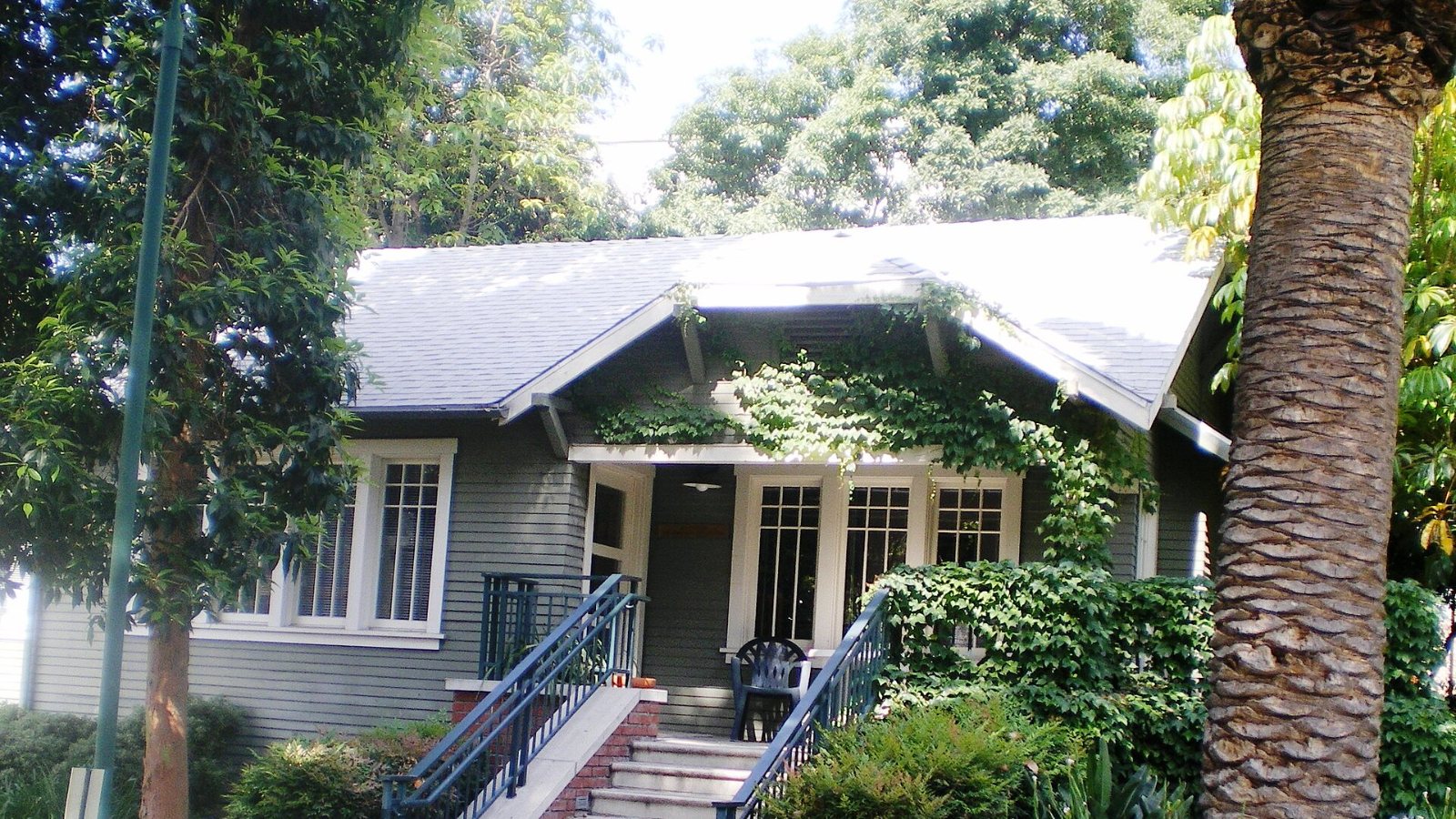
Cover photo: “Highland-Camrose Bungalow Village” by Los Angeles, CC BY-SA 3.0, cropped, via Wikimedia Commons.
Questions or a correction?
If something in this guide is unclear, out of date or does not match what your city told you, send me a message. Include the source if you have one.