The short answer: In California, a city can require at most one parking space per ADU or per bedroom, whichever is less, and it can be tandem on a driveway. In six situations it cannot require any parking at all, including when the ADU is within half a mile walking distance of public transit or is part of the house or an existing accessory structure. If you demolish or convert a garage to build the ADU, the city cannot make you replace those spaces. JADUs need no additional parking.
Last verified: October 28, 2026 · Written by Marc
This guide explains California state law in force on October 28, 2026. It is general information, not legal advice. Local rules can be more generous than the state floor, so confirm your lot with your planning department.
Parking used to be one of the main reasons cities rejected ADUs. A required space could eat the backyard, and replacing a converted garage could cost more than the conversion itself. State law now removes most of those requirements, but the exemptions are written in specific terms. “Public transit” here does not mean the same as in the height rule, and “part of the primary residence” has a precise meaning. This guide walks through the cap, each exemption and the garage rule, with a checklist for your lot.
The one-space cap
Where a city can require parking, section 66314(d)(10) limits how much. Parking requirements “shall not exceed one parking space per accessory dwelling unit or per bedroom, whichever is less.”
That cap shapes every ADU on a single-family lot:
- A studio or one-bedroom ADU: at most one space.
- A two-bedroom ADU: still at most one space, because one per unit is less than one per bedroom.
- Two ADUs on the lot: at most one space for each.
The same paragraph adds two flexibility rules. The space “may be provided as tandem parking on a driveway,” meaning one car parked behind another. And off-street parking “shall be permitted in setback areas” in locations the city decides, or through tandem parking, unless the city makes specific findings that this is not feasible because of the site, regional topography or fire and life safety conditions.
In practice, the tandem rule is the important one. Most lots already have a driveway, and a space behind the house’s car often satisfies the requirement without any new paving.
Six cases where no parking can be required
Section 66322(a) goes further. It applies “whether or not the local agency has adopted an ordinance,” and it bars any parking standard for an ADU in six situations.
| Situation | What the statute says | What to check |
|---|---|---|
| Near public transit | Within half a mile walking distance of public transit | Your walking route to the nearest fixed-route stop |
| Historic district | Within an architecturally and historically significant historic district | Whether your lot is inside a designated district |
| Part of the house or an accessory structure | The ADU is part of the proposed or existing primary residence or an accessory structure | Whether it is a conversion or attached unit |
| Street permits not offered | On-street parking permits are required but not offered to the ADU occupant | Your city’s permit parking program |
| Car share nearby | A car share vehicle is located within one block | Car share locations near your lot |
| New home on the same lot | The ADU application is submitted with an application for a new single-family or multifamily dwelling on the same lot | Whether you are building a new house too |
The “part of the primary residence or an accessory structure” case covers more projects than people expect. A garage conversion, a basement unit or an attached ADU falls under it, so most conversions need no parking at all, wherever the lot is.
The transit test is wider than you think
The transit exemption depends on the definition of “public transit” in section 66313. It means a location, “including, but not limited to, a bus stop or train station,” where the public can access buses, trains, subways and other transportation that charge set fares, run on fixed routes and are open to the public.

That is a much lower bar than the transit test for extra ADU height. The height rule needs a major transit stop or a high-quality transit corridor, with frequent service. The parking rule only needs a fixed-route stop with set fares, with no frequency requirement in the definition.
| Rule | Transit needed | Distance |
|---|---|---|
| No parking requirement (§ 66322) | Any public transit stop: fixed route, set fares, open to the public | Half a mile walking distance |
| Extra height for a detached ADU (§ 66321) | Major transit stop or high-quality transit corridor | Half a mile walking distance |
Common mistake: assuming the transit exemption needs a train station or frequent buses. An ordinary fixed-route bus stop can qualify for the parking exemption. Measure the walking route, not a straight line, and save a screenshot of it with your application.
Our guide to ADU height limits in California explains the stricter transit test that applies to height.
Converting a garage: no replacement parking
Section 66314(d)(11) covers the situation most ADU owners face. When a garage, carport, covered parking structure or uncovered parking space “is demolished in conjunction with the construction of an accessory dwelling unit or converted to an accessory dwelling unit,” the city “shall not require that those offstreet parking spaces be replaced.”
So the parking you lose to build the ADU does not have to be rebuilt elsewhere. A two-car garage turned into a studio leaves the main house without its garage spaces, and the city cannot require new ones for them.
Here is how the rules combine on a typical project. Take a hypothetical lot with a detached two-car garage, a driveway and no transit stop within half a mile:
- You convert the garage into a one-bedroom ADU. The ADU is part of an existing accessory structure, so under section 66322(a) no parking can be required for it.
- The two garage spaces are converted to an ADU, so under section 66314(d)(11) they do not have to be replaced.
- The result: no new parking at all, even though the lot is far from transit.
Build the same ADU as a new detached unit in the backyard instead, and the city could require one space. The driveway in front of the garage can usually provide it as tandem parking.
Some cities write the same rule into their own code. Sacramento’s section 17.608.020.L says that when parking is removed to build an ADU or JADU, no replacement parking is required for the ADU or for the other homes on the lot.
JADUs and local rules
A JADU sits inside the existing home, so it is part of the primary residence for the parking exemption. State law also addresses JADUs directly: a city cannot require additional parking as a condition of a JADU permit (Gov. Code § 66334(a)).
Cities can be more generous than the state, and several are:
- San Diego: outside the Coastal Overlay Zone, no parking is required. In the Beach Impact Area of the coastal zone, one space is generally required unless the ADU is 500 sq ft or less, attached to the main home, in a historic district or near car-sharing.
- Los Angeles: the city ordinance lists exemptions that include units under 500 sq ft, in addition to the state cases.
- San Jose: the 2021 ordinance required one on-site space except near transit or in historic districts. State law has changed since, so ask the city how it applies the rule today.
Coastal lots are the main exception to watch. The Coastal Act still applies there, and cities such as Los Angeles may require extra parking case by case to protect public access to the coast. Check our guides to San Diego and Los Angeles for the details.
Practical tip: Bring a printed map to your pre-application meeting showing the walking route to the nearest bus stop, any car share location within a block and your historic-district status. Planners decide parking on those facts, and having them ready shortens the conversation.
How to check your ADU’s parking requirement
- Identify the ADU type. A conversion, attached ADU or JADU is part of the house or an accessory structure, and needs no parking.
- Check transit. Find the nearest fixed-route stop with set fares and measure the walking route. Half a mile or less means no parking.
- Check the other exemptions: historic district, permit parking not offered, car share within a block, or a new home applied for at the same time.
- If none applies, the city can require at most one space per ADU or per bedroom, whichever is less, and it can be tandem on the driveway.
- Check the coastal zone. Coastal Act rules can add requirements.
- Read your city’s ordinance, which may be more generous than state law.
- Get the answer in writing and keep it with your permit file.
Frequently asked questions
Does an ADU need a parking space in California?
Often not. A city can never require more than one space per ADU or per bedroom, whichever is less, and it cannot require any parking in six cases listed in Government Code section 66322, including ADUs within half a mile walking distance of public transit and ADUs that are part of the house or an accessory structure. Where a space is required, it can be tandem on the driveway.
Do I have to replace my garage parking if I convert it into an ADU?
No. Section 66314(d)(11) says that when a garage, carport, covered parking structure or uncovered space is demolished or converted to build an ADU, the city shall not require those spaces to be replaced. The converted ADU itself is part of an existing accessory structure, so under section 66322 it needs no parking either. Coastal lots can still face Coastal Act review.
What counts as public transit for the parking exemption?
Section 66313 defines public transit as a location, such as a bus stop or train station, where the public can access buses, trains, subways and similar transportation that charge set fares, run on fixed routes and are available to the public. That is broader than the major transit stop needed for extra ADU height. The ADU must be within half a mile walking distance.
Can the city require a covered or garage space for an ADU?
The statute caps the number of spaces and allows them as tandem parking on a driveway or in setback areas, unless the city makes specific findings that this is not feasible. That flexibility makes it hard for a city to insist on a new garage. Ask your planner which form of parking the local ordinance accepts, and cite section 66314(d)(10) if a reviewer asks for more.
Does a JADU need parking?
No additional parking can be required for a JADU. Section 66334(a) bars cities from requiring additional parking as a condition of a JADU permit, and a JADU is contained inside the existing home, which also places it within the exemption for units that are part of the primary residence. The main house’s own parking rules are unchanged by the JADU.
The bottom line
ADU parking requirements in California are tightly limited. A city can require no more than one space per ADU or per bedroom, whichever is less, and it can be tandem on the driveway. It cannot require any parking near public transit, in historic districts, for ADUs that are part of the house or an accessory structure, or in three other cases. Converted garage spaces never have to be replaced.
Your next step is to run the seven checks above, starting with the walking distance to the nearest fixed-route stop, and confirm the result in writing. Then compare the full state rules in California ADU laws in 2026 and check what your lot can hold with our 5-step property check.
Sources
- Cal. Gov. Code § 66313 (definitions)
- Cal. Gov. Code § 66314
- Cal. Gov. Code § 66322
- Cal. Gov. Code § 66334
- City of San Diego: Information Bulletin 400
- Los Angeles City Planning: ADU Ordinance
General information, not legal advice. Local rules vary and change; confirm with your planning department.
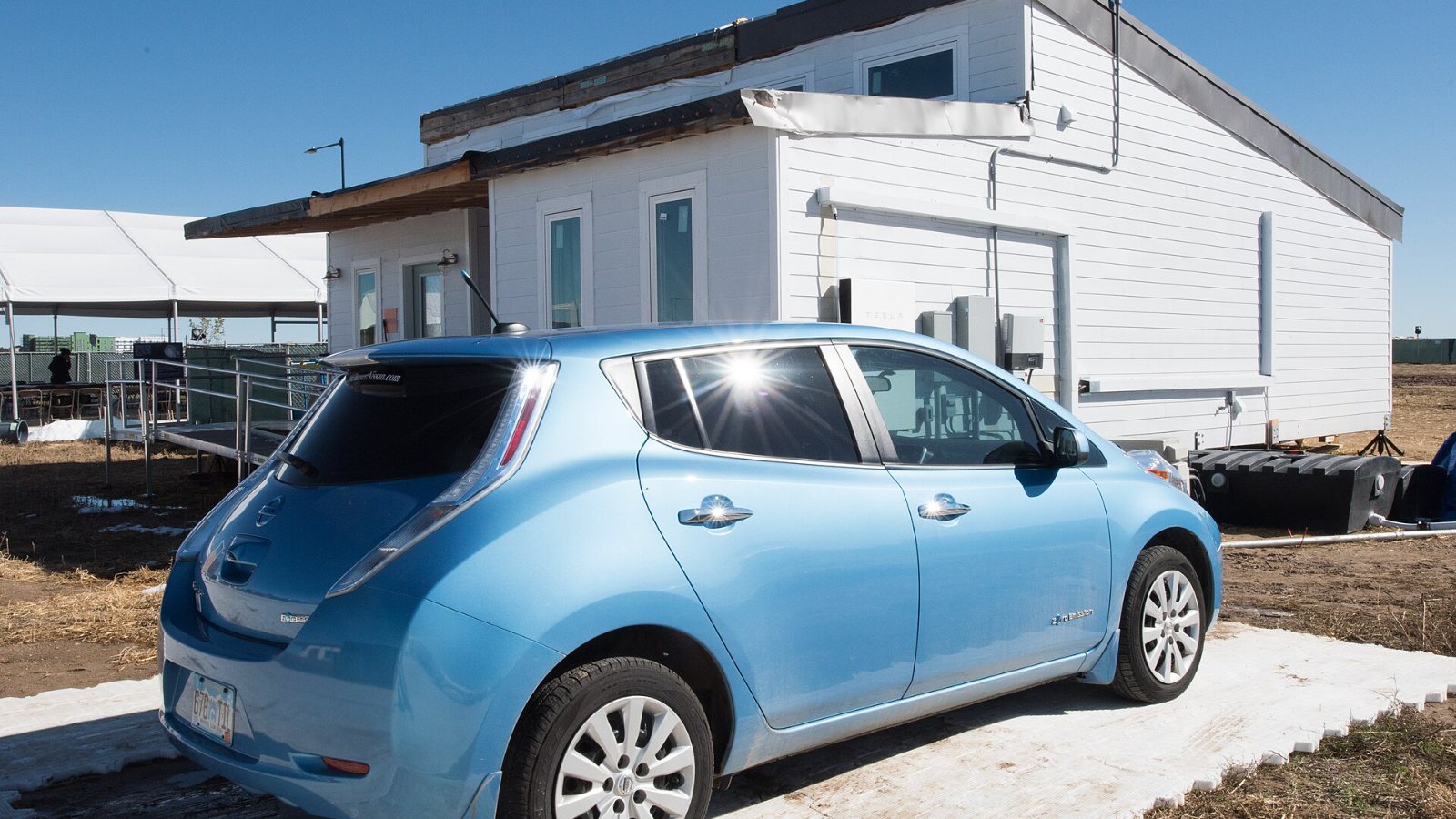
Cover photo: “Solar Decathlon SD17Gallery of Houses (23788861108)” by U.S. Department of Energy Solar Decathlon, public domain, via Wikimedia Commons.
Questions or a correction?
If something in this guide is unclear, out of date or does not match what your city told you, send me a message. Include the source if you have one.